
12 July 2026 · Editorial Team
Is Replica Furniture Legal UK? 2026 Buyer's Verdict
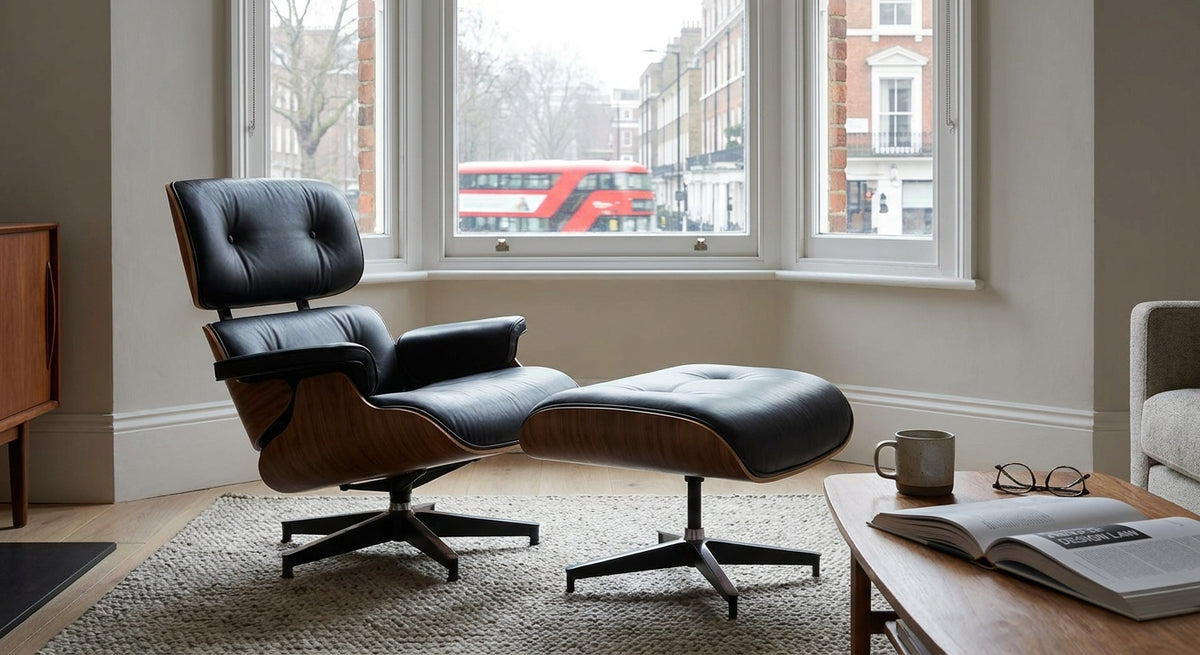
Buying a replica Eames chair or a Wishbone-style dining set in the UK is legal for personal use, but selling unlicensed reproductions as "genuine" or manufacturing them for commercial resale can breach copyright and trademark law that now runs for the designer's life plus 70 years.
TL;DR
Is replica furniture legal UK buyers ask this constantly, and the short answer is: buying and owning a replica is not a criminal act, but the legal risk sits with manufacturers and sellers who copy protected designs without a licence. Since the UK's Enterprise and Regulatory Reform Act came into force in July 2016, industrial designs classed as "works of artistic craftsmanship" get copyright protection for 70 years after the designer's death, not the old 25-year term. That change pushed many UK dupe retailers to rework details, rename products, or shift into genuinely licensed reproductions. Verdict: buying is low-risk, selling unlicensed copies is not — check the replica furniture buying guide before you order anything in 2026.
Why this matters
Facilities teams, office managers, and homeowners keep landing on "replica" and "inspired by" listings for pieces like the Barcelona chair, the Eames Lounge Chair, and the Wishbone chair, often at a third of the licensed price. The confusion isn't really about whether you'll get arrested for buying a chair — it's about which sellers are operating within the law and which ones are quietly exposing you to seized shipments, refund headaches, or products that vanish from sale mid-order. Quell Workspace fields this question from procurement teams sourcing furniture for meeting rooms and breakout areas, because getting it wrong can mean a delayed office fit-out in 2026, not just a legal footnote.
What you'll need
- Basic understanding of the difference between copyright, design right, and trademark law
- The name of the original designer and manufacturer (e.g. Herman Miller, Vitra, Carl Hansen & Søn) for whatever piece you're sourcing
- A UK-based retailer's company registration details, VAT number, and returns policy
- Roughly 15-20 minutes to check a seller's terms and product descriptions before ordering
- A note of your intended use — personal home, office fit-out, or resale — since this changes your exposure
The steps
1. Confirm what type of protection applies
UK furniture designs can be protected by copyright (the artistic work itself), unregistered design right, or a registered design — and each has a different term and enforcement route. Since the section 52 repeal took effect on 28 July 2016, classic 20th-century pieces by names like Le Corbusier, Arne Jacobsen, and Charles and Ray Eames are treated as artistic works with a copyright term of life plus 70 years, not the shorter industrial design term that expired decades ago for many pieces. Common mistake: assuming a chair is "out of copyright" just because it's over 25 years old — that rule stopped applying in 2016.
2. Check who's actually selling the item
Look at whether the retailer describes the piece as "genuine," "licensed," "replica," or "inspired by" — the wording tells you a lot. A licensed retailer will name the manufacturer explicitly (Vitra, Fritz Hansen, Herman Miller); a dupe seller will use generic terms like "designer-style" or "iconic silhouette." Common mistake: trusting a product photo lifted from the original manufacturer's catalogue as proof of authenticity — reverse-image search the photo if you're unsure.
3. Separate personal use from commercial resale
Buying one replica sofa for your living room carries essentially zero legal exposure under UK law; the liability sits with whoever manufactured or imported it without a licence. The picture changes if you're a business reselling replicas at scale, or fitting out dozens of offices with unlicensed copies branded as originals — that's where trading standards and IP holders take action. Common mistake: treating a bulk office order the same as a single home purchase — commercial volume changes the risk calculus.
4. Read the import and customs terms
If a replica ships from outside the UK, check whether the retailer states it clears customs under EU or UK rules, since Border Force and HMRC do seize counterfeit goods that infringe registered trademarks (not just copyright). A genuinely UK-based seller with UK stock avoids most of this friction entirely. Common mistake: ordering from an overseas marketplace listing with no UK returns address, then being surprised when a shipment gets held.
5. Look for trademark red flags, not just copyright ones
Trademark infringement is the sharper legal risk: a seller using the actual brand name ("Eames Lounge Chair" as a product title rather than "mid-century lounge chair replica") or a copied logo is on far shakier ground than one describing style and inspiration. Common mistake: assuming trademark and copyright issues are the same thing — they're separate laws with separate enforcement bodies.
6. Verify materials and construction match the price
A genuine leather and chrome lounge chair from a licensed manufacturer costs meaningfully more than a bonded-leather dupe, and that price gap should be visible in the specification, not just the marketing copy. If a retailer won't state leather type, foam density, or frame material, that's a quality flag as much as a legal one. Common mistake: comparing a £400 replica to a £4,000 original on looks alone without checking materials.
7. Confirm return and warranty terms before you buy
UK Consumer Rights Act 2015 protections apply regardless of whether furniture is a replica or original, so a legitimate seller will offer at least a 14-day cooling-off period on distance sales. Common mistake: assuming replica sellers are exempt from standard consumer protection — they aren't, and a seller dodging this is a bigger warning sign than the word "replica" itself.
Troubleshooting
- Your order got held at customs: contact the retailer for a customs declaration and HS code; UK-stocked sellers rarely hit this problem since goods are already cleared.
- The listing disappeared after you paid: request an immediate refund in writing and report the platform if it doesn't resolve within 14 days, per Consumer Rights Act 2015 timelines.
- You're not sure if a piece is licensed or a dupe: search the manufacturer's official retailer list — Vitra and Herman Miller both publish authorised UK dealer names.
- A business colleague wants to resell replicas from your office refit: don't — that shifts you from buyer to seller and into direct copyright exposure.
- The seller won't confirm country of manufacture: treat this as a hard stop; legitimate UK and EU retailers state it plainly on the product page.
- Price looks too good even for a dupe: extremely cheap replicas (under a third of standard dupe pricing) often use lower-grade foam or veneer that won't hold up in daily office use.
Tools and resources
- Best designer furniture dupes UK 2026 for a current rundown of styles and price bands
- UK Intellectual Property Office guidance on design rights and copyright terms
- Consumer Rights Act 2015 summary for distance-selling protections
- A Theo three-seater sofa as an example of a UK-stocked, clearly specified piece rather than an ambiguous import listing
What to do next
Once you've confirmed a piece is either fully licensed or clearly marketed as an "inspired by" reproduction with no trademark overlap, the next decision is sourcing quality — foam density, frame material, and fabric grade matter more day-to-day than the legal label. Compare specifications before you compare price tags, and keep a copy of the product description in case a return or warranty question comes up later in 2026 or beyond.
FAQ
Is replica furniture illegal to buy in the UK? No, buying a replica for personal use is not illegal under UK law. The legal risk sits with manufacturers and sellers producing unlicensed copies, not individual buyers.
Is it illegal to sell replica furniture in the UK? Selling unlicensed copies of a design still under copyright protection can breach the designer's or manufacturer's rights, especially if the seller uses the original brand name or logo. Copyright on these pieces now runs for 70 years after the designer's death following the 2016 law change.
Why did replica furniture rules change in 2016? The Enterprise and Regulatory Reform Act, in force from 28 July 2016, repealed section 52 of the Copyright, Designs and Patents Act 1988, extending protection on artistic craftsmanship works from 25 years to life plus 70 years.
Can I get a replica chair confiscated at customs? Counterfeit goods that infringe a registered trademark can be seized by Border Force or HMRC, though this mostly affects overseas imports rather than UK-stocked retailers.
How do I tell a licensed reproduction from an unlicensed dupe? Licensed retailers name the original manufacturer explicitly (Vitra, Herman Miller, Fritz Hansen) and typically appear on the manufacturer's official dealer list; unlicensed sellers use generic terms like "designer-style" or "iconic silhouette."
Does UK consumer law still protect me if I buy a replica? Yes. The Consumer Rights Act 2015 applies to replica and original furniture alike, including the standard 14-day cooling-off period on distance sales.
Is replica furniture legal to use in a commercial office? Using a small number of replicas in an office carries similar risk to personal use, but large-scale commercial procurement of unlicensed copies increases exposure if the pieces use protected brand names or logos.
One last thing
The 2016 copyright extension didn't ban replica furniture outright — it just shifted who carries the legal risk from buyers to the businesses manufacturing and importing unlicensed copies, which is why most credible UK dupe retailers in 2026 now market pieces as "inspired by" rather than using the original designer's name in the product title.


