
27 August 2026 · Editorial Team
Noguchi Coffee Table Dupe for Playroom: 2026 Picks
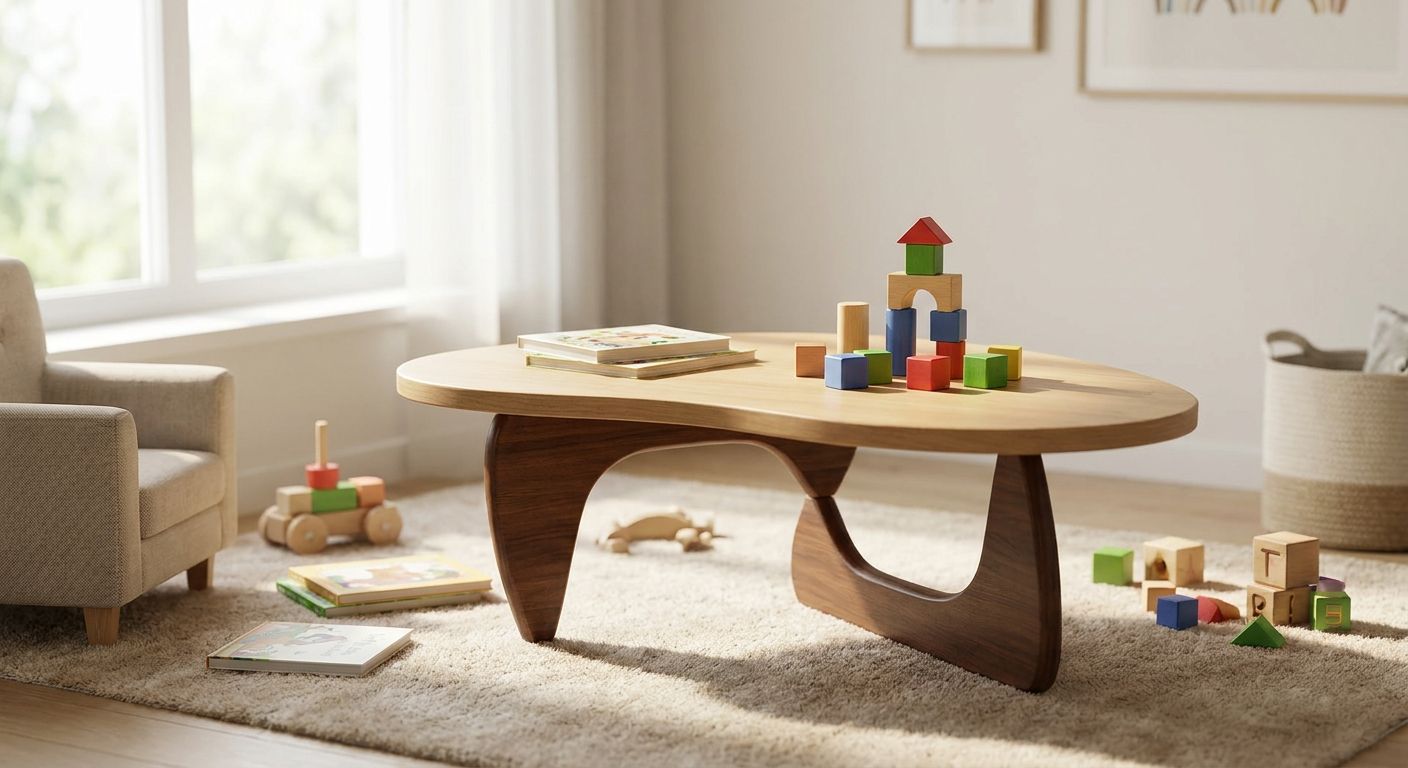
A rounded-edge Noguchi coffee table dupe for playroom use trades the fragile glass top of the original for wipeable, child-adjacent-friendly materials without losing the biomorphic silhouette Isamu Noguchi designed in 1944.
- A rounded-edge Noguchi coffee table dupe for playroom use skips glass tops and keeps the biomorphic wood silhouette. Buy.
- The original Noguchi table footprint runs roughly 128cm by 92cm; playroom-scale dupes shrink 20-30% for tight rooms.
- Laminate or sealed-wood tops wipe clean faster than glass or raw veneer in high-traffic play areas. Consider for daily use.
- Full-size glass-top replicas dominate small playrooms and complicate cleaning after crayons and juice. Skip for this room.
Why this matters
The Noguchi coffee table is one of the most replicated mid-century designs on the market, which means the dupe field is crowded with options built for adult living rooms rather than rooms where kids crawl, kneel and knock into furniture daily. A dupe that nails the biomorphic shape but ships with a glass top or a footprint sized for an open-plan lounge solves the wrong problem. This guide, from Quell Workspaces, narrows the field to what actually holds up in a playroom.
Who this is for
This guide is for parents and interior planners furnishing a dedicated playroom, a shared family room, or a nursery transition space who want the sculptural, low, biomorphic look of a Noguchi-style table without a glass surface or a footprint that eats floor space kids need for play. If you're furnishing an adults-only lounge, the criteria below relax considerably and the original's glass-and-wood combination stops being a concern.
What to look for in a Noguchi coffee table dupe for playroom use
Edge profile and shape
The entire appeal of the Noguchi design is its curved, interlocking base and rounded glass or wood top — there are no 90-degree corners on a faithful dupe. In a playroom, that rounded profile is worth prioritising over a sharper, more angular reproduction, since a curved edge is simply a gentler surface for a room where kids move at floor level.
Table height and floor clearance
The original Noguchi table sits low, close to floor height, which suits a playroom where most activity happens on rugs and floor mats rather than from a sofa. A dupe that matches this low profile keeps the table visually and physically out of the way of standing play, rather than sitting at a height that catches hips and knees.
Top material and cleanability
This is the single biggest fork in the road for a playroom dupe. The original pairs a wood base with a glass top; playroom-appropriate versions swap that glass for sealed wood, laminate, or a wipeable composite. Tempered glass tops on coffee tables typically run 10-12mm thick — sturdy for adult use, but a surface that shows every fingerprint and crayon mark in a room full of small hands.
Footprint versus room size
The original Noguchi table measures roughly 128cm by 92cm — generous in an open living room, oversized in a compact playroom or nursery. Compact dupes built for smaller rooms typically shrink that footprint by 20-30%, which keeps more floor clear for mats, bins and actual play.
Base design and legroom
The three-legged, interlocking wood base is part of what makes the Noguchi silhouette recognisable, and it also creates open space underneath for toy storage bins or floor cushions to slide beneath. A dupe that keeps this open-base design gives a playroom more usable floor area than a solid-plinth alternative.
Top picks for a Noguchi coffee table dupe for playroom use
The faithful dupe — full biomorphic shape, no glass
This is the pick for anyone who wants the recognisable Noguchi silhouette without compromise on the top material. Look for a solid wood or sealed-veneer top in place of glass, keeping the same interlocking three-piece base the original is known for. The Noguchi coffee table replica options guide breaks down which finishes hold up best to daily wear. Verdict: Buy for playrooms where the design statement matters as much as the practicality.
The space saver — scaled-down magazine table
For smaller playrooms or nurseries, a magazine-table-sized dupe keeps the same rounded, biomorphic language at a smaller scale — often 20-30% down on the original's 128cm by 92cm footprint. It won't anchor a large room the way the full-size table does, but it clears floor space for play mats and storage bins. The Noguchi-inspired magazine tables guide covers sizing against different room dimensions. Verdict: Buy for rooms under roughly 12 square metres.
The easy-clean option — laminate top, small-room sizing
This pick pairs a wipeable laminate surface with a smaller-than-original footprint, aimed at rooms that see food, paint and markers on a weekly basis. It sacrifices some of the depth and warmth of real wood grain for practicality. The choosing a coffee table for a small room guide walks through the sizing maths for boxy or narrow layouts. Verdict: Consider if cleaning speed matters more than material authenticity.
What to avoid
- Full-size glass-top replicas. At 128cm by 92cm with a 10-12mm glass surface, these belong in adult living rooms, not spaces where toys and drinks end up on the table daily.
- Spindly hairpin-leg alternatives marketed as "Noguchi-style." They borrow the low-table idea but drop the interlocking wood base and open floor clearance that make the real silhouette work in a busy room.
- Unsealed raw-wood tops. They look closest to the original finish in photos but stain and mark faster than a sealed or laminate surface once a playroom is in daily use.
The same footprint logic shows up across playroom furniture generally, not just coffee tables — a wooden play kitchen for small spaces follows the same principle of scaling a recognisable design down without losing the details that make it work. Coffee tables and play kitchens both need to give up square footage without giving up the shape that makes them worth buying.
Verdict comparison table
| Pick | Edge profile | Top material | Footprint vs original (128 x 92cm) | Verdict |
|---|---|---|---|---|
| Faithful biomorphic dupe | Fully rounded | Sealed wood/veneer | Same as original | Buy |
| Compact magazine-table dupe | Rounded, smaller scale | Laminate | 20-30% smaller | Buy |
| Small-room laminate dupe | Rounded | Wipeable laminate | Sized to room | Consider |
| Full-size glass-top replica | Rounded edges, glass surface | Tempered glass, 10-12mm | Same as original | Skip |
FAQ
What is a Noguchi coffee table dupe for a playroom?
It's a reproduction of Isamu Noguchi's biomorphic 1944 coffee table design, typically built with a wood or laminate top in place of the original's glass surface so it holds up in a room used for daily play. The rounded, three-legged base and organic top shape carry over from the original design.
Is a glass-top Noguchi dupe suitable for a playroom?
A glass top, usually 10-12mm tempered glass, is harder to keep clear of fingerprints and marks in a room used daily by kids compared with a sealed wood or laminate surface. Most playroom-focused dupes drop the glass top for this reason.
How big should a Noguchi-style coffee table be for a playroom?
The original table measures roughly 128cm by 92cm, which suits an open living room more than a smaller playroom. Compact dupes built for tighter spaces typically reduce that footprint by 20-30%.
What's the best top material for a playroom coffee table dupe?
Sealed wood, veneer, or laminate wipe clean faster than glass or unsealed raw wood and hold up better to daily marks from crayons, food and drinks. Glass shows fingerprints and smudges more visibly than any of these alternatives.
Does a rounded-edge dupe still look like the original Noguchi table?
Yes — the rounded, biomorphic top and interlocking three-piece wood base are the defining features of the design, and most playroom dupes keep both while changing only the top material. The overall silhouette stays recognisable even without the glass.
What's the difference between a magazine table dupe and a full-size coffee table dupe?
A magazine-table-sized dupe scales the same biomorphic shape down, generally 20-30% smaller than the original's 128cm by 92cm footprint, making it better suited to compact playrooms or nurseries. A full-size dupe keeps the original dimensions and suits larger open-plan rooms.
Should I choose a low table or a standard-height table for a playroom?
The original Noguchi table sits at a low profile, which matches floor-level play better than a standard coffee-table height. A low table keeps the piece out of the way of kids moving between the floor and nearby seating.
Can an open-base coffee table dupe help with playroom storage?
The interlocking, open base of the Noguchi design leaves floor space underneath the table free, which works for sliding storage bins or floor cushions beneath it. A solid-plinth alternative removes that usable gap.
One last thing
The detail most playroom shoppers miss: the original Noguchi base is designed to be freestanding and interlocking rather than fixed, which is exactly why the wood-base-only version of the dupe (no glass) keeps the sculptural look intact even when the top material changes. Swap the glass, keep the base — that's the whole trick.


