
4 August 2026 · Editorial Team
Best Replica Bar Cart Mid-Century UK 2026: Ranked
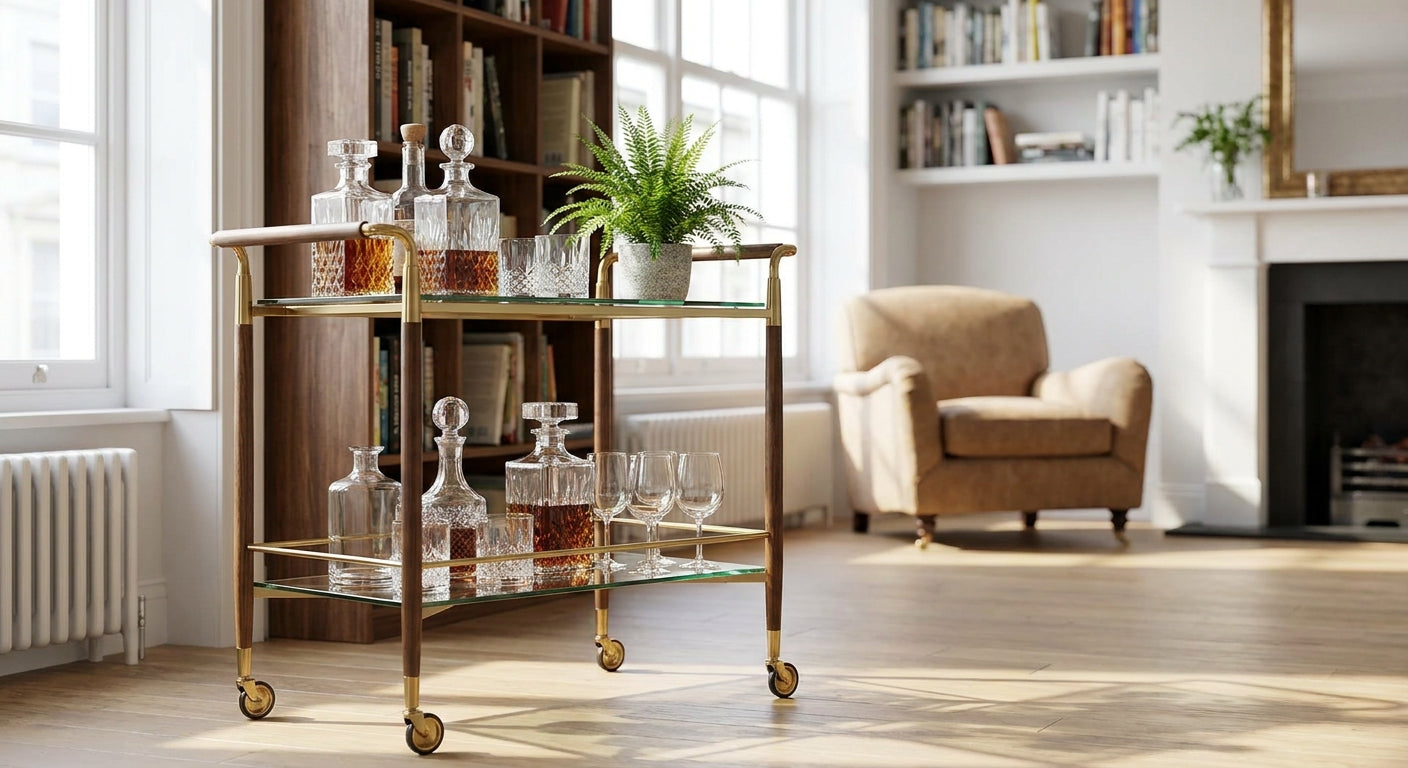
Six mid-century bar cart styles are worth shortlisting for a UK home in 2026, and this guide ranks them on frame quality, shelf capacity and how faithfully each keeps the original drinks trolley silhouette rather than a flattened knock-off.
- The Kaymet-style pierced aluminium trolley is the best replica bar cart mid-century UK buyers can get in 2026 - Buy.
- Skip laminate flat-pack trolleys under a certain price point; hinges and castors fail within a year of daily use.
- Brass-and-glass Cesare Lacca style carts cost more upfront but hold their look through years of use - Buy.
- Danish teak drinks trolleys suit period homes; confirm FSC-certified timber before you order.
- Sculptural free-form fibreglass carts look striking but need the right room - Wait for the right space.
Why this matters
A bar cart earns its floor space or it becomes a dust magnet within a season. The mid-century original was built to move drinks, glasses and ice from kitchen to living room on a frame that could take repeated loading without the shelves flexing or the castors seizing.
Most replica bar carts sold in the UK in 2026 copy the look but skip the engineering: thinner gauge metal, unbraced shelves, plastic castor housings. The mid-century modern replica furniture UK market has matured enough that buyers can now tell good frames from bad ones just by checking three specs, which is what this ranking is built around.
How this list is ranked
Each style below is judged on four criteria: frame material and gauge, shelf load capacity, castor quality, and fidelity to the original mid-century proportions (tier spacing, handle height, overall footprint). A trolley that nails the look but flexes under a bottle of wine and two glasses does not make the Buy list.
Pricing varies by retailer and finish, so this guide sticks to spec comparisons rather than quoting figures that shift week to week. Check current pricing directly with whichever retailer stocks the style you want before you commit.
The ranked list
1. Kaymet-style pierced aluminium trolley — the British classic
This is the trolley design most UK households picture when someone says "drinks trolley": a pierced aluminium frame, two tiers, and a handle rail that doubles as a towel bar. Original Kaymet trolleys date to the 1950s and the pierced pattern is still the detail that separates a faithful replica from a generic metal cart.
Look for 15kg-plus load capacity per shelf and welded (not riveted) joints at the handle. Riveted joints loosen within 12 to 18 months of regular use. Verdict: Buy — this is the safest pick for anyone who wants the style without babying it.
2. Cesare Lacca-style brass and glass cart — the statement piece
The Italian glass-and-brass cart brings a warmer, more formal look than the British trolley, with a brass-plated steel frame and tempered glass shelves around 6mm thick. It reads as furniture rather than utility hardware, which suits a dining room over a kitchen.
Confirm the glass is toughened, not standard float glass — a dropped bottle on untreated glass shatters rather than chips. This style costs more than the aluminium trolley but the brass plating holds its finish for years rather than months. Verdict: Buy for anyone furnishing a room where the cart stays on permanent display.
3. Bauhaus tubular chrome trolley — the minimalist option
Tubular chrome steel with three flat tiers, no ornamentation, no handle rail beyond the bent frame itself. This is the Bauhaus reading of the bar cart and it works best in rooms already committed to a stripped-back palette.
Three tiers give more storage than the two-tier trolley but the flat-sheet shelves (rather than pierced or slatted) show scratches faster. It is a strong pick for a specific look rather than an everyday-use default. Verdict: Hold until you have confirmed it fits the room — this design reads wrong in a period property.
4. Danish teak drinks trolley — the wood-lover's pick
Solid teak top and base shelves on hairpin steel legs, a combination lifted straight from 1960s Danish sideboard design language. It suits homes already running teak sideboards or dining tables, and it ages better than veneer, which delaminates around window sills and radiators within a couple of winters.
Check for FSC-certified timber and a sealed (not just oiled) finish if the cart will sit near a window. Verdict: Buy for anyone matching existing teak furniture, and worth reading the how to create a mid-century modern living room guide before you commit to a wood tone.
5. Sculptural free-form fibreglass cart — the wildcard
A curved, organic-shaped shell on castors, closer to Noguchi-era free-form design than the boxy British or Italian trolleys. It is the most photogenic option on this list and the least practical: fibreglass shells hold less weight than metal frames and the curved shelves make glassware slide when the cart moves.
This is a display piece more than a working bar. Verdict: Wait — buy it for a specific styling moment, not as your only drinks storage.
6. Budget flat-pack laminate trolley — the one to skip
MDF or particleboard shelves wrapped in laminate, bolted (not welded) to a thin steel frame, sold as a mid-century replica on the strength of two tiers and round handles. The laminate edges chip within months and the bolted joints work loose faster than any style above.
This is the trolley that looks fine in a product photo and wobbles within a season of real use. Verdict: Skip entirely — the savings do not cover the replacement cost.
Comparison table
| Style | Frame material | Tiers | Best for | Verdict |
|---|---|---|---|---|
| Kaymet-style aluminium | Pierced aluminium | 2 | Daily use, kitchens | Buy |
| Cesare Lacca brass and glass | Brass-plated steel + tempered glass | 2 | Dining rooms, display | Buy |
| Bauhaus tubular chrome | Chrome tubular steel | 3 | Minimalist interiors | Hold |
| Danish teak | Solid teak + hairpin legs | 2 | Period homes | Buy |
| Free-form fibreglass | Moulded fibreglass | 1-2 | Styling statement pieces | Wait |
| Budget flat-pack laminate | Laminate over MDF | 2 | Nobody, really | Skip |
Where to buy
- Ask for weld photos, not render images. Any retailer confident in their frame quality will show the actual joints, not a 3D mock-up.
- Confirm glass shelf thickness in writing before ordering a glass-topped style — 6mm tempered is the minimum for a cart that gets used, not just admired.
- Check delivery timelines before you order. Bulky trolley frames ship differently to small accessories, and the replica furniture delivery UK guide covers what to expect on lead times and packaging.
If you're new to buying replica pieces generally, the replica furniture UK buying guide and the note on whether replica furniture is legal in the UK are worth reading before you check out — both apply to bar carts the same way they apply to any other mid-century replica.
FAQ
What's the best replica bar cart mid-century UK buyers can get in 2026?
The Kaymet-style pierced aluminium trolley is the strongest all-round pick in 2026, with welded joints and 15kg-plus shelf capacity holding up to daily use. Brass-and-glass Italian styles are the better choice for a formal dining room instead of a kitchen.
Is a brass and glass bar cart better than an aluminium one?
Neither is universally better; the brass-and-glass Cesare Lacca style suits a display role in a dining room while the aluminium Kaymet-style trolley handles daily kitchen-to-lounge use better. Pick based on how often the cart actually moves.
How much weight can a replica bar cart hold?
A well-built replica bar cart holds around 15kg per shelf, enough for a few bottles, glasses and an ice bucket. Below that capacity, shelves visibly flex when loaded and the frame stresses at the welds over time.
Are teak drinks trolleys still made in 2026?
Yes, solid teak drinks trolleys on hairpin legs are widely available as replicas of 1960s Danish designs in 2026. Confirm FSC-certified timber and a sealed finish if the cart will sit near a window or radiator.
Do flat-pack bar carts hold up over time?
Budget flat-pack laminate trolleys typically loosen at the bolted joints and chip at the laminate edges within months of regular use. A welded metal frame costs more but avoids this failure pattern entirely.
What height should a mid-century bar cart be?
Most mid-century bar cart replicas stand 75 to 85cm tall, matching the original 1950s and 60s proportions. Anything noticeably shorter or taller usually signals a design that has drifted from the source silhouette.
Can a bar cart double as a side table?
Yes, two-tier trolleys with a stable top shelf work well as a side table when not in bar use, provided the top shelf is rated for at least 15kg. Fibreglass free-form carts are less suited to this dual role because the curved shelves hold less evenly.
Should I check castor wheel size before buying?
Yes, castor wheels under 4cm in diameter tend to seize on carpet and struggle over door thresholds. Look for 4 to 5cm wheels with a locking mechanism if the cart will move between rooms regularly.
One last thing
The detail that separates a trolley that lasts from one that doesn't rarely shows up in the product photo: it's the weld at the handle rail. Pierced aluminium and tubular chrome frames with a visible weld seam outlast riveted or bolted joints by years, not months, and that single check matters more than the finish colour you pick.


