
2 August 2026 · Editorial Team
Best Replica Sideboards UK Mid-Century 2026 Picks
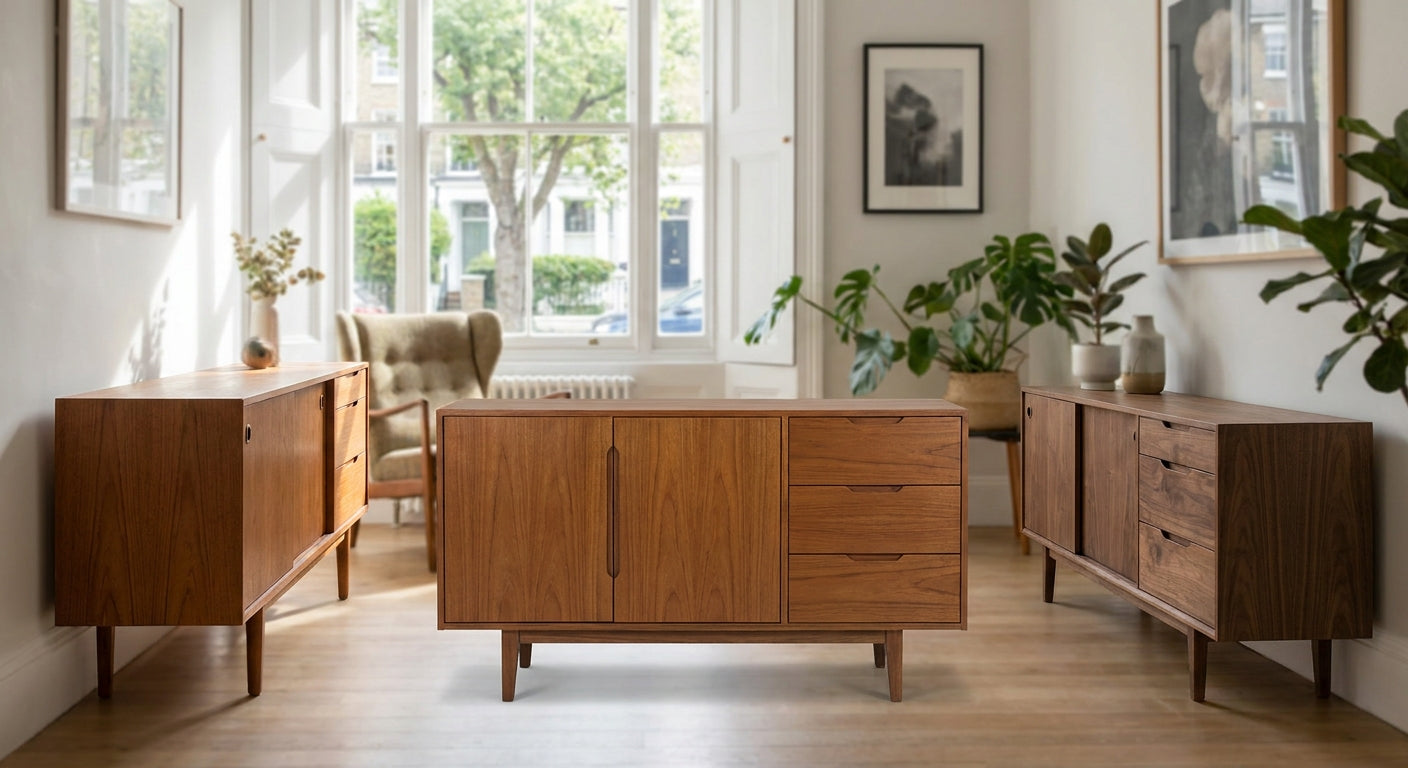
Mid-century sideboards are the most-searched storage piece in the UK replica furniture market, and most buyers can't tell a well-built tambour door from one that will jam within a year. This guide ranks the six replica sideboard styles UK shoppers ask about most in 2026, with a straight verdict on each.
- Rosewood tambour sideboards are the strongest replica sideboards UK mid-century pick for 2026 living rooms: Buy.
- Teak ladder-leg credenzas handle daily use and TVs up to 32kg best: Buy for family rooms.
- Nelson-style thin edge sideboards warp on cheap 12mm cores: Consider only with 18mm+ ply.
- Two-tone lacquer sideboards are the 2026 trend pick but scratch fast: Hold unless the finish is sealed.
- Bar cabinet sideboards with drop-down fronts store drinks well but fail as book storage: Skip for practical use.
Why this matters
Search demand for mid-century modern replica furniture has pushed sideboards into their own buying category, separate from the wider living room list. That split matters because a sideboard bought for a hallway console does a completely different job than one bought to hold a 55-inch TV and a stack of vinyl.
The UK replica market runs on three core wood finishes: teak, rosewood, and walnut veneer over an MDF or ply core. Door mechanism is the single biggest differentiator between a piece that lasts and one that jams by year two. Tambour (roll-front) doors need a wider running channel than hinged doors, and that channel is where cheap replicas cut corners.
How we ranked
Each pick below is scored on four things: door mechanism durability, core material, weight capacity for AV or dining use, and how closely the proportions track the original 1960s-1970s design brief. Sideboards under 18mm core thickness or with plastic-glide tambour tracks were marked down regardless of finish quality. Pieces get a Buy, Consider, Hold, or Skip verdict based on how they perform against those four criteria in 2026 market listings.
The ranked list
1. Rosewood tambour-door sideboard — the collector's pick
Rosewood veneer over an 18mm ply core is the benchmark finish for period-accurate Danish-style sideboards, and the grain pattern is the detail most buyers check first. Standard proportions run 180-220cm wide and 40-45cm deep, matching original 1960s cabinetry. The tambour door should glide shut in under two seconds on a well-cut track — anything slower signals an undersized channel. Buy if the listing specifies ply core and metal door guides; this is the safest replica sideboards UK mid-century choice for a main living room.
2. Teak ladder-leg credenza — the everyday workhorse
Teak's tighter grain resists scratching better than rosewood, which makes this the pick for households with kids or pets. Leg height typically sits at 14-16cm, giving clearance for a robot vacuum and keeping the cabinet visually light. Weight capacity on a solid ladder-leg frame handles a 32kg television without the legs splaying. Buy for daily-use rooms; this is the most forgiving option in the entire mid-century storage category.
3. Nelson-style thin edge sideboard — the design-nerd favourite
The thin-edge silhouette, with its narrow top lip and flush hinged doors, is the most frequently copied George Nelson design in the replica space. It looks sharp in photos, but the flat panel construction shows every warp if the core drops below 18mm. Check the spec sheet before buying — many budget versions use 12mm MDF that bows within 12-18 months in centrally heated rooms. Consider only from sellers who confirm 18mm+ core; otherwise Skip.
4. Walnut USA Modern credenza — the space-saver
Sliding doors instead of hinged or tambour panels make this the pick for tight rooms where door swing is a problem. Walnut veneer runs slightly darker than teak, which suits north-facing rooms that need visual weight. Depth on sliding-door models tends to run shallower, around 38-40cm, so it holds less than a tambour equivalent. Buy for small flats or narrow hallways; Skip if you need full-depth AV storage.
5. Two-tone lacquer sideboard — the modern hybrid
Black-and-white or navy-and-oak combinations are the fastest-growing style search of 2026, blending mid-century proportions with a contemporary lacquer finish. Lacquer shows fingerprints and light scratches faster than veneer, so it needs a matte or semi-gloss sealed top coat to hold up. It photographs well for mid-century modern living room setups but isn't the most forgiving daily-use finish. Hold until you've confirmed the seal coat; Consider once you have.
6. Bar cabinet sideboard with drop-down front — the entertainer's pick
The drop-down front converts to a serving shelf, which makes this the best option for hosting but a poor one for books or box files — the internal shelving is usually spaced for bottles, not A4 storage. Weight capacity on the drop-front hinge maxes out around 8-10kg before sagging. Buy if you're furnishing a dining or entertaining space; Skip for a home office or study.
“If the tambour door doesn't glide shut in under two seconds, the running channel is undersized for daily use.”
Comparison table
| Style | Best for | Door type | Core standard | Verdict |
|---|---|---|---|---|
| Rosewood tambour | Main living room | Tambour roll-front | 18mm ply | Buy |
| Teak ladder-leg | Family use, heavy TVs | Hinged | 18mm ply | Buy |
| Nelson-style thin edge | Design-focused rooms | Hinged flush panel | 18mm+ required | Consider |
| Walnut USA Modern | Small flats, hallways | Sliding | 16-18mm | Buy (space-limited) |
| Two-tone lacquer | Statement pieces | Hinged | 18mm + sealed lacquer | Hold |
| Bar cabinet drop-front | Entertaining spaces | Drop-down | 16mm | Buy (bar use only) |
Where to buy
- Ask for the core material in writing before ordering — "MDF" alone isn't a spec, thickness is the spec that matters.
- Check the replica furniture buying guide on overpaying before comparing prices across sellers, since listings for near-identical sideboards can vary widely on the same style.
- Confirm delivery lead time in writing, especially for tambour models where the doors ship separately from the carcass on some sellers.
FAQ
What's the best replica sideboard for a UK living room in 2026?
A rosewood tambour-door sideboard on an 18mm ply core is the strongest all-round pick for 2026 living rooms. It matches original 1960s proportions and holds up better under daily use than thinner MDF alternatives.
Is teak or rosewood better for a mid-century sideboard replica?
Teak resists scratching better and suits households with kids or pets, while rosewood gives a more collector-accurate grain pattern. Neither wins outright — the choice comes down to how much daily wear the piece will take.
How much does a mid-century replica sideboard cost in the UK?
Prices vary widely by core thickness, veneer, and door mechanism, so compare specs line by line rather than price alone. Two listings that look identical in photos can differ significantly once core material and door hardware are accounted for.
Do tambour door sideboards need more maintenance than hinged ones?
Tambour doors need a wider, cleaner running channel and can jam if dust builds up in the track. Hinged doors need less upkeep but don't roll flush against the cabinet front the way tambour does.
Can a mid-century sideboard hold a modern flatscreen TV?
A teak ladder-leg credenza on a solid frame handles a TV up to roughly 32kg without the legs splaying. Thin edge and sliding-door models are less suited to heavy AV equipment because of shallower depth and lighter leg construction.
What core thickness should a replica sideboard have?
18mm ply or MDF is the minimum recommended core thickness for a mid-century sideboard replica in 2026. Anything thinner, particularly 12mm panels, is prone to bowing in centrally heated rooms within 12-18 months.
Are two-tone lacquer sideboards durable enough for daily use?
Lacquer finishes show fingerprints and light scratches faster than veneer unless sealed with a matte or semi-gloss top coat. Confirm the seal coat before buying if the piece will see daily contact.
What's the standard depth for a mid-century sideboard?
Standard depth for AV and general storage runs 40-45cm, while sliding-door space-saving models tend to run shallower at 38-40cm. Depth matters more than width if the sideboard is holding a TV or media equipment.
One last thing
The detail buyers skip most often is door mechanism weight capacity, not finish. A rosewood veneer looks identical whether it's sitting on a solid ply core or a hollow-core budget frame, and the tambour track is the part that fails first — check that before checking the wood grain.


