
11 August 2026 · Editorial Team
Replica Drinks Cabinet UK: Best Mid-Century Bars 2026
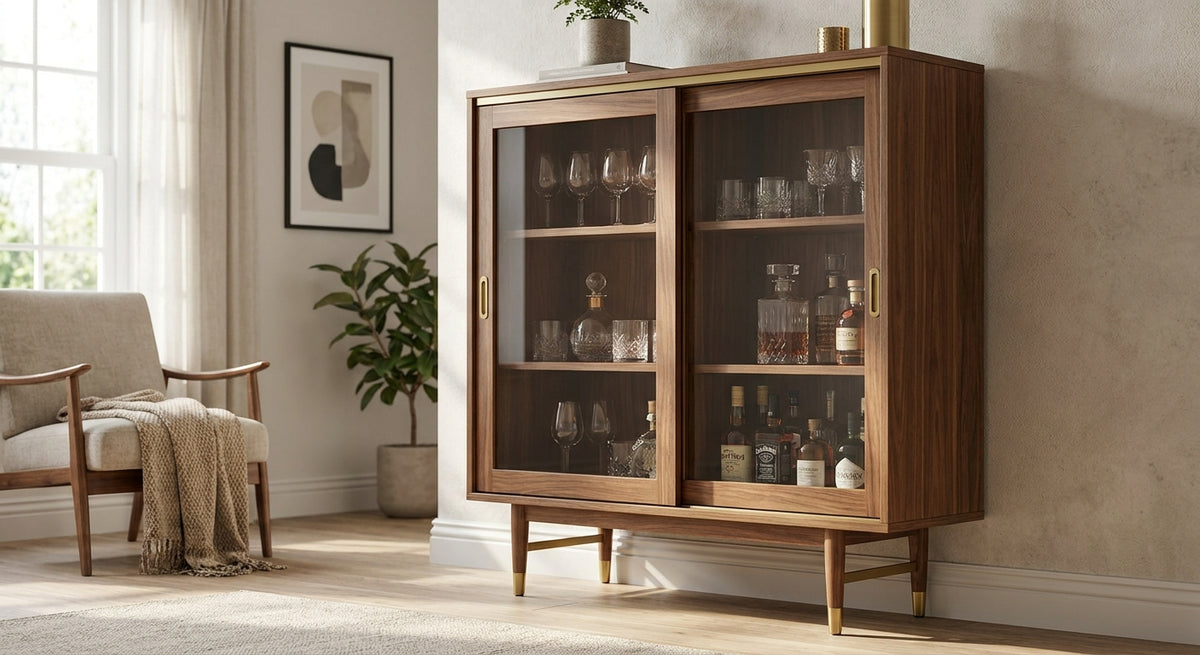
A replica drinks cabinet is the fastest way to get a mid-century bar into a UK living room without paying auction prices for a genuine Dyrlund or G-Plan piece, and picking the right style matters more than picking the right price point.
- Danish-style rosewood sideboard bars are the safest replica drinks cabinet UK buy for 2026 living rooms — Buy.
- Bar carts win on footprint for flats under 700 sq ft but hold less than a sideboard bar — Buy.
- Fold-out cocktail cabinets look the part but need 90cm of swing clearance to open properly — Hold.
- Skip wall-mounted glass-front cabinets unless the wall is load-rated; most UK stud walls aren't — Wait.
- Vintage-style oak globe bars are a novelty pick, not a daily-use drinks cabinet — Skip.
Why this matters
Mid-century drinks cabinets went from a niche interiors search to a mainstream living-room purchase over the past two years, and the mid-century modern replica furniture category now covers everything from £150 bar carts to £2,000-plus rosewood-veneer sideboards. The problem is that most of what shows up under "replica drinks cabinet UK" on marketplace sites is one of two things: a plywood box with a walnut-effect wrap, or a genuinely well-built piece with a price tag that makes the replica pointless.
The difference usually comes down to veneer thickness and hinge quality, not the photo. A cabinet built on 2mm to 3mm real wood veneer over MDF holds its finish for years; anything thinner than 0.6mm chips at the corners inside a season. None of that shows up in a product listing photo, which is why this guide ranks by build category rather than by brand name.
How we ranked
Each style below is ranked on three things: how well it suits a standard UK living room footprint, whether the hardware (hinges, drawer runners, catches) matches the price point, and how it performs against the category it's replacing. A £6,000 original mid-century sideboard and a £400 replica are not solving the same problem, so this list groups by cabinet type rather than pretending every replica is chasing the same original.
The ranked list
1. Danish-Style Rosewood Sideboard Bar — the safe pick
This is the closest replica category to the original 1960s Danish sideboard-with-bar-compartment format, usually 150cm to 180cm wide with a lift-up or sliding-door bar section on one end. The tambour or sliding door hides glassware and bottles while the rest of the cabinet handles general storage, which makes it double as a piece of furniture rather than a single-purpose bar.
Build quality varies most at the hinge and door-runner level — a sliding bar door that sticks after three months of daily use is the single most common complaint in this category. At 2026 prices, expect the well-built versions to use soft-close runners rather than basic metal tracks.
Verdict: Buy — the format works in nearly any living room and the storage-to-footprint ratio beats every other option on this list.
2. Mid-Century Bar Cart / Drinks Trolley — the space-saver
The bar cart trades storage for footprint: most sit at 60cm to 75cm wide on castors, with two or three tiers and a rail to stop bottles rolling off in transit. It suits flats and smaller living rooms where a full sideboard bar would swallow a wall.
Castor quality is the tell here — cheap nylon wheels crack within a year on hard flooring, while brass or rubber-capped castors last. The full breakdown of trolley styles and finishes sits in the replica bar carts guide.
Verdict: Buy — for anyone renting or short on floor space, this is the lowest-commitment entry point into a mid-century bar setup.
3. Fold-Out Cocktail Cabinet — the showpiece
This is the cabinet that looks like furniture when closed and opens into a full bar with a fold-down or fold-out front panel, sometimes with an internal mirror and light. It's the most visually dramatic pick on this list and the one most likely to get commented on at a gathering.
The catch is clearance: a fold-out front needs 80cm to 90cm of swing space in front of the cabinet to open fully, which rules it out for tight rooms. Hinge strain is also the main failure point since the door carries more weight than a standard cabinet door.
Verdict: Hold — brilliant if the room has the clearance, wasted if it doesn't.
4. Wall-Mounted Glass-Front Cabinet — the flat-share option
This style skips the footprint problem entirely by fixing the cabinet to the wall, usually with a glass front for display. It suits narrow hallways or small kitchens where floor space isn't available.
The risk is structural, not aesthetic. Most UK stud walls aren't rated for the combined weight of a glass-front cabinet plus a full bottle collection, and a lot of listings don't specify a maximum load. Without a confirmed weight rating from the seller, this is a cabinet to wait on rather than commit to.
Verdict: Wait — confirm wall load rating before buying, not after mounting.
5. TV Unit With Hidden Bar Storage — the dual-purpose pick
A growing number of mid-century TV units now build a bar compartment into one side, usually behind a door matched to the main unit's finish. It's a practical option for anyone who wants a bar without dedicating a separate piece of furniture to it.
The trade-off is capacity — these units typically hold a fraction of what a dedicated sideboard bar holds, since most of the internal space still goes to media equipment. The full range sits in the replica TV units guide.
Verdict: Buy — the right call for anyone who's already shopping for a TV unit and doesn't want a second piece of furniture.
6. Console Table With Under-Storage Bar — the hallway pick
A console table with a shelf or cupboard section underneath works as a compact bar for hallways, dining rooms, or narrow living spaces. It's more display piece than storage solution, usually holding six to eight bottles at most.
This pick suits people who want the aesthetic of a home bar without heavy daily use. It's a reasonable secondary option but rarely the main bar in a household that entertains regularly.
Verdict: Hold — fine as a display piece, thin as an actual working bar.
7. Vintage Oak Globe Bar — the novelty pick
The globe-shaped drinks cabinet on a wooden stand is the most recognisable novelty format in this category, opening to reveal a small bar interior. It photographs well and works as a talking point.
Practically, it holds very little and the opening mechanism is the most common point of failure across the whole drinks-cabinet category — hinges rated for occasional use fail fast under daily opening and closing.
Verdict: Skip — a decorative piece, not a functional 2026 drinks cabinet.
Comparison table
| Style | Best for | Typical width | Verdict |
|---|---|---|---|
| Danish rosewood sideboard bar | Main living room bar | 150-180cm | Buy |
| Bar cart / drinks trolley | Small flats, mobility | 60-75cm | Buy |
| Fold-out cocktail cabinet | Rooms with clearance | 90-120cm | Hold |
| Wall-mounted glass-front | Hallways, small kitchens | 60-90cm | Wait |
| TV unit with bar storage | Combined media + bar | 150-200cm | Buy |
| Console table bar | Secondary/display bar | 100-140cm | Hold |
| Vintage oak globe bar | Novelty/gift | 40cm diameter | Skip |
Where to buy
Check veneer thickness before checking price — a listing that specifies 2mm-plus real wood veneer over MDF is worth more than one that just says "walnut finish." Finish descriptions without a veneer spec usually mean printed laminate.
Ask about the return window before ordering anything with a fold-out or sliding mechanism, since these are the parts most likely to fail once a cabinet is in daily use rather than sitting in a showroom. A seller who won't confirm a return period on a mechanised cabinet is a signal to keep looking.
Cross-check product photos against stock imagery of the original designer piece — a listing using the same photo angle as a museum archive photo of an original 1960s cabinet is reusing marketing imagery, not showing the actual replica for sale.
FAQ
What is the best replica drinks cabinet UK shoppers can buy in 2026?
The Danish-style rosewood sideboard bar is the strongest all-round pick for 2026, combining bar storage with general cabinet space in a 150cm to 180cm footprint. Bar carts are the better choice for smaller flats where floor space is limited.
Is a replica drinks cabinet legal to buy in the UK?
Buying a replica drinks cabinet inspired by a mid-century design is legal in the UK as long as the seller isn't using a protected trademark or claiming it's the original branded product. Design patents on most 1960s furniture have expired, which is why the replica market exists at all.
How much does a mid-century drinks cabinet cost?
Prices vary widely by style, with bar carts sitting at the lower end and full sideboard bars at the higher end. Check current listings directly since pricing shifts by finish, size and hardware quality.
What's the difference between a bar cart and a drinks cabinet?
A bar cart is an open, mobile trolley on castors with no doors, while a drinks cabinet is an enclosed piece of furniture with doors or a fold-out front. Carts suit smaller spaces; cabinets hold more and hide contents when closed.
Are replica sideboards with bar storage good quality?
Quality depends entirely on veneer thickness and hinge specification, not on the word replica itself. A sideboard bar with 2mm-plus real wood veneer and soft-close hardware performs close to an original; thin laminate versions chip within a year.
What size drinks cabinet fits a standard living room?
A sideboard-style drinks cabinet at 150cm to 180cm wide fits most standard UK living rooms against a single wall. Smaller rooms or flats are better suited to a 60cm to 75cm bar cart instead.
Should I buy an original vintage cabinet or a replica?
An original mid-century drinks cabinet from a recognised maker routinely sells for four-figure sums at auction, while a well-built replica delivers the same footprint and function for a fraction of that. Replicas make sense unless provenance and resale value matter more than daily use.
How do I check if a replica drinks cabinet is well made?
Check the veneer thickness spec, test the door or drawer action if buying in person, and confirm the return window before ordering anything with moving mechanisms. Hinges and runners fail faster than the wood itself in most poorly made replicas.
One last thing
The cabinets that fail fastest aren't the cheapest ones — they're the mid-priced ones with a mechanism (fold-out front, sliding bar door, glass display door) built to a budget hinge spec. A £300 bar cart with no moving parts will outlast a £900 cocktail cabinet with a weak hinge, every time. If daily use matters more than the reveal moment, buy the format with the fewest moving parts.


