
28 July 2026 · Editorial Team
Replica Mid-Century TV Unit UK: 2026 Best Picks
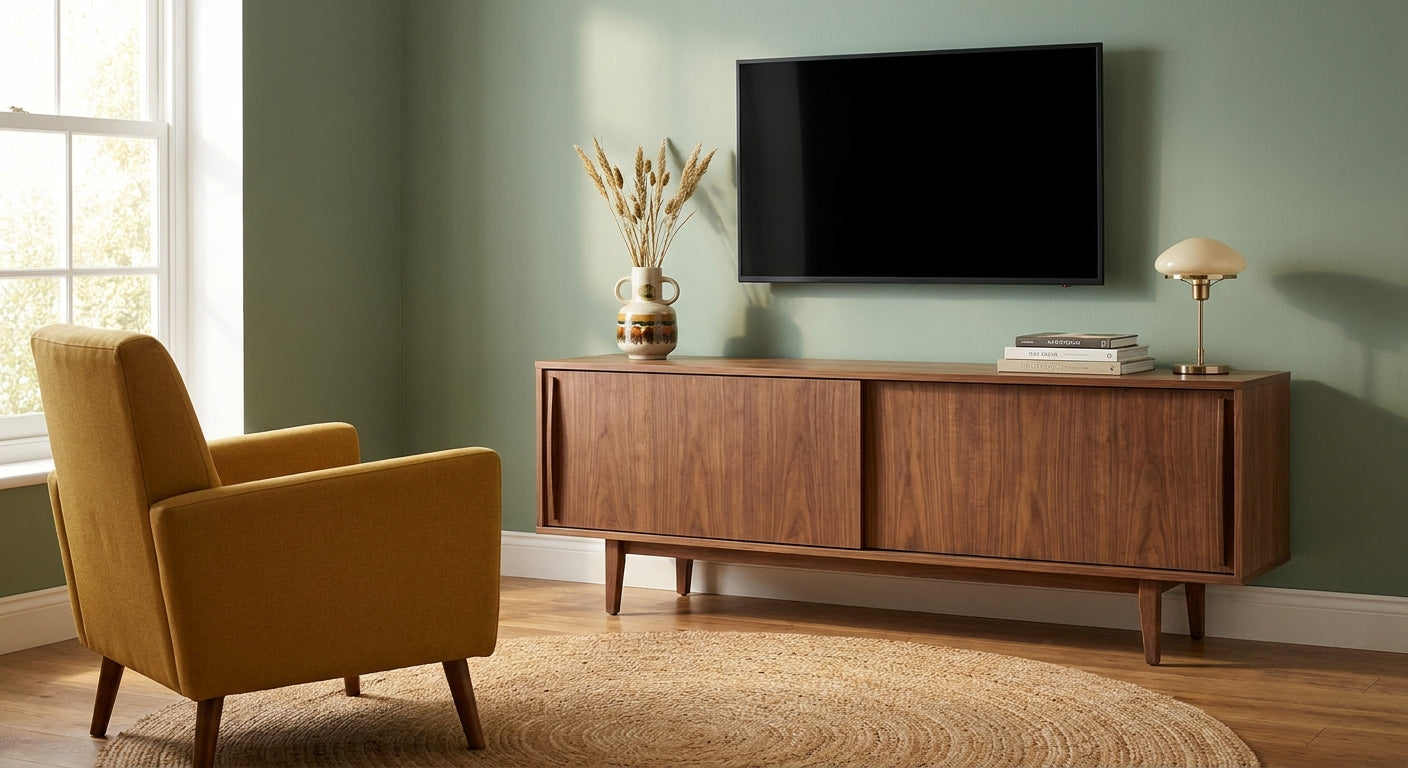
Replica mid-century TV units span everything from Danish teak sideboards to Bauhaus-style tambour credenzas, and getting the wrong one means a warped veneer top or a cable channel that never fits your set-top box. This guide ranks the styles UK shoppers are actually searching for in 2026, with a verdict on each so you don't have to guess.
- Danish teak sideboard-style units are the safest replica mid-century tv unit UK pick for 2026 - Buy.
- Bauhaus tambour-door credenzas fit small flats at around 120cm wide - Consider.
- Skip rattan-front TV cabinets under 40cm deep; set-top boxes and cable runs will not clear.
- Solid oak legs beat veneer-wrapped legs on anything over 180cm wide - check before you order.
Why this matters
A mid-century modern replica furniture TV unit sits under a screen, a router, a games console and whatever cables you have not hidden yet, so it takes more daily wear than a chair or a lamp. Cheap replicas cut corners where you cannot see them: chipboard cores under a thin veneer skin, plastic-wrapped legs pretending to be oak, drawer runners rated for a fraction of the weight a soundbar and receiver actually put on them.
Quell Workspace tracks replica mid-century TV unit prices and construction across UK retailers through 2026, and the pattern is consistent: units under a certain price band swap solid legs for veneer-wrapped MDF the moment you go above 150cm wide. That is the detail this guide is built around.
How we ranked
Each style below is judged on four things: material honesty (is the veneer real wood or printed foil), leg and frame construction, cable management for modern AV kit, and how well the proportions suit a UK living room rather than a US-sized one. Widths, depths and typical build details reflect what is commonly listed across UK replica retailers in 2026, not a single manufacturer's spec sheet. Where a style has an obvious weak point - stick-on veneer, thin tambour rails, legs that flex under 20kg - it is flagged directly rather than buried in a caveat. The verdicts (Buy, Consider, Wait, Skip) are the same call you would get from a furniture buyer walking a showroom floor, not a hedge.
The ranked list
1. Danish teak sideboard-style TV unit - the safe pick
This is the archetype most people mean when they search for a replica mid-century TV unit: tapered solid legs, tambour or flat doors in teak or walnut veneer, brass or wood pulls. Standard widths run 150cm to 220cm, with a depth around 40-45cm that clears most modern soundbars. Good units use a plywood or solid-wood carcass under the veneer rather than chipboard, which matters once you are sliding a heavy OLED stand or a games console drawer in and out weekly. Buy if the listing specifies plywood or solid-timber carcass construction; treat "MDF veneer" as a downgrade, not a synonym.
2. Nelson thin-edge inspired credenza - the collector's pick
The thin-edge detail - a slim wood lip wrapping the case front - is the giveaway of a well-made replica versus a rough one; on cheap units it is a plastic strip that yellows within a year. On the better versions it is solid wood, mitred at the corners. These units typically run 180-200cm wide with sliding doors rather than hinged ones, which suits a media unit better since you do not need door swing clearance in front of the screen. Buy for anyone who wants the closest look to an original piece and is willing to pay for the mitred edge detail.
3. Bauhaus tambour-door unit - the space-saver
Tambour doors roll into the carcass instead of swinging open, which is the single best feature for a TV unit crammed into a small flat or a rented room with limited floor space. The catch is the rail mechanism: cheap runners bind after a few months of daily use, especially if the unit sits on carpet and racks slightly. Widths around 120-140cm make this the pick for compact living rooms. Consider it, but only after checking the tambour rail material - metal or reinforced nylon runners outlast plastic ones by years, not months.
4. Scandi oak console with hairpin legs - the budget build
Hairpin legs are cheap to manufacture and easy to fake structurally: thin steel rod that flexes under a heavy TV stand load, especially past 15kg of AV equipment sitting on top. The console itself is usually oak veneer over a lighter frame, which keeps the price down but also keeps the weight rating down. Fine for a bedroom TV or a secondary screen; risky under a 55-inch-plus set with a soundbar and console stacked on top. Wait unless the leg gauge is specified - anything under 10mm steel rod is a warning sign.
5. Walnut veneer low sideboard with tapered legs - the statement piece
This is the wider, lower cousin of the Danish teak unit, often stretching past 220cm and sitting closer to 55cm high, designed to anchor a large living room rather than tuck into a corner. Walnut veneer at this scale shows grain inconsistency fast if the sheet quality is poor, so ask for close-up photos of the actual unit, not just a styled hero shot. Buy for a large room where the unit is meant to be the focal piece, not an afterthought under the screen.
6. Rattan or cane-front TV cabinet - the trend pick
Cane-front cabinets look right in a 2026 mood board but are the weakest performer for actual TV-unit duty: most run under 40cm deep, which is too shallow for a router, a games console and a soundbar sitting side by side. Cane also traps dust and is awkward to keep clean behind a media setup that generates heat. Skip this style for a primary TV unit; it works better as a side console elsewhere in the room.
“If the tambour doors stick after a week of use, the rail material was never rated for daily cable access.”
What to avoid
- Foil-wrapped veneer - printed foil over MDF is marketed as veneer in some listings; ask directly whether it is real wood veneer or a laminate finish.
- Legs under 8mm gauge on units over 180cm wide - the wider the case, the more load the legs carry at the corners, and thin steel or unreinforced timber legs flex visibly within months.
- No stated cable-management cutout - if a listing does not mention a rear cable channel, assume there is not one, which means drilling into a veneer panel yourself.
Comparison table
| Style | Typical width | Depth | Best for | Verdict |
|---|---|---|---|---|
| Danish teak sideboard | 150-220cm | 40-45cm | Most living rooms | Buy |
| Nelson thin-edge credenza | 180-200cm | 42cm | Authenticity seekers | Buy |
| Bauhaus tambour unit | 120-140cm | 38-42cm | Small flats | Consider |
| Scandi hairpin console | 130-160cm | 35-40cm | Secondary rooms | Wait |
| Walnut low sideboard | 200-240cm | 45-55cm | Large rooms | Buy |
| Cane-front cabinet | 100-130cm | 30-38cm | Side console, not primary TV | Skip |
Where to buy
Check the carcass material before the finish - ask whether the case is plywood, solid timber or chipboard under the veneer, since that is the detail most listings bury in the small print. Quell Workspace's furniture guides consistently flag veneer core thickness as the single biggest predictor of how a unit ages past year one, more than the finish colour or leg style.
Compare at least two replica furniture shops online before ordering a unit over 180cm wide - return costs on large furniture are high enough that a bad first pick is expensive to undo. Ask for the actual delivery lead time in writing; 2026 stock levels on wider sideboard-style units fluctuate more than the smaller consoles.
FAQ
What's the best replica mid-century TV unit for a UK living room in 2026?
A Danish teak sideboard-style unit at 150-220cm wide is the safest pick for most UK living rooms in 2026, provided the carcass is plywood or solid timber rather than chipboard under the veneer. It suits both compact and larger rooms without the mechanical weak points of tambour doors.
Is a Bauhaus tambour-door unit better than a hinged sideboard?
A tambour-door unit is better for tight spaces since the doors roll into the case instead of swinging open, but hinged sideboards are more durable long-term. Cheap tambour rails bind within months, so only choose tambour if the runner material is specified as metal or reinforced nylon.
How much does a replica mid-century TV unit cost in the UK?
Prices vary widely by width, material and finish quality, with genuine plywood or solid-timber carcasses costing more than chipboard-and-veneer equivalents of the same size. Compare at least two retailers before ordering anything over 180cm wide given the higher cost of returning large furniture.
Are rattan or cane-front TV cabinets a good choice for a media unit?
Cane-front cabinets are a weak choice for a primary TV unit because most run under 40cm deep, too shallow for a router, console and soundbar together. They work better as a side console elsewhere in the room rather than under the main screen.
What leg thickness should a replica TV sideboard have?
Legs under 8mm steel gauge or thin unreinforced timber legs flex under load on units wider than 180cm. Check the listed leg gauge before ordering a wide sideboard-style unit, especially if it will carry a soundbar and games console on top.
Is veneer or solid wood better for a replica sideboard?
Real wood veneer over a plywood or solid-timber carcass performs well and keeps weight and cost reasonable; foil-printed laminate marketed as veneer does not hold up the same way. Ask the retailer directly which material is used before ordering.
How deep should a TV unit be for modern AV equipment?
A depth of 40-45cm comfortably fits a soundbar, router and games console side by side without crowding cable access. Units under 38cm deep struggle once you add more than one AV component behind the screen.
Do replica mid-century TV units come with cable management?
Not always - check the listing specifically for a rear cable channel or cutout, since many listings omit this detail entirely. If it is not mentioned, assume you will need to drill the veneer panel yourself after delivery.
One last thing
The detail almost nobody checks before ordering: ask for the actual carcass material in writing, not just the finish name. A listing that says "teak" or "walnut" is describing the veneer, not what is underneath it, and the underneath is what determines whether the unit still closes properly by the end of 2026.


