
2 August 2026 · Editorial Team
Reading Nook Replica Furniture UK: 2026 Build Guide
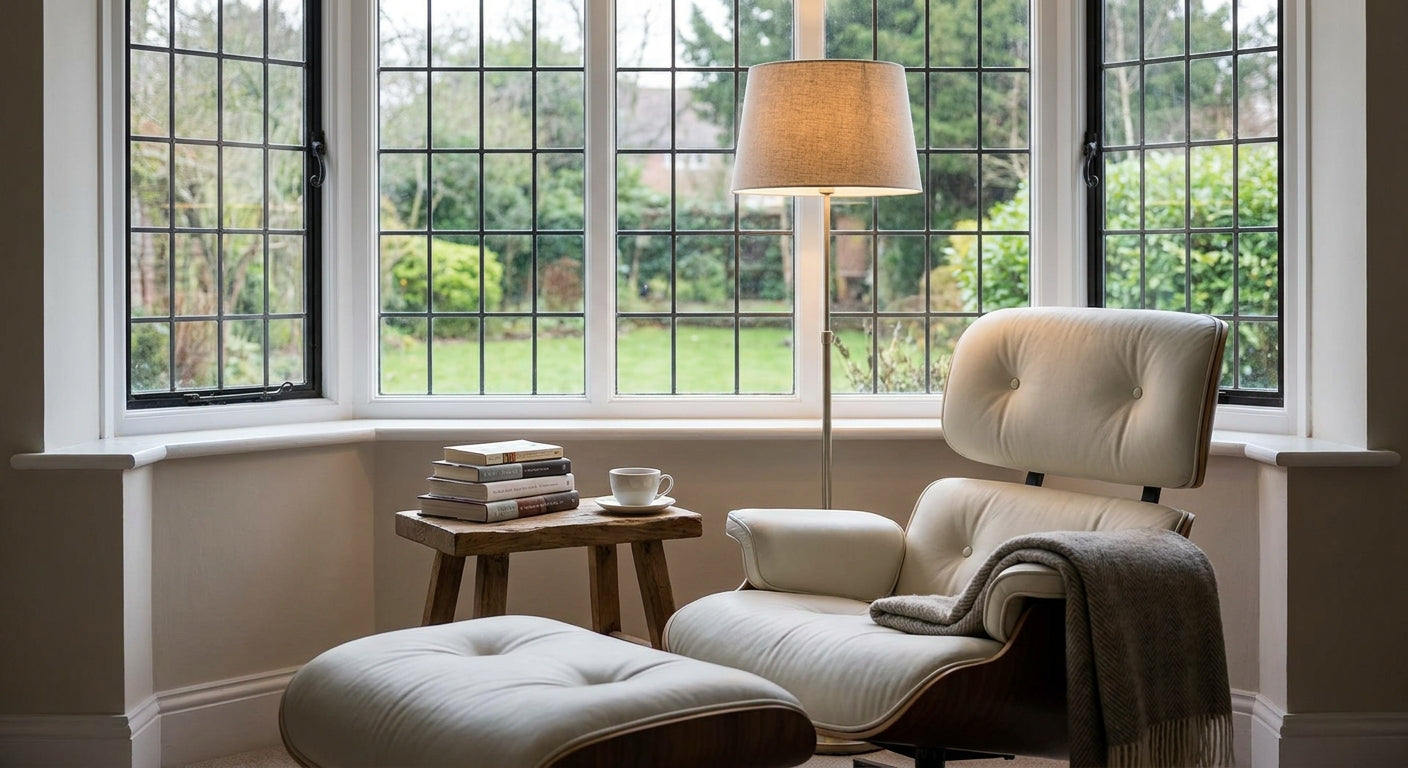
A reading nook built around replica furniture UK shoppers can buy off-the-shelf costs a fraction of the designer originals and takes a weekend, not a renovation project.
- A reading nook with replica furniture UK setup runs roughly 400-900 pounds for chair, lamp and rug in 2026.
- An Eames-style lounge chair replica or a Wegner-style Wishbone chair are the two safest anchor pieces for a corner nook.
- Skip PU leather replicas under 300 pounds — the foam and stitching sag within 12-18 months of daily use.
- Position the chair within 1.5 metres of a window, then add a 2700K floor lamp for evening reading.
Why this matters
A reading nook only works if three things line up: the chair fits your body for long sits, the light doesn't glare off a page or a screen, and the corner feels separate from the rest of the room. Get any one of those wrong and the space turns into a spot for coats and laundry within a month.
Replica furniture UK retailers have made this cheap to fix properly. A well-made Eames lounge chair replica costs a tenth of an original Herman Miller piece, and the acoustic and ergonomic gap has narrowed a lot since 2020 as tooling and foam quality improved.
What you'll need
- A corner with at least 1.2m x 1.2m of floor space, ideally against a wall
- One anchor seat — check the home library chair guide before you commit to a shape
- A side table no taller than the chair's arm height, usually 55-65cm
- A floor lamp with a warm colour temperature, 2700K to 3000K
- A rug at least 20cm wider than the chair's footprint on each side
- A tape measure, painter's tape, and 45-60 minutes for the layout stage
- Optional: a small acoustic panel or bookshelf to break up hard-wall echo
The steps
1. Measure the corner and mark the footprint
Tape off a rectangle on the floor before you buy anything — this stops you ordering a chair that swallows the space. Most reading chairs need 90cm of depth including recline clearance, plus 40cm on one side for the table. Skipping this step is the single most common reason a reading nook gets returned or resold within 2026's first quarter of ownership, based on the return patterns retailers report each year.
Common mistake: measuring the chair's seat width only and forgetting the swivel or recline arc, which adds 15-25cm on most lounge-chair replicas.
2. Choose the anchor piece
The chair decides everything else — fabric, lamp height, even the rug shape. For most UK homes, an Eames-style lounge chair replica with a matching ottoman is the safest pick because the recline angle suits reading rather than lounging flat.
If your corner is under 1m wide, a Wishbone-style dining chair with a cushion or a compact Wegner-style side chair works better than trying to force a full lounge chair in. Buy the chair before the lamp or table — every other measurement follows from its dimensions.
3. Layer the lighting
Overhead light alone creates glare on glossy pages and phone or tablet screens. A dedicated mid-century floor lamp replica positioned just behind and above the shoulder line fixes this without a rewiring job.
Set the lamp at 2700K to 3000K — anything higher reads as clinical rather than restful in the evening. A dimmer switch or a smart bulb adds flexibility for daytime versus night reading without buying a second lamp.
Common mistake: placing the lamp directly in front of the chair, which throws shadow across the page instead of light onto it.
4. Add a side table sized to the chair
A table taller than the chair's armrest forces an awkward reach for tea or a bookmark. Match the table height to within 3-5cm of the arm height, and pick a footprint under 40cm square so it doesn't block the walking path into the corner.
5. Break up hard surfaces for sound
A reading nook in a room with bare walls and hard flooring echoes every page turn and every phone notification. A rug under the chair absorbs footfall noise, and a single acoustic panel or a filled bookshelf behind the chair cuts the flutter echo that makes small rooms feel noisy even when they're quiet. This matters more in open-plan flats and studio conversions, where a nook has no door to close against the rest of the room.
Common mistake: relying on curtains alone for sound control — they help with reflected noise from windows but do nothing for footfall or voices carrying from an adjacent kitchen.
6. Style with textiles, not clutter
One throw, one or two cushions, and a rug are enough. Overloading the chair with cushions defeats the ergonomic point of buying a properly shaped replica in the first place — the shell is already designed to support your back.
7. Test the sightline before you finalise
Sit in the chair for 15 minutes at the time of day you'll actually use the nook. Check for screen glare, draught from a nearby door, and whether the lamp switch is within arm's reach without standing. Small fixes here — rotating the chair 20 degrees, moving the lamp 30cm — save a full re-layout later.
Troubleshooting
- Chair feels too low against the side table: raise the table on furniture risers or swap for a taller design closer to 60cm.
- Glare on tablet or phone screens: move the lamp to a 45-degree angle behind the shoulder rather than directly overhead.
- Room still echoes with the rug down: add a second soft surface — a filled bookshelf or a single acoustic panel absorbs far more than another rug layer.
- Cushion or leather sagging within a year: this is the classic sign of a sub-300-pound replica with low-density foam; a mid-range replica with cold-cure foam holds shape for 2026 and well beyond.
- Corner feels cramped despite correct measurements: check for a door swing or radiator intruding into the footprint — these get missed in a straight tape-measure check.
- Colours clash with the rest of the room: pull one accent colour from the chair fabric into the cushion or rug rather than matching everything to the walls.
Tools and resources
- Tape measure and painter's tape for the footprint stage
- A lux meter app (most phones have one built into the camera app) to check glare before buying a lamp
- The buying replica furniture without overpaying guide for what separates a durable replica from a disposable one
- A fabric swatch card if you're matching an existing sofa or curtain colour
What to do next
Once the nook is built, the fastest upgrade is swapping the anchor chair for a size or shape better suited to how you actually sit — read the bedroom reading corner ideas guide if your nook sits in a bedroom rather than a living room, since the lighting and noise rules shift slightly.
FAQ
How much does a reading nook with replica furniture cost in the UK?
A reading nook with replica furniture UK setup typically costs 400 to 900 pounds in 2026 for a lounge chair, floor lamp and rug. Adding a side table and acoustic panel pushes the total closer to 1,000 pounds.
Is replica furniture good enough for daily reading use?
Mid-range and higher replicas hold up well for daily use when the foam is cold-cure rather than basic PU foam. Budget replicas under 300 pounds often sag or split within 12 to 18 months of regular sitting.
What is the best chair for a small reading nook?
A Wishbone-style side chair with a cushion suits corners under 1 metre wide, while an Eames-style lounge chair replica needs closer to 1.2 metres of depth including recline clearance.
What colour temperature is best for a reading lamp?
2700K to 3000K gives a warm, restful light suited to evening reading without the clinical feel of daylight-balanced bulbs. Dimmable fittings let you shift brightness for daytime versus night use.
Do I need an acoustic panel in a reading nook?
Only if the room has hard walls and flooring with no door to close it off. A rug plus one filled bookshelf or acoustic panel removes most of the flutter echo in open-plan spaces.
Can a reading nook fit in an open-plan flat?
Yes, provided the corner is set back from main foot traffic and gets a rug or panel to control noise from the rest of the room. Open-plan nooks benefit most from sound-absorbing textiles since there's no door.
How do I stop glare on my phone or tablet while reading?
Position the floor lamp at a 45-degree angle behind the shoulder rather than directly overhead or in front of the chair. This is the single most common lighting mistake in DIY reading nooks.
One last thing
The detail most people skip is sitting in the chair for 15 minutes at the actual time of day they'll use the nook — not in the showroom, not for 30 seconds in the living room. Glare, draught and lamp reach only show up once you've settled in, and that 15-minute test catches problems a tape measure never will.


