
26 July 2026 · Editorial Team
Japandi Living Room Furniture UK: Budget Guide 2026
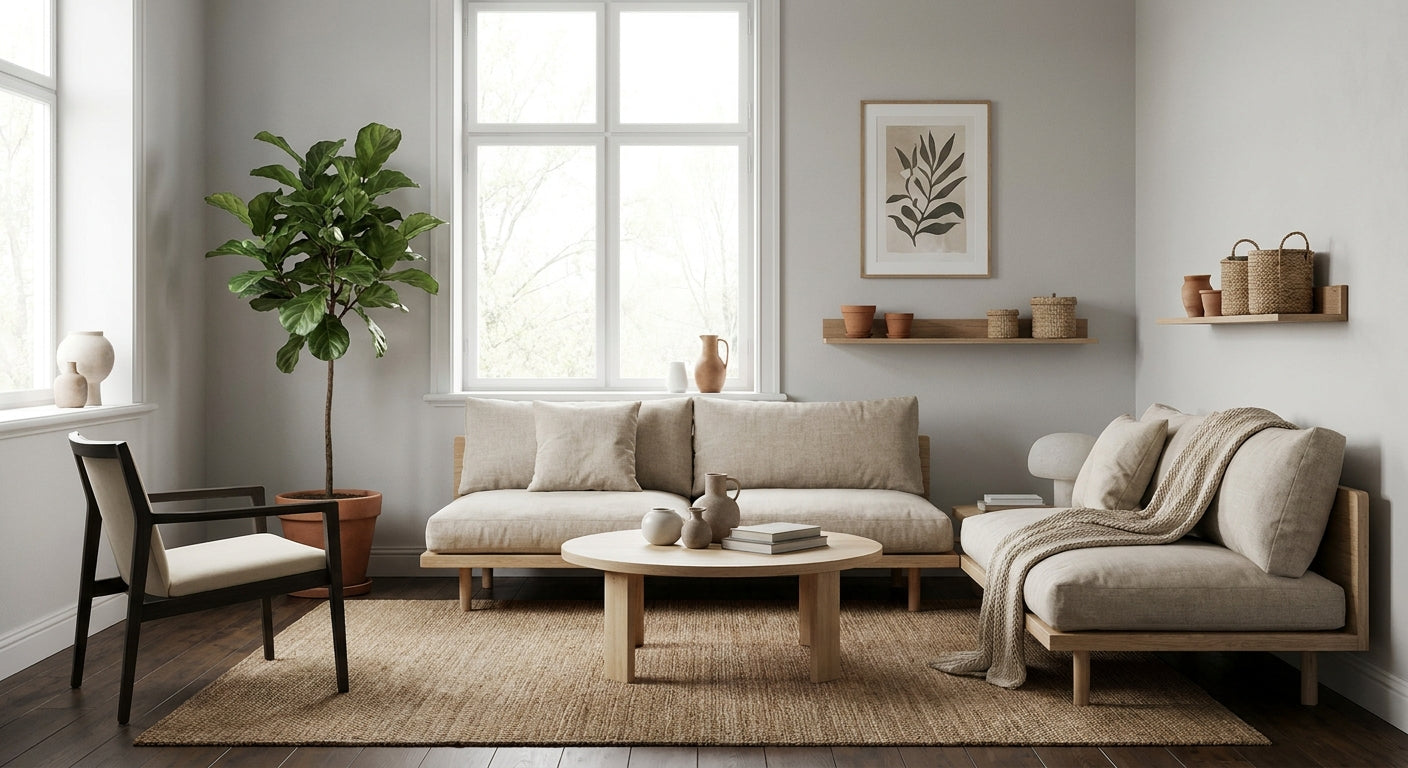
Japandi living rooms blend Japanese restraint with Scandinavian warmth, and you can build the look in the UK for under £2,000 if you pick the right mix of replica and budget pieces rather than chasing full-price designer originals.
- A full Japandi living room furniture UK setup runs £1,200-£2,000 in 2026 if you replica the seating and buy new for textiles.
- Oak veneer over solid oak cuts furniture costs by 30-40% without changing the look from three feet away.
- One investment seating piece plus replica accents beats an all-replica room every time - buy the sofa new, replica the rest.
- Rattan, boucle and linen do more for the Japandi feel than any single piece of furniture - budget for texture, not just shapes.
Why this matters
Japandi isn't a discount version of Scandi-minimalism - it's a specific balance of low, warm-toned wood, muted neutrals and deliberate negative space. Get the balance wrong and a budget room reads as "empty" rather than "calm".
Most UK searches for japandi living room furniture uk assume the look requires a four-figure sofa and matching designer coffee table. It doesn't. The room depends more on tone consistency (oak, not mixed woods) and restraint (fewer, better pieces) than on any single expensive item.
Quell Workspaces' replica furniture for living rooms breakdown covers this exact tension between designer originals and budget-friendly reproductions - the same logic applies whether you're furnishing a mid-century lounge or a Japandi one.
What you'll need
- A room plan with measurements - Japandi rooms fail fast when furniture is oversized for the space
- A budget split across four categories: seating, storage, lighting, textiles
- A single wood tone reference (oak or walnut, not both) to match new and existing pieces against
- 2-3 fabric swatches in linen, boucle or wool for cushions and throws
- A tape measure and a floor plan sketch, even a rough one on paper
- Patience for a staggered buy - Japandi rooms are assembled over weeks, not one shopping trip
The steps
1. Set your budget ceiling and split it by category
Decide the total first, then allocate roughly 40% to seating, 25% to storage, 20% to lighting, 15% to textiles. A £1,500 budget in 2026 splits to about £600 seating, £375 storage, £300 lighting, £225 textiles.
This stops the classic mistake of blowing the whole budget on one sofa and furnishing the rest with mismatched leftovers. Expected outcome: four category budgets you can shop against independently.
Common mistake: spending 70%+ on the sofa alone, then compromising on lighting and storage in ways that undercut the calm, uncluttered look Japandi depends on.
2. Choose a neutral base palette and stick to it
Japandi runs on three to four tones maximum: warm oak, off-white or stone, charcoal or black accents, and one muted earth tone (sage, terracotta, rust). Pick your palette before buying anything.
Quell Workspaces' Scandinavian replica furniture edit is a useful starting reference for tone-matching oak pieces at accessible price points - the same neutral logic carries into Japandi styling.
Common mistake: buying warm oak and cool grey-toned wood in the same room. Two wood undertones side by side reads as clutter, not layering.
3. Buy one investment seating piece, replica the rest
Spend real money on the piece you sit on daily - a well-built sofa or an accent chair - and replica everything else. A boucle-upholstered accent chair replica typically costs £250-£450 in 2026 against £900+ for a designer original.
This single decision protects comfort and durability where it matters (seat frame, cushion fill) while keeping the visual language consistent everywhere else. Expected outcome: one comfortable anchor piece, several lower-cost supporting pieces that still look coherent.
Common mistake: replica-ing the sofa and buying full price on a side table nobody actually uses for more than a coaster.
4. Add natural textures before adding more furniture
Japandi reads as "considered" largely through texture, not object count. A linen throw, a rattan basket, a boucle cushion cover and a jute rug do more visual work than a fourth piece of furniture.
Budget £150-£250 for textiles across cushions, a throw and a rug runner if you're not replacing the main rug. Expected outcome: a room that feels layered without adding footprint.
Common mistake: treating textiles as an afterthought and spending the whole textile budget on one large item, leaving the sofa bare.
5. Layer low-profile storage instead of tall units
Japandi rooms favour low sideboards and open shelving over tall cabinets - low sightlines are part of what makes small UK living rooms feel calmer, not busier. A low oak sideboard in the 120-150cm width range fits most UK terrace and flat living rooms without dominating the wall.
Expected outcome: storage that hides clutter without visually shrinking the ceiling height.
Common mistake: buying a tall bookcase because it was on sale, then realising it breaks the horizontal, grounded feel the rest of the room is built around.
6. Introduce warm, low lighting
Swap the overhead pendant's cool bulb for a warm 2700K equivalent, and add one floor lamp with a paper or linen shade near the seating area. Japandi rooms rarely rely on a single bright overhead source.
Expected outcome: a room that photographs and feels warmer at the same furniture cost, since lighting temperature is a £10-£15 bulb swap, not a furniture purchase.
Common mistake: buying an expensive designer floor lamp and pairing it with a daylight-temperature bulb that undoes the warmth entirely.
7. Finish with negative space - stop before the room feels full
Japandi's defining trait against generic Scandi-minimalism is restraint: visible floor, uncluttered surfaces, one or two decorative objects per surface rather than five. Resist the urge to fill the last 10% of budget with more objects.
Quell Workspaces' buy replica furniture without overpaying guide covers how to spot when a "good deal" is really just unnecessary clutter dressed up as value.
Common mistake: treating an empty corner as a problem to solve rather than a feature of the style.
Troubleshooting
The room feels cold or clinical, not calm. You've likely gone too grey or too white without enough warm wood or earth-tone accent. Add one terracotta or rust cushion and swap any grey-toned wood accessory for oak.
You've overspent on the rug and now can't afford the sofa upgrade. Rugs are the easiest category to under-scope - a 200x290cm jute or wool-blend rug in 2026 runs £120-£220, well under the £400+ designer options. Reallocate before buying seating.
Wood tones clash between old and new furniture. Stick a swatch of your existing wood next to any new piece before buying. If they don't match within one shade, paint or oil the older piece rather than buying a third tone.
The room looks beige and flat in photos. Beige-on-beige is the single most common Japandi styling failure. Add one deliberate contrast - a charcoal-framed mirror, a black metal lamp base - to break the monotony.
You're unsure if a replica piece is well made before buying online. Check seam stitching photos, frame material specs and return policy before ordering - the difference between a good replica and a poor one is almost always in the details listed on the product page, not the price tag alone.
The small living room feels cramped after adding storage. Swap a tall unit for a low sideboard under 45cm high, or wall-mount a floating shelf instead of adding floor-standing storage.
Tools and resources
- A tape measure and painter's tape to mock up furniture footprints on the floor before buying
- A wood-tone swatch card or sample from your chosen supplier
- Quell Workspaces' replica furniture for living rooms breakdown for base-palette reference
- A spreadsheet or notes app to track the four-category budget split as you shop across weeks
What to do next
Once the core seating and storage are in place, focus on the accessory layer - lighting, textiles and one statement decorative object. That's where a Japandi room either finishes convincingly or stalls out half-furnished.
If you're mixing inherited or charity-shop pieces with new replica buys, work through tone-matching before adding anything else - a mismatched wood finish undoes more of the look than a slightly-too-large sofa ever will.
FAQ
How much does it cost to furnish a Japandi living room in the UK in 2026?
A full Japandi living room furniture UK setup typically costs £1,200-£2,000 in 2026 when you replica the seating and buy new for textiles and lighting. Spending more on one investment sofa and less everywhere else keeps the total down without cutting comfort.
Is Japandi the same as Scandinavian minimalism?
No, Japandi adds Japanese restraint and warmer, darker wood tones to Scandinavian minimalism's lighter palette. The overlap is real, but Japandi leans more heavily on negative space and muted earth accents than pure Scandi style.
What wood tone works best for a Japandi living room?
Warm oak is the standard base tone for Japandi rooms, paired with black or charcoal metal accents. Mixing oak with grey-toned wood in the same room breaks the tonal consistency the style depends on.
Can you use replica furniture for a Japandi look?
Yes, replica seating and tables are common in Japandi rooms because the style depends more on tone and proportion than on brand-name provenance. Spend on comfort where you sit daily and replica the rest.
How do you make a small living room look Japandi on a budget?
Use low-profile storage under 45cm high, a single neutral rug and one warm floor lamp rather than adding more furniture pieces. Negative space reads as intentional in Japandi rooms, not empty.
What's the biggest styling mistake in budget Japandi rooms?
Going all-beige without a contrast accent is the most common failure, making the room look flat rather than calm. One charcoal or black accent piece breaks the monotony without breaking the palette rules.
Do you need a designer sofa for a Japandi living room?
No, a well-made replica or budget sofa in a neutral tone works fine as long as the frame and cushion quality hold up to daily use. Reserve real spending for the seat you use most, not the label on it.
One last thing
The cheapest fix in any Japandi living room isn't furniture at all - it's the bulb temperature. Swapping a 4000K daylight bulb for a 2700K warm one costs about £10-£15 and does more to make a budget room feel considered than a £300 accent chair.


