
21 July 2026 · Editorial Team
How to Mix Replica and Vintage Furniture (2026 Guide)
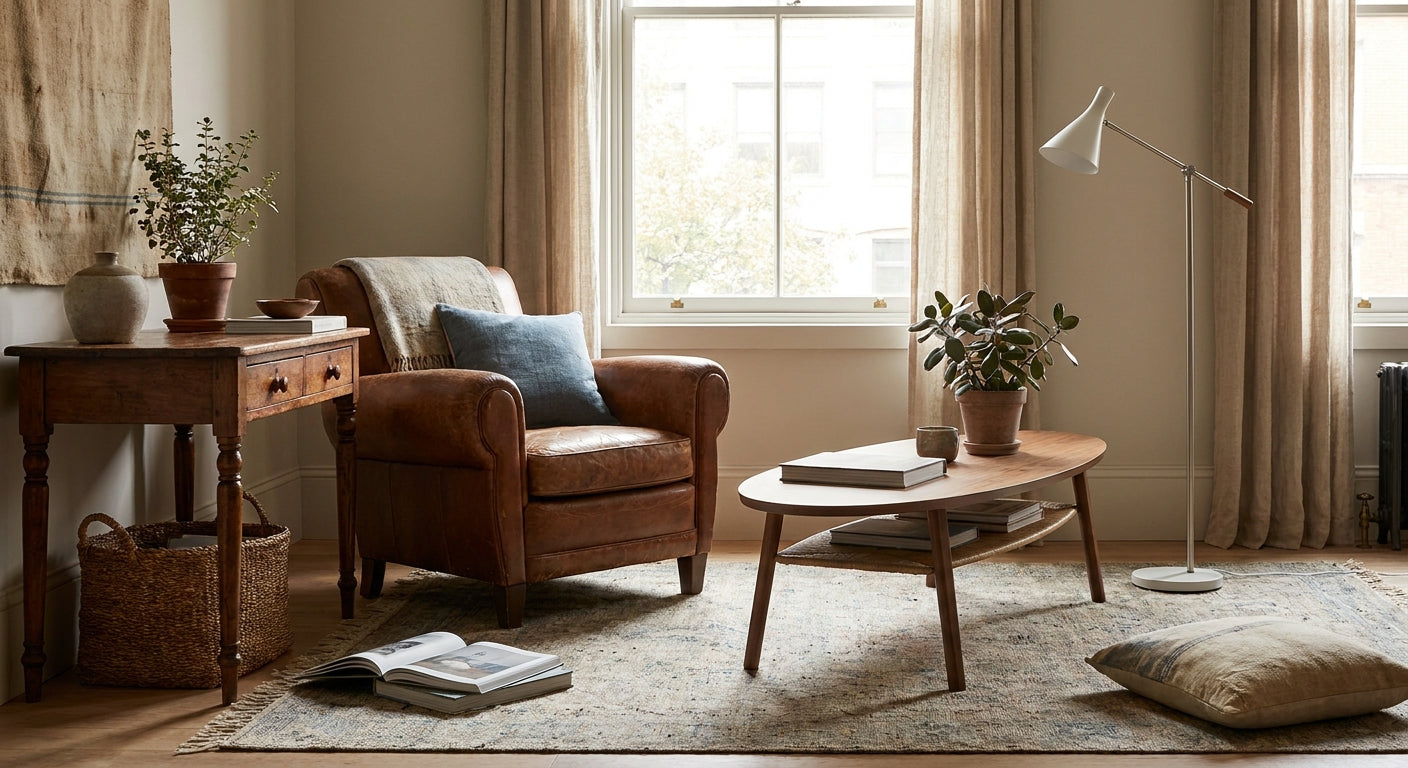
Mixing an Eames DSW replica with a genuine 1960s teak sideboard sounds risky until you see it done right — the trick is matching proportion and finish, not provenance. This guide walks through the process step by step, with the swaps that work and the ones that make a room look like a showroom clearance sale.
- Match wood tones within one shade family before mixing replica and vintage furniture — a warm walnut replica beside a cold-toned oak original reads as mismatched.
- Anchor the room with one genuine vintage piece and build replicas around it, not the other way round.
- A well-made Eames lounge chair replica sits happily next to an original mid-century sideboard bought in 2026 — the finish is the giveaway, not the age.
- Skip pairing high-gloss replica plastics with distressed original leather; the sheen contrast reads as cheap.
Why this matters
Furniture shoppers in 2026 are buying replica and vintage pieces in the same room more than ever, mostly because full vintage sets are getting harder to source and full replica sets can look flat without an original anchor. Get the mix wrong and a living room looks like two separate purchases that never met. Get it right and nobody can tell which piece is 60 years old and which arrived last month.
The skill isn't spotting a fake — it's matching materials, proportion, and wear pattern so the room reads as one considered space. That's a styling problem, not an authentication problem, and it's solvable with a short checklist.
What you'll need
- A tape measure and photos of the room in natural daylight — colour temperature shifts what "matching" wood tones actually means
- One confirmed vintage or original piece to anchor the room (a sideboard, a chair, a lamp)
- A replica piece under consideration — check how to spot a quality replica chair before you buy before ordering anything
- Fabric or wood swatches from both pieces, laid side by side, not viewed on separate screens
- 30 minutes with the furniture actually in the room, not just measured on paper
The steps
1. Pick your anchor piece first
Start with whichever item is genuinely vintage or the one piece you're not willing to compromise on. Everything else in the room gets chosen to sit beside it, not the reverse. If the anchor is a 1970s rosewood sideboard, the replica pieces you add need to sit within the same warm-brown family, not a cooler grey-oak tone.
Common mistake: choosing three replica pieces first, then hunting for a vintage piece that matches all three. That search rarely ends well because vintage stock is finite and you'll compromise on the anchor instead of the replicas.
2. Match tone before you match style
Wood and fabric tone matters more than furniture era. A walnut-toned replica dining chair sits fine beside a genuine oak table if both land in the same mid-brown range; a black-stained replica beside a honey-oak original will fight for attention every time.
Hold swatches together in the room at the time of day you'll actually use it — north-facing rooms shift wood tones cooler, and a match under a shop's fluorescent lighting can look wrong at home. Common mistake: matching swatches under phone-camera lighting, which shifts colour temperature and hides the mismatch until the furniture's delivered.
3. Let one material repeat, not every material
Pick one material — leather, velvet, oiled oak, chrome — and let it show up in at least two pieces across the room. That repetition is what makes a mixed room look curated instead of accidental. Everything else can vary.
A genuine vintage leather armchair paired with a replica sofa in the same leather tone reads as intentional. Pair that same chair with a replica in bouclé and a coffee table in glass, and the room has three competing textures with nothing tying them together.
4. Scale the pieces to the room, not to each other
Vintage furniture from the 1950s to 1970s often runs smaller than modern replicas built to today's average body size. A genuine vintage armchair at 68cm wide next to a replica built at 80cm can throw off the whole seating arrangement even if the finishes match perfectly.
Measure the room's clear floor space before ordering, not just the furniture. Round tables like the Aarhus round dining table at 119cm work in rooms where a rectangular original wouldn't clear a doorway — check the room's pinch points, not just wall length.
Common mistake: assuming a replica built to modern dimensions will slot into a vintage-scaled room without adjustment. It usually won't.
5. Distress deliberately, don't distress accidentally
Genuine vintage furniture carries real wear — scuffed legs, a faded arm, a patina that took decades to build. A brand-new replica next to it will look conspicuously new unless you're deliberate about where the contrast sits. Some owners let the replica stay crisp and let the vintage piece do the wear-and-age storytelling; others choose a replica finish that's already slightly matte to soften the gap.
What doesn't work: buying a "distressed" replica finish to try to match genuine wear. Manufactured distressing rarely matches the wear pattern of forty years of actual use, and the mismatch is more obvious than a crisp new piece would have been.
6. Test the pairing before committing to the room
Before buying a second or third piece, get both items in the same room together, even temporarily. Photos and swatches get you 80% of the way; actual daylight in the actual space closes the gap. If a supplier offers a swatch or sample delivery, use it.
Expected outcome: within 30 minutes in the room you'll know if the pairing works. If you're still debating after that, the tones probably aren't close enough and it's worth revisiting step 2.
Troubleshooting
The replica looks too new next to the vintage piece. Let the replica live in the room a few weeks before final judgement — new upholstery and finishes soften slightly with use and light exposure, closing some of the gap naturally.
Wood tones looked matched in the shop but clash at home. Shop lighting is almost always warmer or cooler than home lighting. Retest swatches at the window in the actual room before finalising any order.
The room feels like a furniture showroom, not a home. You've likely matched too many materials at once. Drop back to one repeating material (per step 3) and let the rest of the room breathe with variation.
Scale feels off even though dimensions matched on paper. Vintage pieces were often built for smaller rooms and smaller average body sizes. Re-measure clear floor space, not just wall-to-wall length, and check chair or sofa depth against actual seated comfort, not the spec sheet alone.
One piece dominates the room and the other disappears. This usually means the anchor piece was chosen for provenance rather than presence. Reassess which piece should visually lead — it doesn't have to be the older one.
Tools and resources
- A daylight-hour room walkthrough with swatches in hand, done before any order is placed
- Theo three-seater sofa in Seaglass velvet as a reference point for matching a replica sofa's texture against a vintage leather or wood anchor
- A tape measure and a note of the room's actual clear floor space, not just wall dimensions
- Fabric swatch cards from any supplier before committing to an order — most will send them
What to do next
Once the pairing works in one room, the same logic scales to a full living space. Start with the anchor piece, repeat one material, and measure before you buy — that sequence solves 90% of mismatched-room complaints.
FAQ
Can you mix replica and vintage furniture in the same room?
Yes — matching wood tone and repeating one material across both pieces is what makes the mix look intentional rather than accidental. The furniture's age matters far less than whether the finishes sit in the same tonal family.
What's the best way to start mixing replica and vintage pieces?
Pick one confirmed vintage or original piece as the room's anchor first, then choose replica pieces to sit beside it. Choosing replicas first and hunting for a matching vintage piece afterwards is harder and less reliable.
Does a replica chair look wrong next to a genuine vintage sideboard?
Not if the wood tones and material finish are matched within the same shade family. A crisp new replica beside a heavily worn original can look mismatched, but that's a wear-pattern issue, not a replica-versus-original issue.
How do you match wood tones between replica and vintage furniture?
Hold swatches from both pieces together in the actual room at the time of day you'll use it, since shop lighting and phone cameras both shift colour temperature. A match under fluorescent lighting can look wrong in daylight.
Is it cheaper to mix replica and vintage furniture than buying a full vintage set?
Generally yes, because full matching vintage sets are increasingly hard to source in 2026 and command a premium when complete. A single anchor piece plus replicas fills a room without needing a full original set.
Should the vintage piece or the replica piece be the room's focal point?
Either can lead, depending on which piece has the strongest presence in the room, not which one is older. A striking replica sofa can anchor a room just as well as a genuine vintage sideboard.
What furniture styles mix best with vintage pieces?
Mid-century and Scandinavian-influenced replica pieces tend to pair most naturally with genuine vintage originals from the same period, since proportions and material choices were already similar when the originals were made.
Can distressed replica finishes match real vintage wear?
Rarely convincingly. Manufactured distressing follows a pattern that real decades of use don't, and the mismatch is often more noticeable than pairing a crisp new replica with a genuinely worn original.
One last thing
The pairing most people get wrong isn't wood tone — it's scale. A vintage armchair built in the 1960s for an average smaller frame can sit awkwardly next to a modern replica built to 2026 body-size standards, even when every finish matches. Measure seat depth and arm height before ordering, not just the swatch.


