
27 August 2026 · Editorial Team
Togo Footstool Dupe UK: Best Matching Pouffes 2026
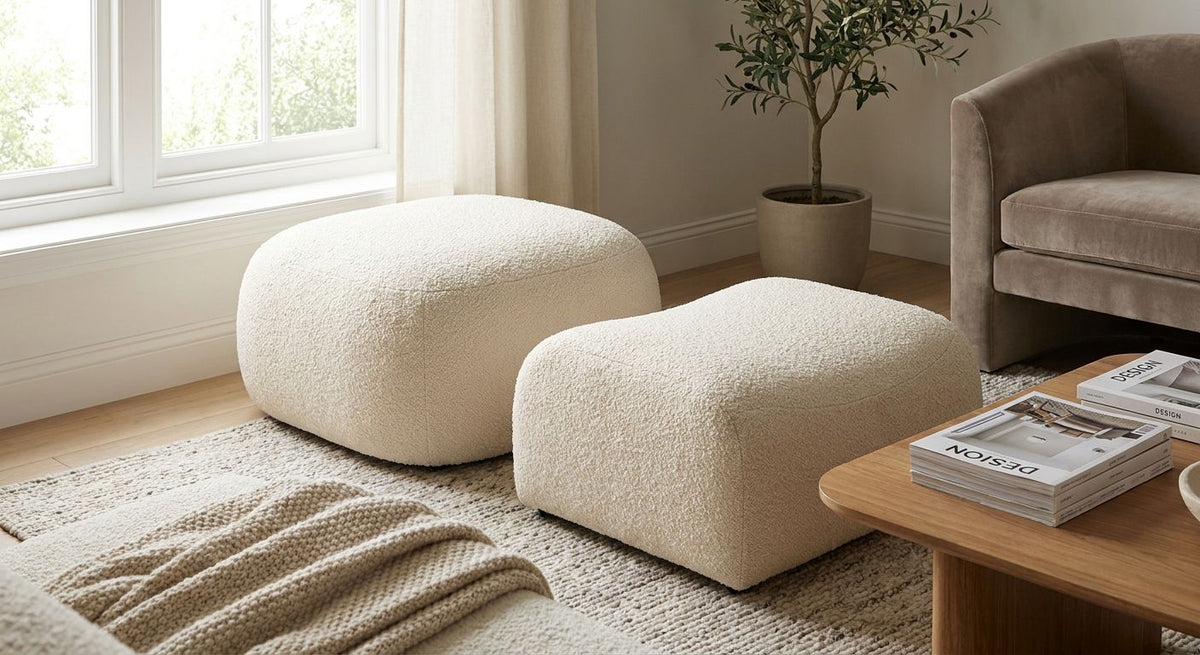
A Togo footstool dupe only finishes a Togo-style sofa setup when the ridges, foam and fabric actually match the seat you already own — otherwise it just sits nearby looking like a separate purchase. This guide breaks down what makes a matching pouffe work in a UK living room and which styles hold their shape.
- A togo footstool dupe only reads as matching when channel stitching and fill density line up with your existing Togo sofa dupe.
- Foam-core ottomans hold the ridged Togo profile for years; bean-fill pouffes flatten within months.
- Faux-leather barrel pouffes clash with bouclé Togo dupes — match fabric family first, colour second.
- The original Togo range launched with Ligne Roset in 1973, and the low, gathered silhouette is what every dupe is chasing.
Why this matters
A Togo-style sofa is built from gathered foam panels stitched into visible channels, and a footstool that ignores that detail sits stiffly beside it. Quell Workspace covers replica and dupe furniture buying decisions regularly, and the same rule that applies to replica ottomans and footstools applies here: fill type and stitching pattern matter more than colour matching.
Most buyers already own a Togo sofa dupe and are adding a footstool afterwards, which means the pouffe has to match a fabric and fill decision that was made months or years earlier. Get the fill wrong and the footstool sags below sofa-arm height within a year. Get the fabric wrong and the mismatch is obvious from across the room, even in matching colours.
Who a togo footstool dupe is for
This guide is for UK shoppers who already own — or are about to buy — a Togo-style sofa dupe and want a footstool or pouffe that sits alongside it without looking bolted on. It suits small flats where the footstool doubles as extra seating, and it suits anyone who has been burned before by a pouffe that looked identical in photos and completely different once it arrived.
It's not aimed at buyers starting from a blank room with no existing Togo piece — for that, a full sofa-and-footstool set solves the matching problem before it starts.
What to look for in a togo footstool dupe
Foam density and fill type
The original Togo silhouette holds its gathered, ridged shape because the panels are built from high-density foam blocks, not loose fill. A togo footstool dupe filled with foam blocks keeps its channel definition after repeated sitting; one filled with polystyrene beads or shredded foam softens and flattens noticeably faster. Check the listing for "foam block" or "foam core" rather than "bean fill" or "shredded fill" before anything else.
Stitching and channel pattern
The visible quilted lines running across a Togo piece aren't decorative — they're what separates a genuine dupe from a generic round pouffe. A footstool with continuous, evenly spaced channels running in the same direction as your sofa's stitching reads as a matched set. Uneven or decorative stitching that doesn't continue the sofa's pattern breaks the illusion immediately.
Fabric family, not just colour
Bouclé, corduroy, velvet and faux leather all catch light differently, so a footstool in the "right" colour but the wrong fabric family will still look mismatched sitting next to a bouclé Togo sofa dupe. Matching fabric family first and colour second gets a far closer result than chasing an exact colour code across two different weaves.
Proportions relative to your sofa
A footstool that sits noticeably taller or shorter than your sofa's seat height looks like an afterthought rather than a set. Check the stool's seated height against your existing sofa dupe's arm and seat measurements before ordering, since Togo-style ranges vary in scale between retailers.
Base and underside construction
A solid base plate under the foam keeps the footstool's shape consistent over time, while a flexible or unsupported base allows the sides to splay outward with regular use. This detail rarely appears in product photos, so it's worth checking the listing description or asking the retailer directly before buying.
Matching pouffe styles worth shortlisting
Quilted channel ottoman — the closest match. Built from a foam-block core with continuous channel stitching running around the sides, this style is designed specifically to sit next to gathered-panel sofas. It holds its ridged profile long after cheaper pouffes have flattened. Buy this style if you already own a bouclé or corduroy Togo sofa dupe and want a genuine set.
Bean-fill floor pouffe — the lightweight option. Filled with polystyrene beads rather than foam blocks, this style is cheaper and easier to move around a small flat, but it loses its shape within months of daily use and won't hold the Togo's channel definition. Consider it only as a temporary footstool while you save for a foam-core match.
Bouclé cube stool — the textural match. A square-edged, foam-filled stool in bouclé fabric picks up the texture of a Togo dupe without copying the exact ridged shape, which works well when you want a footstool that complements rather than replicates the sofa. Buy this if you're mixing pieces rather than building an identical set — see the fuller breakdown in the guide on choosing a Togo dupe that holds its shape.
Faux-leather barrel pouffe — the wildcard. This style holds its rounded shape well thanks to a firm foam core, but faux leather sits awkwardly next to fabric Togo dupes because the sheen and drape don't match a woven or bouclé surface. Skip it unless your existing sofa dupe is also faux leather.
“If the channel stitching doesn't run continuously around the base, it isn't a Togo silhouette, no matter what the listing calls it.”
If you're furnishing a professional space rather than a living room — a meeting booth or a quiet corner in an office — a low, cushioned stool like the Joy Stool from Quell Workspace gives a similarly low, rounded profile built for workspace use rather than home styling. It's a different category of seating from a Togo footstool dupe, but the two share the same low-profile, informal silhouette that works in casual meeting areas.
What to avoid
- Pouffes marketed as "Togo style" with no visible channel stitching. If the listing photo shows a plain round or square pouffe with no ridges, it's a generic ottoman wearing the name for search traffic.
- Oversized floor cushions sold as footstools. These lack the internal foam structure that keeps a genuine dupe upright and shaped, and they compress flat within weeks.
- Mismatched foam density between sofa and footstool. Even when fabric and colour match perfectly, a softer or firmer fill than your sofa's makes the set look like two separate purchases rather than one.
Verdict comparison
| Style | Fill | Fabric match | Shape retention | Verdict |
|---|---|---|---|---|
| Quilted channel ottoman | Foam block core | Bouclé, corduroy, wool | Holds ridges for years | Buy |
| Bean-fill floor pouffe | Polystyrene beads | Cotton, linen blends | Flattens within months | Consider |
| Bouclé cube stool | Foam block | Bouclé, textured weaves | Firm edges hold well | Buy |
| Faux-leather barrel pouffe | Foam core | Faux leather, PU | Holds shape, creases at folds | Skip (fabric sofas) |
FAQ
What is a togo footstool dupe?
A togo footstool dupe is a footstool or pouffe built to echo the gathered, channel-stitched panels of the original Ligne Roset Togo range without the designer price tag. The closest matches use a foam-block core and continuous quilted stitching around the sides.
Is a Togo footstool dupe the same as a Togo pouffe?
They're generally the same product described two ways. Both terms refer to a low, rounded seat designed to sit alongside a Togo-style sofa dupe rather than as standalone seating.
How do I match a footstool to an existing Togo sofa dupe?
Match fabric family first, then fill type, then colour. A bouclé footstool with foam-block fill next to a bouclé sofa reads as a set even if the exact shade differs slightly.
What fill works best for a Togo-style pouffe?
High-density foam blocks hold the ridged Togo profile far longer than bean or shredded fill, which flattens within months of regular use.
Can I use a leather Togo dupe footstool with a fabric sofa?
It's possible but the sheen and drape of faux leather sit awkwardly next to woven or bouclé fabric. Matching fabric families gives a closer result than mixing leather and fabric pieces.
How tall should a Togo footstool dupe be compared to the sofa?
It should sit close to your sofa's seat height rather than noticeably above or below it. Check the seated height listed for both pieces before ordering, since scale varies between retailers.
Do Togo footstool dupes come in the same fabric as the original Ligne Roset range?
Many dupes copy the bouclé and corduroy options associated with the original 1973 Togo range, though exact fabric weights and weaves vary by retailer.
What ruins the look of a Togo dupe pouffe fastest?
Mismatched foam density is the most common issue. A softer or firmer fill than the sofa's own foam makes the set look like two unrelated purchases even when colours match.
One last thing
The original Togo range was designed by Michel Ducaroy for Ligne Roset in 1973, and the entire dupe market — footstools included — is chasing that one gathered, ridge-stitched silhouette. The single detail that separates a convincing togo footstool dupe from a generic pouffe is whether the channel stitching runs continuously around the base; check that before checking the price.


