
27 August 2026 · Editorial Team
Best Noguchi Coffee Table Dupe with Storage (2026)
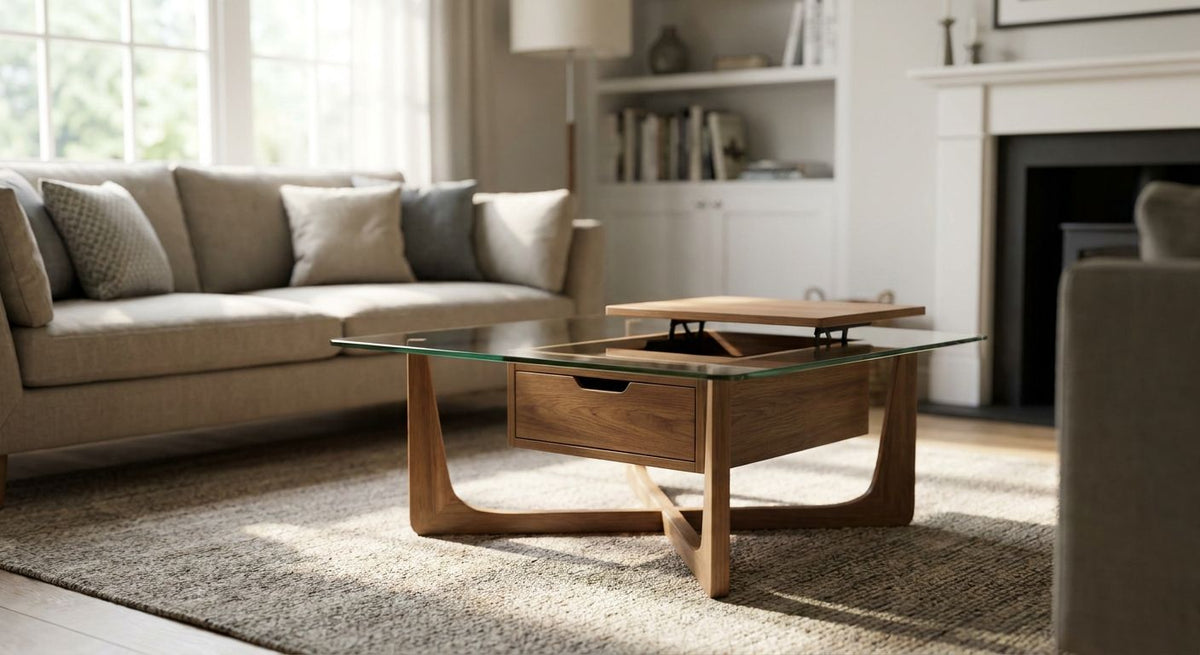
Isamu Noguchi's original coffee table has no storage at all. The base is a sculptural, interlocking pair of wood forms holding up a freeform glass top, and it was never meant to hide anything. If you want that silhouette plus somewhere to put remotes, chargers or coasters, you need a noguchi coffee table dupe with storage — and the five storage styles below are ranked on how well they keep the original shape while adding real function in 2026.
- A genuine noguchi coffee table dupe with storage adds a drawer, shelf or lift-top the 1948 original never had.
- The two-tier stacking base is the safest storage upgrade for small UK living rooms in 2026 — Buy.
- Lift-top compartments break the freeform curve visually, so match the finish to the base before buying — Consider.
- Nesting pairs with a shared shelf cost less than a single large dupe but sacrifice the one-piece silhouette.
Why this matters
The original Noguchi Coffee Table, designed in 1948 and still sold by licensed manufacturers, measures roughly 91cm long, 76cm wide and 41cm tall. That fixed footprint has zero built-in storage — the base is two solid wood pieces acting purely as sculpture, not cabinetry.
Dupes exist precisely because buyers want the look without the price, and a growing share of them now build in storage the licensed version never offered. That's a genuine upgrade for small UK flats where a coffee table has to double as a side cabinet. Some of these builds do it well, keeping the curve of the freeform top intact. Others bolt on a box that fights the shape. The Noguchi coffee table replica options worth shortlisting in 2026 are the ones that solve storage without losing what made the original design work in the first place.
How these picks are ranked
Each storage style below is judged on three things: how much the added storage changes the freeform silhouette, how the base handles daily use around a sofa, and how easy the configuration is to find from UK sellers in 2026. None of these are lab tests — they're practical comparisons based on how the storage is built into the base, not marketing copy from any single retailer. A style that hides a drawer inside the existing base footprint ranks above one that bolts an extra box onto the side, because the second changes the table's proportions more than the storage is worth.
The ranked list
The drawer-base dupe — the practical pick
A shallow drawer, usually around 5cm deep, sits inside the existing base rather than adding bulk to the footprint. It holds coasters, remotes and charging cables without anyone seeing them from the sofa.
This is the closest match to the original 1948 proportions, since the drawer sits flush inside the base rather than changing its outline. For anyone who wants the freeform look plus somewhere to stash clutter without a visual change, this is the Noguchi-style side and accent tables worth comparing side by side. Buy if you want storage that disappears into the design.
The two-tier stacking base — the space saver
Instead of one solid base plate, this version stacks two plates with a gap of roughly 15cm between them, creating an open shelf under the glass top. It's the easiest storage style to spot because the gap is visible from every angle in the room.
Open shelving suits magazines, books or a stack of coasters better than anything that needs to stay hidden. It also tends to be the lightest of the five styles, which matters in a rented flat where you'll move furniture more than once. Check styling tips for a Noguchi coffee table before committing to an open-shelf base, since an untidy shelf undercuts the whole point of the sculptural design. Buy for small UK living rooms; Skip if you want everything fully hidden.
The lift-top compartment — the media-room pick
One half of the top hinges up on a concealed seam to reveal a closed cavity underneath, usually enough for a couple of remote controls and a games controller. The seam is the trade-off — it interrupts the continuous curve that defines the original freeform shape.
This style works best in a media room where hiding controllers matters more than preserving the exact silhouette. Buyers who care about the unbroken glass curve tend to notice the seam within the first week of ownership. Consider this option only if the finish on both halves matches closely enough that the seam is hard to spot from a seated position.
The solid wood cubby base — the family-room pick
This version replaces the original's two interlocking wood legs with a closed box base finished in oak or walnut veneer, with one open cubby built into the side. It trades the sculptural leg shape for a sturdier-looking block, which changes the visual character of the table more than any other style here.
Families who need somewhere to stash toys or blankets without them scattered across the floor get real use out of the cubby. The finish also tends to hide scuffs better than the original's smooth wood legs. Consider for households with young children; the trade-off is a heavier, boxier look than the 1948 design.
The nesting pair with shelf — the budget option
Two smaller nesting tables sit under one shared open shelf, splitting the freeform top into two pieces rather than one continuous curve. It's usually the cheapest way to get storage into a Noguchi-style setup because the pieces are smaller and use less glass and wood per unit.
The upside is flexibility — pull the smaller table out for extra surface space when guests are over. The downside is obvious: you lose the single, unbroken silhouette that makes the original design recognisable. Buy if budget matters more than an exact match to the 1948 shape; Skip if the one-piece look is the whole reason you wanted a Noguchi dupe.
Comparison table
| Style | Storage type | Best for | Verdict |
|---|---|---|---|
| Drawer-base dupe | Shallow internal drawer | Everyday clutter | Buy |
| Two-tier stacking base | Open shelf | Small flats | Buy |
| Lift-top compartment | Hinged closed cavity | Media rooms | Consider |
| Solid wood cubby base | Closed cubby | Family rooms | Consider |
| Nesting pair with shelf | Shared open shelf | Tight budgets | Buy |
Where to buy
- Ask the seller whether the top is one continuous curved piece or two pieces spliced together — the answer changes how close the dupe sits to the original 1948 silhouette.
- Get the actual finish name (oak veneer, walnut veneer, lacquered MDF) rather than relying on a photo, since colour swatches vary between screens.
- Compare more than one retailer before ordering — you can browse Quell Workspaces' wider furniture range from the Quell Workspaces homepage as a starting point alongside dedicated replica sellers.
FAQ
What is a Noguchi coffee table dupe with storage?
It's a reproduction of Isamu Noguchi's 1948 freeform coffee table that adds a drawer, shelf or lift-top compartment the original design never included. The added storage sits inside or under the base rather than changing the glass top.
Is a Noguchi coffee table dupe with storage worth it?
It's worth it if you need somewhere to put remotes, coasters or chargers without cluttering the surface. The trade-off is that some storage styles, like lift-tops, interrupt the smooth curve that makes the original design recognisable.
What's the best noguchi coffee table dupe with storage in 2026?
The drawer-base dupe is the best match for the original silhouette because the drawer sits inside the existing base rather than adding bulk. The two-tier stacking base is the better pick for small rooms that need open shelving instead.
How much storage does a Noguchi dupe with a shelf actually hold?
A two-tier stacking base typically leaves a gap of around 15cm between the plates, enough for a stack of magazines or a couple of coasters. It's open storage, not a closed compartment, so it suits display more than concealment.
Does adding storage change the look of a Noguchi coffee table dupe?
Yes — any storage feature changes the proportions of the original 1948 design to some degree. Drawer-base and two-tier styles change it the least; solid cubby bases and nesting pairs change it the most.
What's the difference between a lift-top and a drawer-base Noguchi dupe?
A lift-top hinges open to reveal a closed cavity but leaves a visible seam across the top. A drawer-base keeps the top uninterrupted and hides the storage inside the base instead.
How do I style a Noguchi coffee table dupe with storage?
Keep the top mostly clear so the freeform shape reads clearly, and use the built-in storage for the items you'd otherwise pile on the surface. A cluttered open shelf undercuts the sculptural point of the design.
One last thing
The original 1948 Noguchi Coffee Table has no storage whatsoever — Isamu Noguchi built the base as two interlocking wood sculptures, not cabinetry. Every storage feature on every dupe on this list, from the shallow drawer to the lift-top seam, is an addition made by reproduction makers, not something you'll ever find on a licensed reissue. If the unbroken 1948 silhouette matters more to you than storage, the nesting pair and cubby base are the two styles to skip.


