
25 August 2026 · Editorial Team
Replica Furniture for Libraries UK: 2026 Buying Guide
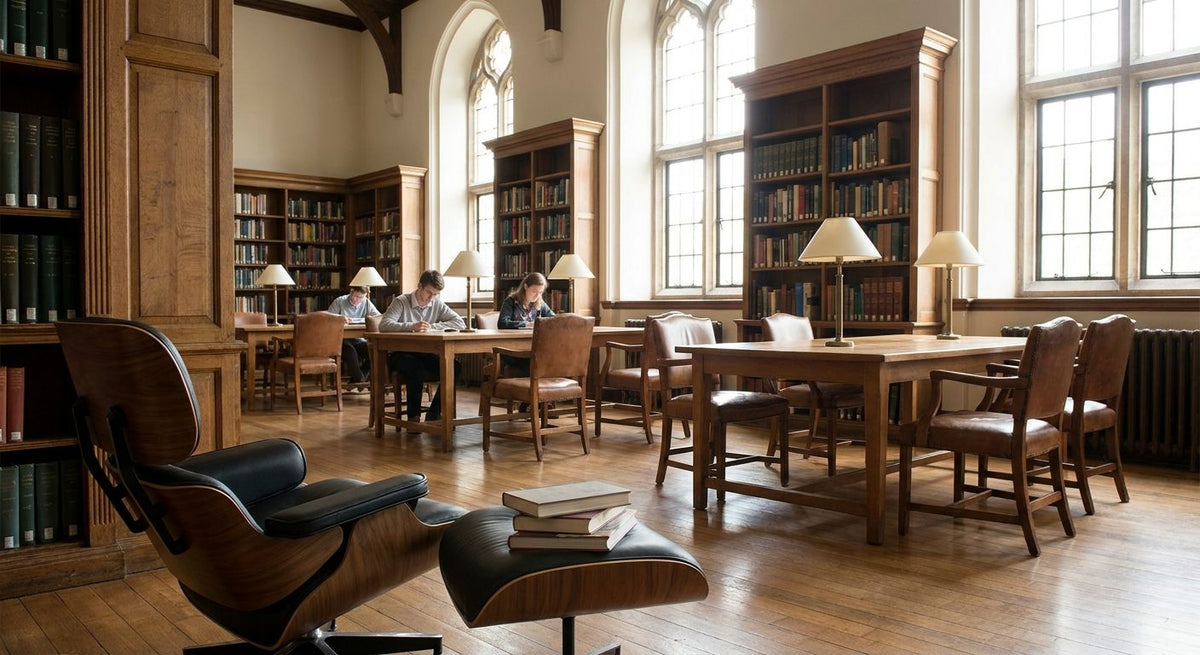
Fitting out a library reading room or study zone with replica furniture means balancing look, comfort and daily wear in a way that home buying guides rarely cover. This guide breaks down what public libraries, university estates teams and school librarians should check before ordering, with concrete picks and a straight verdict on each.
- Replica furniture for libraries UK works best when pieces trade delicate detailing for commercial-grade covers and simple, repairable frames.
- The Bugsy Lounge Chair anchors quiet reading corners and carries a low-slung profile suited to long dwell times.
- The Billy Office Chair fits staff desks and study carrels where posture support matters more than styling.
- Skip home-only replica pieces for shared library seating — public footfall wears out thin foam and delicate fabric fast.
Why this matters
A library reading room sees a different pattern of use than a living room or even a private office. Chairs get moved between tables for group work, sat in for hours during exam season, and left exposed to daylight and spills near cafe corners.
That means replica chairs picked for a home library don't automatically translate to a public building. Frame strength, cover material and how easily a piece stacks or reconfigures all matter more once dozens of readers use the same seat across a week rather than one household.
Quell Workspaces' furniture range gets asked about often for exactly this reason — buyers want the aesthetic of designer seating without the fragility that comes with it in a shared space.
Who this is for
This guide is for facilities and procurement staff at public library services, university library estates teams refreshing reading rooms ahead of term, and school librarians rebuilding a reading corner on a fixed budget. If you're furnishing a space that needs to look considered on day one and still hold up after a full academic year of use, the criteria below apply directly.
What to look for in replica furniture for libraries
Commercial-grade upholstery
Home-spec replica upholstery is chosen for looks first. Library seating needs covers that resist daily contact, repeated cleaning and the odd spilled coffee without visibly wearing within months. Ask what cover options are available before you order the design you like — the finish matters as much as the silhouette.
Frame and joint durability
A chair that gets dragged between tables several times a day needs a frame built for that, not one designed to sit still in a corner. Look for simple, solid joinery over intricate detailing that's harder to repair if a library caretaker needs to tighten or replace a part later.
Quiet materials in shared reading rooms
Upholstered seating and soft stool tops absorb some ambient noise in an open reading room, which matters when quiet study and casual conversation happen a few metres apart. Chairs with hard shells and no fabric or felt contact add to reflected noise instead of dampening it.
Stacking or flexible layouts
Reading rooms double as event spaces, exam halls and group study zones through the year. Stools and lighter chairs that reposition easily beat fixed, heavy lounge pieces if your room needs to flip from quiet study to a workshop layout within the same day.
Aesthetic consistency across zones
Mixing wood tones and finishes across a reading room, a staff desk area and a children's corner reads as unplanned once all three sit in view of each other. Pick a limited palette of finishes across your order rather than one striking piece per zone.
Budget and lead time clarity
Institutional buying cycles run on fixed budgets and fixed installation windows, not impulse purchases. Quell Workspaces quotes lead times from four weeks across its catalogue with delivery included nationwide, which is worth building into any refurbishment timeline before you commit to a launch date.
Top picks for library furniture
The Bugsy Lounge Chair — the reading-room anchor. Its low-slung lounge profile suits long, seated reading sessions in a quiet corner rather than a shared desk setup. Verdict: Buy for dedicated reading nooks and staff break areas.
The Billy Office Chair — the staff-desk workhorse. Built with an ergonomic profile for desk-based work, it's the better fit for librarian workstations and study carrels than a lounge piece. Verdict: Buy for any desk where someone sits for a full shift.
The Tulip Stool — the flexible overflow seat. A lightweight stool profile that's easy to bring out for busy exam periods and put away when the room reverts to quiet study. Verdict: Consider if your reading room needs to flex between layouts through the week.
The Joy Stool is worth a look too as a colour accent piece for casual reading corners, though it suits a supporting role over a primary seating order. Verdict: Consider for smaller, informal seating pockets rather than a full room fit-out.
What to avoid
- Delicate replica pieces built for domestic display, not daily contact. A chair chosen for a showroom photo often lacks the cover weight or joint reinforcement a shared library seat needs.
- Fixed, heavy lounge furniture in rooms that need to reconfigure. If your reading room doubles as an event or exam space, a piece that can't be moved single-handedly becomes dead weight during a layout change.
- Mismatched finishes bought piece by piece. Ordering one chair per department without checking wood tone or upholstery colour against the rest of the room creates a patchwork look that's expensive to fix later.
Verdict comparison
| Pick | Best for | Footprint | Verdict |
|---|---|---|---|
| Bugsy Lounge Chair | Quiet reading corners | Low, stationary | Buy |
| Billy Office Chair | Staff desks and carrels | Compact, desk-based | Buy |
| Tulip Stool | Overflow and group work | Light, movable | Consider |
| Joy Stool | Informal accent seating | Light, movable | Consider |
FAQ
What's the best replica furniture for a library reading room?
A low-slung lounge chair like the Bugsy Lounge Chair suits dedicated quiet reading corners, while an ergonomic piece such as the Billy Office Chair works better at desks and study carrels. The right pick depends on whether the seat supports long reading sessions or focused desk work.
Is replica furniture durable enough for public library use?
It depends entirely on the cover material and frame build rather than the design itself. Commercial-grade upholstery and solid joinery hold up to daily public contact far better than pieces specified for home use.
How long does replica library furniture take to arrive?
Quell Workspaces quotes lead times from four weeks across its range, with nationwide delivery included. Build that window into any refurbishment schedule tied to a term start or event date.
Can replica furniture be mixed with a library's existing stock?
Yes, as long as wood tones and upholstery colours are kept within a limited palette across the room. Mixing too many finishes in one line of sight reads as unplanned even when each piece is well made.
What's the difference between furniture for staff areas and public reading rooms?
Staff desks need ergonomic support for full shifts, which favours a chair like the Billy Office Chair. Public reading rooms favour comfort over long sitting periods and flexible seating that can move between layouts.
Should university libraries choose different furniture to public libraries?
Not necessarily by category, but by volume and flex — university reading rooms often need more stacking or movable stools to handle exam-period surges, while smaller public branches can prioritise fixed lounge seating.
What upholstery works best for high-traffic library seating?
Commercial-grade, cleanable covers designed for repeated contact and cleaning outperform decorative home fabrics in a shared reading room. Ask about cover options before ordering rather than assuming the display fabric is the only choice.
Does stool seating work in a library reading room?
Stools like the Tulip Stool or Joy Stool work well as flexible overflow seating for busy periods, but they're better as a supporting layer than the primary seating for long reading sessions.
One last thing
The detail procurement teams miss most often isn't the chair itself — it's matching leg finishes and floor contact points across zones. A reading room refurbished in phases over a year looks unplanned fast if the wood tone on a new stool doesn't match the chairs bought eighteen months earlier, so lock in a finish reference before the first order goes in.


