
27 August 2026 · Editorial Team
How to Clean a Togo Sofa Dupe: Fabric Care Guide 2026
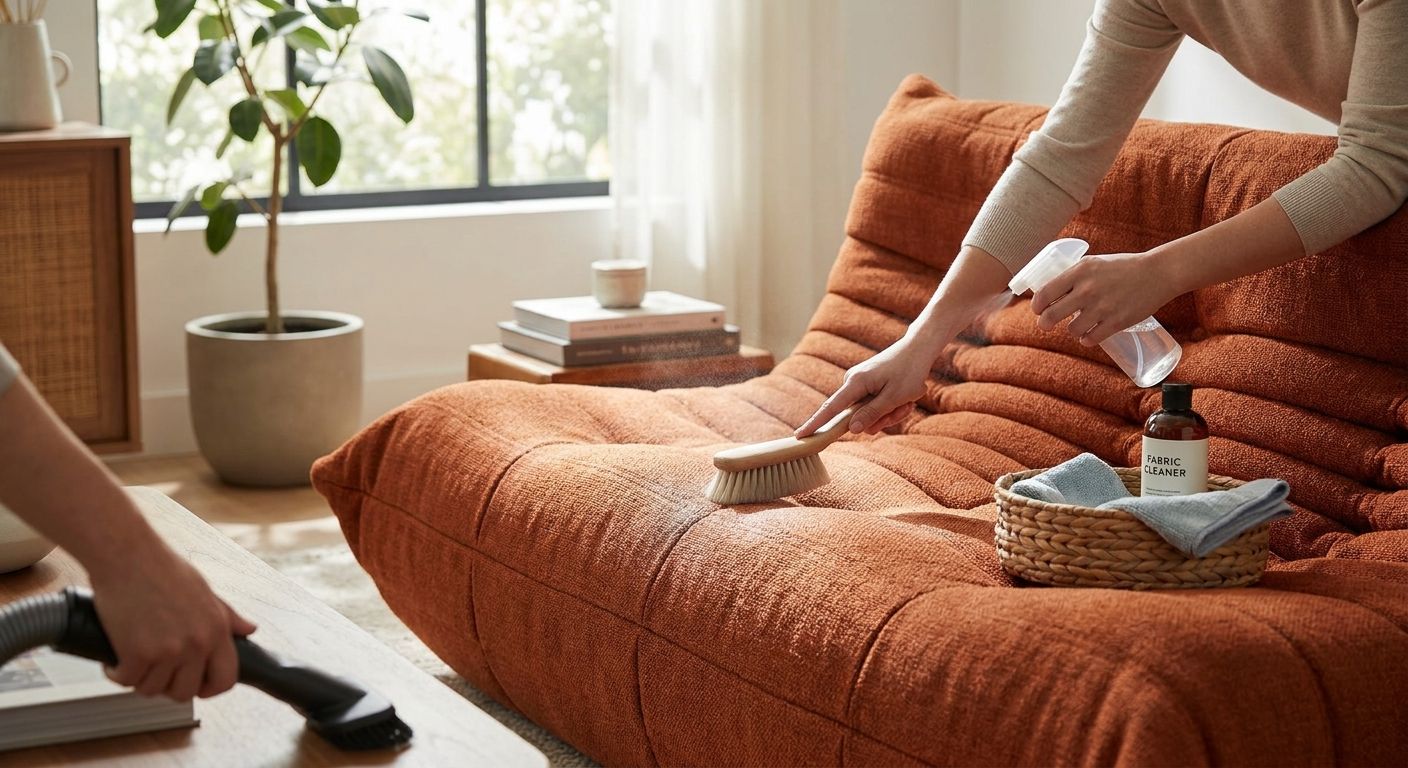
A Togo sofa dupe holds up well when you match the cleaning method to the actual fabric on the cushions, not to a generic "upholstery cleaner" label. This guide runs through the tools, the steps, and the fixes for the most common fabric problems on a Togo-style dupe in 2026.
- Knowing how to clean a Togo sofa dupe starts with matching cleaner to fabric — bouclé, velvet, and linen-blend each need a different approach.
- Vacuum weekly and spot-test any cleaner on a hidden panel before it touches the main cushions.
- Treat spills within minutes: dried marks on a Togo chair dupe are far harder to lift once set.
- Bicarbonate of soda lifts odour without wetting the fabric — leave it on for at least 20 minutes.
- A ring mark almost always means too much water, not too little cleaner.
Why this matters
A Togo-style dupe is built from foam-filled cushions wrapped in loose fabric covers, and that construction is exactly why cleaning it wrong causes visible damage fast. Water that soaks past the surface takes days to dry inside dense foam, and a cushion that stays damp too long can develop a musty smell that's hard to shift afterwards.
Getting the fabric type right before you clean anything matters more than the cleaner you pick. If you're still deciding between fabric options, choosing a Togo sofa dupe that holds its shape covers which weaves resist matting before you buy. If you already own one, the steps below keep it looking right for years, not months.
What you'll need
- A soft-bristled upholstery brush or a vacuum with an upholstery attachment
- A fabric-specific cleaner rated for the weave you have (foam-based for bouclé and velvet, liquid for woven linen-blends)
- Distilled water — tap water leaves mineral spots on light fabric
- Two or three clean microfibre cloths
- Bicarbonate of soda for odour
- A soft-bristled nail brush for tufted seams and piping
- A small hidden panel on the sofa (underside of a cushion, back of an armrest) for spot-testing
Set aside 30 to 45 minutes for a full clean, plus overnight drying time before the cushions go back into daily use.
The steps
1. Vacuum every surface first
Run the upholstery attachment over the whole sofa, including seams, piping, and the gap where the cushion meets the base. This lifts loose dust and grit before it gets ground into the fibres by a damp cloth, which is the single most common cause of dulled fabric. Skipping this step is the most common mistake — wet-cleaning over dry dust just smears it deeper into the weave.
2. Identify the fabric before you touch a cleaner
Bouclé, velvet, and linen-blend dupes all react differently to moisture and heat, so check the care label or run a finger test: bouclé has a looped, textured surface; velvet has a short, directional pile; linen-blend is flat and woven. Getting this wrong is why so many owners end up with flattened pile or watermarks. A fabric-vs-leather comparison for Togo dupes is worth a read if you're not sure which category yours falls into.
3. Spot-test on a hidden panel
Apply a small amount of your chosen cleaner to the underside of a cushion or the back of an armrest, then wait 10 minutes. If the colour holds and the fabric doesn't stiffen, you're clear to treat the visible surface. This step catches problems before they show up on the front cushion where everyone will see them.
4. Treat spills the moment they happen
Blot — never rub — with a dry microfibre cloth to lift as much liquid as possible before it spreads through the fill. Rubbing pushes the spill deeper into the foam and widens the stain instead of containing it. A fresh spill treated within minutes usually lifts with a damp cloth alone; the same spill after an hour often needs a full fabric shampoo pass.
5. Deep clean with a fabric-safe solution
Work the cleaner in with a soft-bristled brush using small circular motions, following the direction of the pile on velvet fabric. Use as little liquid as you can get away with — oversaturating the cover is what causes rings and slow-drying patches inside the foam. Wipe away residue with a clean, barely-damp cloth once you've worked through a section.
6. Deodorise with bicarbonate of soda
Sprinkle a thin, even layer over the whole cushion and leave it for at least 20 minutes before vacuuming it off. This lifts trapped odour from cooking, pets, or general daily use without introducing any moisture at all, which makes it the safest option for fabrics you're not confident cleaning wet.
7. Dry fully before use
Stand cushions on edge or prop them against airflow rather than leaving them flat, and keep them away from direct heat sources like radiators, which can shrink or stiffen synthetic-blend covers. A full day of air-drying is standard for anything more than a light surface clean. Using a cushion before it's fully dry is how mould gets a foothold inside the foam.
If stains or matting keep coming back no matter how carefully you clean, pet owners in particular often do better switching to a stain-resistant fabric option for a Togo dupe rather than fighting the original weave every month.
“If the water leaves a ring, you used too much of it.”
Troubleshooting
Flattened, matted pile after cleaning — brush gently in the direction of the nap while the fabric is still slightly damp, then let it air-dry fully before sitting on it again.
A visible ring mark where you cleaned — this is almost always excess water. Re-dampen the whole panel evenly with a barely-damp cloth to blend the edge, then let it dry flat.
Faded patches near a window — sun exposure fades synthetic-blend fabric unevenly over time. Rotating cushions every few weeks spreads the fading evenly instead of leaving one obvious lighter patch.
Persistent musty smell — the foam inside likely stayed damp too long during a previous clean. Bicarbonate of soda left on for a full day, followed by thorough drying in an airy room, usually clears it.
Pet hair buildup in the weave — a rubber pet-hair brush or a slightly damp rubber glove run across the fabric lifts embedded hair that a standard vacuum attachment misses.
Seams or piping coming loose — stop wet-cleaning directly over stitched seams; moisture weakens thread over repeated cleans faster than it affects the surrounding fabric.
Tools and resources
- Upholstery vacuum attachment and soft-bristled brush
- Fabric-specific cleaner matched to bouclé, velvet, or linen-blend
- Bicarbonate of soda for odour control
- Distilled water for spot-cleaning light fabric
- Guidance on caring for replica leather furniture if your dupe uses a leather or faux-leather cover instead of woven fabric
If your household needs seating that shrugs off daily wear without this level of upkeep, Quell Workspaces' furniture for 1-2 person office pods is built around commercial-grade fabric rather than decorative weave, which is a different trade-off worth knowing about even outside an office setting.


What to do next
Once the fabric itself is clean, the frame and foam underneath deserve a check too — sagging fill or a shifted foam block is a separate problem cleaning won't fix. For fabric-specific buying decisions before your next purchase, the fabric-vs-leather comparison linked above breaks down which cover type suits a household with pets, kids, or heavy daily use in 2026.
FAQ
How often should you clean a Togo sofa dupe?
Vacuum a Togo sofa dupe weekly and do a full fabric clean every three to four months in 2026, more often in a high-traffic household with pets or children. Spot-clean spills immediately regardless of the regular schedule.
Can you machine wash a Togo sofa dupe cover?
Most Togo dupe covers are not designed for a washing machine because the foam-filled construction and piped seams distort under agitation and heat. Hand-clean in place with a fabric-specific cleaner instead.
Is bouclé or velvet easier to clean on a Togo dupe?
Velvet generally shows watermarks and pile flattening more easily than bouclé, so bouclé is the more forgiving fabric for households doing frequent spot-cleans. Both need the same spot-test-first approach before any deep clean.
What removes a water ring from fabric upholstery?
Re-dampen the entire panel evenly with a barely-damp microfibre cloth to blend the ring's edge, then let it air-dry flat away from direct heat. Applying more water only to the ring itself usually creates a second ring.
How do you get pet hair out of a Togo dupe's fabric?
A rubber pet-hair brush or a damp rubber glove run across the weave lifts embedded hair that a standard vacuum attachment leaves behind. Follow with a light vacuum pass to collect the loosened hair.
Why does my Togo sofa dupe smell musty after cleaning?
A musty smell after cleaning usually means the foam fill stayed damp for too long during drying. Bicarbonate of soda left on for a full day, plus drying in an airy room away from direct heat, clears most cases.
Does sunlight fade a Togo sofa dupe?
Yes, direct sunlight fades synthetic-blend fabric unevenly over months, leaving lighter patches on the side facing a window. Rotating cushions every few weeks spreads the exposure evenly instead.
What's the safest cleaner for a linen-blend Togo dupe?
A mild liquid fabric cleaner diluted with distilled water is safest for linen-blend covers, applied sparingly and always spot-tested first on a hidden panel. Foam-based cleaners designed for bouclé can leave residue on a flatter linen weave.
One last thing
The fabric on a Togo-style dupe almost never fails first — the foam underneath does, usually from repeated over-wetting during cleaning rather than from daily sitting. Keep every clean as dry as the stain allows and the cover will outlast the cushion fill it's wrapped around.


