
21 July 2026 · Editorial Team
How to Spot Low Quality Replica Leather Furniture (2026)
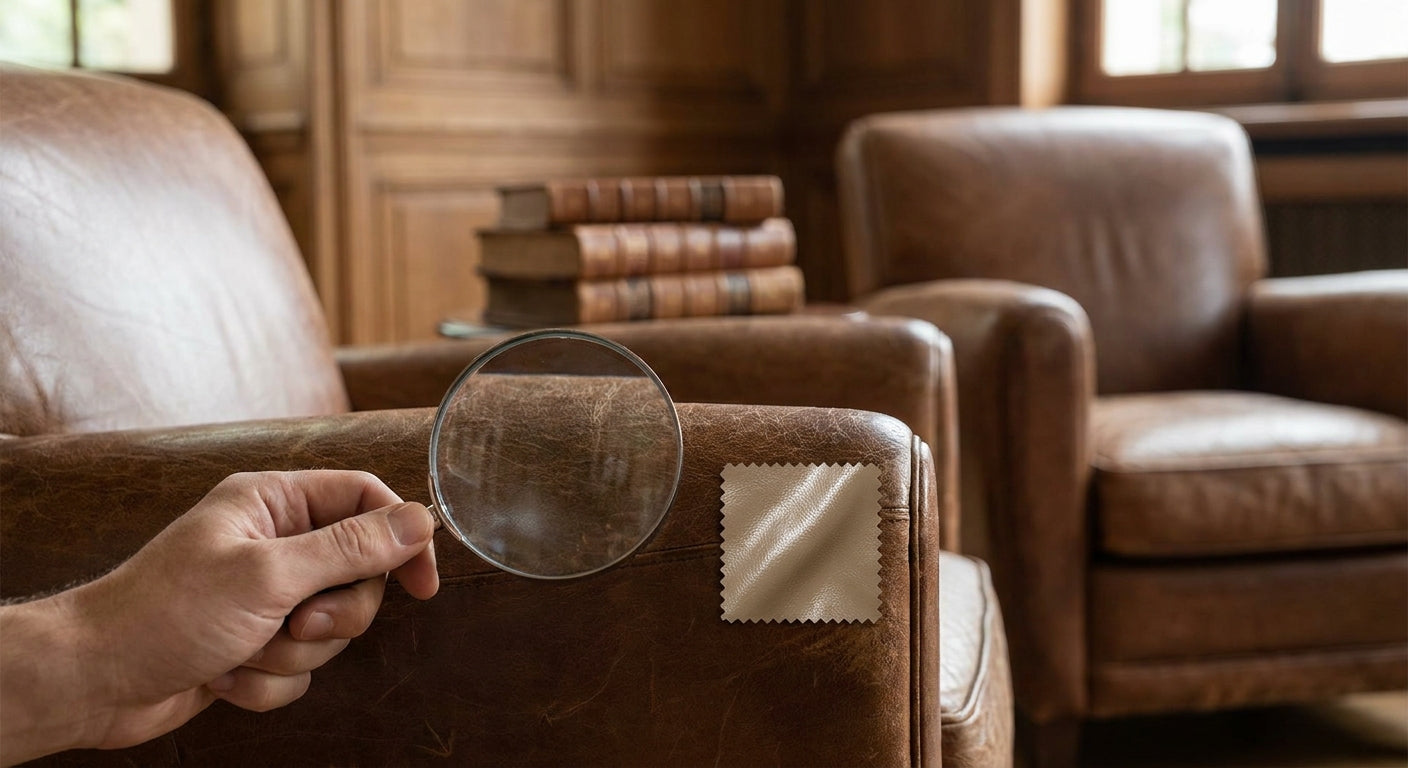
Replica leather furniture can look identical to the original in a product photo and fall apart within a year — the difference sits in details most buyers never check before paying. This guide walks through exactly what to inspect on a replica leather chair or sofa before you hand over money in 2026, from grain pattern to seam construction to that unmistakable smell.
- Genuine aniline or semi-aniline leather shows irregular grain and natural markings; uniform, stamped-on texture signals bonded or PU leather.
- Press the seat cushion for five seconds — if the surface doesn't spring back within 2-3 seconds, it's bonded leather with a foam backing that will crack.
- A chemical or plastic smell that doesn't fade after 48 hours of airing means PU or PVC, not real hide.
- Genuine leather replica seating from a reputable UK retailer in 2026 rarely sells below £600 for a lounge chair; anything far under that is a signal to check the spec sheet.
Why this matters
A low-quality replica leather chair doesn't fail on day one — it fails at month eight, when the coating starts flaking off the arms and the seat cushion has gone flat. By then the return window has closed and you're stuck with a chair that looks worse than the sofa it was meant to upgrade.
The replica furniture market in the UK runs a wide spread: some manufacturers use genuine top-grain leather over hardwood frames, others use bonded leather (shredded leather fibre glued to a fabric backing) over particleboard. Both get marketed as "leather" because trading standards allow the word on any product containing leather content, even 20%. Reading a quality replica chair guide before you shop narrows down which sellers are worth trusting.
What you'll need
- A tape measure for checking seat depth and cushion thickness
- A torch or phone light to inspect seams and piping in low light
- 10 minutes alone with the piece, not a rushed showroom walk-through
- The seller's material spec sheet (ask for it if it's not listed on the product page)
- Your own nose — smell is one of the fastest tells
The steps
1. Look at the grain up close
Real leather has irregular grain: pores vary in size, small scars or wrinkles show up, and no two panels match exactly. Bonded and PU leather show a repeating, stamped pattern that looks identical across the entire surface.
Hold the arm of the chair at an angle under direct light. If the texture repeats every few centimetres like wallpaper, it's not hide. This single check eliminates most low-grade replica leather furniture without needing a spec sheet.
2. Test the smell
Genuine leather smells earthy and slightly sweet, a scent that comes from the tanning process and fades gradually over years. Bonded and PU leather smell like a new shower curtain or car interior — sharp, chemical, and immediate.
Smell close to the seams and underneath the cushions, where finishing chemicals concentrate. If the smell hasn't dropped noticeably after 48 hours of the piece sitting in a ventilated room, you're dealing with a synthetic coating, not leather.
3. Press and watch the surface
Press two fingers into the seat cushion for five seconds and release. Genuine leather over quality foam recovers within 2-3 seconds and shows a faint crease that smooths out. Bonded leather over cheap foam either stays dented or bounces back too fast with a hollow, plasticky feel.
This test also flags backing quality — bonded leather delaminates from its fabric base within 12-18 months of regular use, and the surface starts to peel in sheets rather than crack in fine lines like aged genuine leather does.
4. Inspect the stitching and seams
Count stitches per inch along a seam — quality upholstery runs 6-8 stitches per inch with even spacing. Loose, uneven stitching with visible thread slack is a shortcut manufacturers take on lower-cost replica ranges, and it's usually the first place a piece splits.
Check where panels meet at corners and arm joins. Puckering, visible glue residue, or seams that don't line up across cushions all point to a rushed production run rather than a controlled one.
5. Check the edges and piping
Run a finger along any piped edge. On genuine or well-made semi-aniline leather, the piping sits flush and firm. On bonded leather, piping often looks slightly swollen or uneven because the backing material behaves differently under tension than the outer coating.
Common mistake: buyers check the seat and arms but skip the underside and back panel, which is exactly where manufacturers cut corners because it's rarely seen in showrooms.
6. Ask for the material spec sheet
A legitimate seller will tell you exactly what's in the upholstery: full-grain, top-grain, split leather, bonded leather, or PU/PVC. If a listing just says "leather" or "leatherette" with no breakdown, ask directly before ordering.
Comparing leather versus fabric options on a replica lounge chair is worth doing at this stage too — sometimes a well-made fabric replica outperforms a poor leather one for the same budget.
7. Check the price against known benchmarks
Genuine leather replica seating from an established UK retailer in 2026 typically starts around £600-£800 for a single lounge chair and climbs from there depending on hide grade. If a near-identical listing sits at £250-£350, the leather content is almost certainly bonded or PU, regardless of what the listing copy claims.
Price isn't proof on its own, but it's the fastest filter before you spend time on the checks above.
“If you can smell the furniture from across the room, it's not leather.”
Troubleshooting
- Surface feels sticky after a few months — this is PU coating breaking down under heat and body oils; it won't reverse and usually means a return or replacement.
- Colour rubs off onto clothing — poor dye fixing on a corrected-grain or bonded product; genuine leather that's been properly tanned and finished doesn't transfer colour.
- Cushion has gone flat within a year — low-density foam under the leather, common on budget replica ranges; check foam density (ideally 30kg/m³ or higher) before buying, not after.
- Seams have started gaping — under-tensioned stitching from a fast production line; a well-made replica chair holds seam tension for years, not months.
- Piece smells strongly even after weeks of airing — the coating is off-gassing continuously, a sign of low-grade PVC rather than PU or leather.
Tools and resources
- Replica furniture buying guide for the UK for pricing benchmarks across categories
- A torch app or desk lamp for close inspection of grain and seams
- The seller's returns policy, checked before purchase rather than after a problem shows up
- A tape measure to confirm cushion thickness matches the listing
What to do next
Once you've bought a genuine leather replica piece, protecting the investment matters as much as the initial check. A guide to caring for replica leather furniture at home covers cleaning, conditioning, and the mistakes that shorten a leather chair's life well before its time.
FAQ
How do I know if replica leather furniture is genuine leather?
Check the grain for irregular pores and natural markings rather than a repeating stamped texture, and smell the seams for an earthy scent rather than a chemical one. Ask the seller for a material spec sheet if the listing only says leather without specifying full-grain, top-grain, or bonded.
What's the difference between bonded leather and genuine leather?
Bonded leather is shredded leather fibre glued to a fabric backing and coated with polyurethane, while genuine leather is a single continuous hide. Bonded leather typically delaminates and peels within 12-18 months of regular use, while genuine leather ages with fine cracking rather than sheet peeling.
How much should genuine leather replica furniture cost in 2026?
A genuine leather replica lounge chair from an established UK retailer usually starts around £600-£800 in 2026. Listings priced significantly below that for an apparently identical design are almost always bonded leather or PU rather than real hide.
Is PU leather the same as bonded leather?
No, PU leather is a polyurethane coating applied over a fabric or vinyl base with no real leather content, while bonded leather contains genuine leather fibre mixed into the backing. Both wear out faster than genuine leather, but bonded leather usually smells less chemical when new.
Why does my replica leather chair smell like plastic?
A strong chemical smell that persists after 48 hours of airing means the surface is PU or PVC rather than tanned leather. Genuine leather has an earthy, slightly sweet smell that's noticeably weaker at close range and doesn't intensify in a warm room.
Can you tell replica leather quality from photos before buying?
Photos can show grain irregularity and stitching density if the listing includes close-up shots, but smell and touch tests only happen in person or on delivery. Requesting a material spec sheet before ordering is the closest substitute when buying online.
Does bonded leather crack faster than genuine leather?
Yes, bonded leather typically starts peeling in sheets within 12-18 months, while genuine leather develops fine surface cracking gradually over several years with proper conditioning. The failure pattern itself is a useful diagnostic if you're comparing two pieces already in use.
What stitching quality should I expect on a well-made replica chair?
Look for 6-8 stitches per inch with even spacing and no visible thread slack along seams and corners. Uneven or loose stitching is one of the earliest points of failure on lower-cost replica leather furniture.
One last thing
Most buyers check the seat and arms and skip the underside entirely — but that's exactly where manufacturers hide the cheapest materials, because it's the one panel nobody photographs for a listing. Flip the cushion or tilt the chair before you buy, not after the first crack shows up.


