
18 July 2026 · Editorial Team
Togo Sofa Dupe Quality Guide 2026: What Holds Its Shape
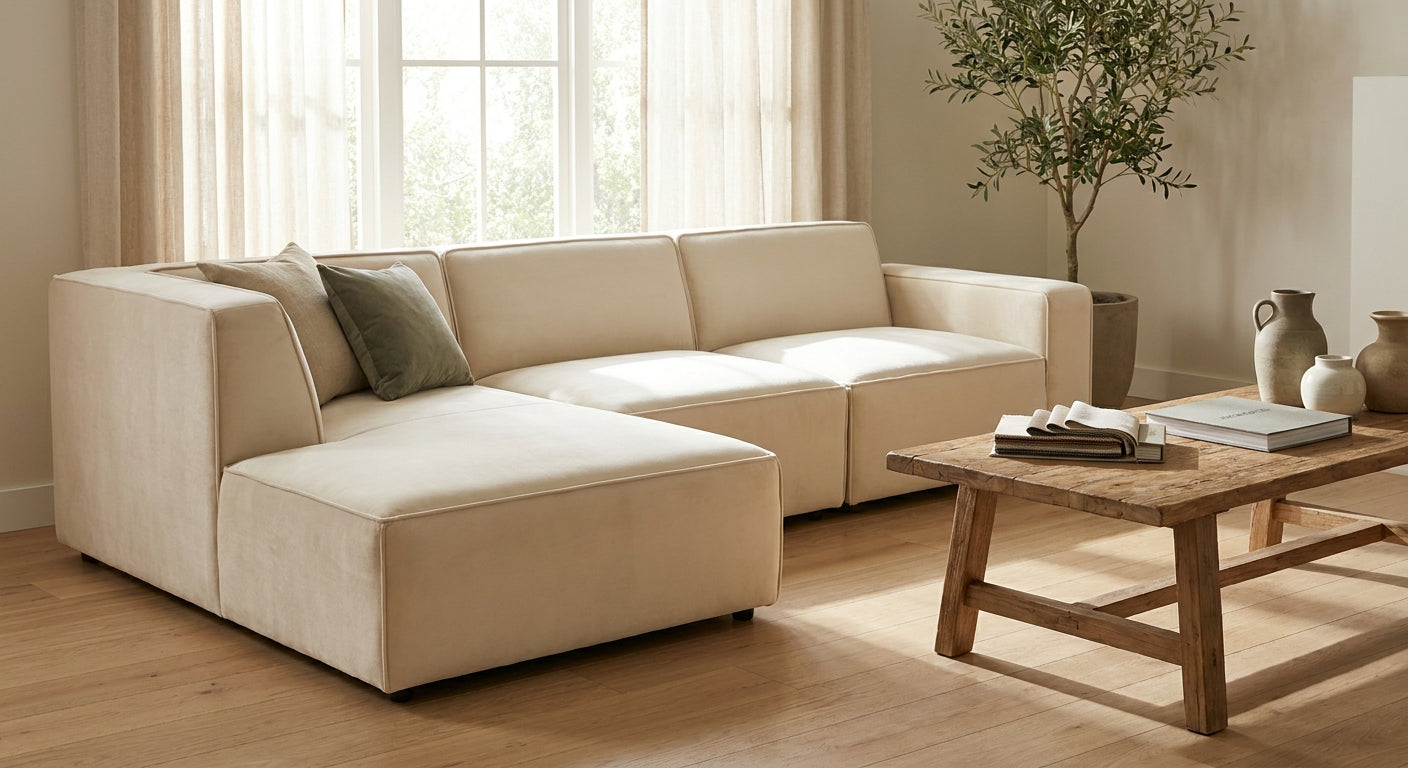
A Togo sofa dupe can look identical to the original in photos and still collapse into a lump within eighteen months — the difference sits in foam density, frame material and seam construction, not the shape of the cushions.
This guide breaks down exactly what to check before you buy, in the order that matters most.
TL;DR
The short version of this togo sofa dupe quality guide: check foam density first (look for 30kg/m3 or higher in the base cushion), then frame material, then seam stitching, then fabric or leather grade. A dupe built on a plywood or solid-wood frame with high-density foam holds its shape for 5+ years; one built on particleboard with low-density fill sags within 12-18 months. Verdict: buy on foam and frame specs, not on how close the photo looks to the original. If a listing has no foam density figure anywhere, treat that as a red flag in 2026, not an oversight.
Why this matters
The Togo sofa's whole design depends on soft, collapsible-looking cushions holding their shape without any visible frame. That's the trick of the original — and it's also the first thing manufacturers cut corners on when producing a cheaper version.
A dupe that uses low-grade foam or a stapled particleboard frame will look near-identical on delivery day. The failure shows up three months later, when the base cushion has flattened by half and the back cushion has slid forward. Spotting a quality replica before you buy starts with reading the spec sheet, not the marketing copy — and that habit applies just as much to sofas as it does to chairs.
The price gap between a well-built dupe and a poorly built one is often only £150-£300. That's a small premium against a sofa you'll be sitting on daily for the next several years.
What you'll need
- The exact dimensions of your space (measure twice, including doorway width for delivery)
- A target foam density figure to compare across listings (30kg/m3 minimum for the seat base)
- Knowledge of your fabric preference: bouclé, velvet, or leather
- A tape measure for checking seat depth and cushion height against your own sofa or a showroom sample
- 20-30 minutes to read through at least three listings side by side before ordering
- A return window confirmed in writing before you pay, in case the sofa arrives underfilled or misshapen
The steps
1. Start with the foam density spec, not the price
Foam density is the single biggest predictor of how a Togo dupe ages. Anything under 25kg/m3 in the base cushion will compress noticeably within the first year of daily use.
Look specifically for high-resilience (HR) foam rated at 30kg/m3 or above in the seat base, with a softer layer on top for the "collapsed" look the design is known for. Listings that only say "premium foam" without a number are worth a direct question to the seller before you order. Common mistake: buying based on the photo of the cushion shape rather than asking what's inside it.
2. Check what the frame is actually made from
Under the fabric, a Togo dupe needs a structural frame to keep its form — solid wood or plywood holds shape for years, particleboard and thin MDF do not.
Ask directly: is the internal frame plywood, solid pine, or particleboard? Particleboard frames are cheaper to produce but flex and crack under repeated weight shifts, especially where people sit on the arm or perch on the edge. Verdict: plywood or solid wood frame is a Buy; unspecified or particleboard frame is a Skip unless the price reflects it.
3. Test — or ask about — the seam and piping construction
The channel-stitched seams are what give the Togo silhouette its ridged, quilted look, and they take the most physical stress of any part of the sofa.
Double-stitched seams with reinforced piping cord hold under repeated sitting and shifting; single-stitched seams start splitting at the corners within a year, particularly on leather versions. If you can see the sofa in person or in a showroom, run your thumb along a seam and check for loose thread or thin piping cord. Common mistake: assuming all channel stitching is equal because it looks the same in a product photo.
4. Compare the fill structure, not just the foam grade
A well-built dupe layers foam differently through the sofa: firmer support foam at the base, softer wrapped foam on top, sometimes with a fibre or down wrap for the slouched look.
Single-density foam throughout the whole cushion looks fine on day one and goes flat evenly and fast. Layered fill costs more to produce but keeps its contour for years rather than months. Ask the seller directly whether the cushions use single-density or layered foam construction.
5. Match the fabric or leather grade to how the sofa will actually be used
Bouclé and velvet dupes are common in 2026 and both look close to the original, but they wear differently — velvet crushes and shows wear patterns faster in high-traffic households, bouclé pills less but can snag on pet claws.
For leather versions, check whether it's genuine top-grain, bonded leather, or PU. Bonded leather and PU look convincing new but crack and peel within two to three years, especially near seams that flex daily. Caring for replica leather furniture properly extends the life of even a mid-tier leather grade, but it can't fix a low-grade material from the start.
6. Measure your space against the two-seater vs three-seater footprint
The Togo silhouette reads differently at each size, and a three-seater squeezed into a two-seater's space looks cramped rather than lounge-like.
Measure your available wall run, then check the exact dimensions listed for the size you're considering — don't estimate from the photo scale. The two-seater vs three-seater comparison breaks down where each size actually fits best, which matters more than it seems once the sofa is in the room. Common mistake: ordering the three-seater because it looks more like the showroom photo, then finding it overwhelms a smaller living room.
7. Confirm the return and inspection window before paying
Even with every spec checked, a dupe can arrive with a defect — an uneven seam, a foam void, a fabric flaw under bad lighting.
Confirm in writing what the return window is and whether it covers structural issues discovered after a few weeks of use, not just damage on arrival. A seller unwilling to confirm this in 2026, when most furniture retailers offer at least a fair inspection period, is a signal worth weighing against the price.
Troubleshooting
The seat cushion already looks flatter after a few weeks. This usually means low-density foam (under 25kg/m3) rather than a delivery fault — check the original spec sheet against what arrived, and raise it with the seller inside the return window.
Seams are splitting at the corners. Single-stitched seams under regular use will do this within months; it's a construction issue, not user error, and should be covered by any reasonable return policy.
Leather feels stiff or is starting to crack near the arms. This points to bonded leather or PU rather than top-grain — caring for replica leather furniture with the right conditioner slows this but won't reverse cracking that's already started.
Cushions have shifted and won't sit flush anymore. Check whether the cushion covers have an internal zip or tie system — dupes without one let the fill migrate over time, especially on the back cushions.
The sofa arrived and it's noticeably smaller or larger than expected. Cross-check the listed dimensions against what you measured before ordering; this is the most common reason people end up disappointed with the size they chose.
Fabric is pilling or crushing faster than expected. Velvet in particular shows this in high-traffic households within the first six months — it's a material trade-off, not always a fault, but worth factoring in before choosing velvet over bouclé.
Tools and resources
- Spot a quality replica chair before you buy — the same checks apply to sofa frames and foam
- Caring for replica leather furniture at home — extends the life of leather and bonded-leather dupes
- Two-seater vs three-seater Togo replica comparison — sizing detail before you commit to a footprint
- A tape measure and your room's floor plan, checked against listed dimensions before ordering
What to do next
Once you've settled on foam density, frame material and fabric grade, the next decision is where to actually source the sofa. Quell Workspaces covers sourcing specifics — including what a fair 2026 price range looks like across UK sellers — in a dedicated buying guide, which is worth reading before you commit to a specific listing.
FAQ
What foam density should a Togo sofa dupe have? Look for 30kg/m3 or higher in the base cushion. Anything under 25kg/m3 will compress noticeably within a year of regular use.
Is a plywood frame better than particleboard for a Togo dupe? Yes. Plywood and solid wood frames hold their shape for years under repeated weight shifts; particleboard frames flex and crack, especially at points where people sit on the arm or edge.
How long should a well-built Togo sofa dupe last? A dupe built on a solid frame with 30kg/m3+ foam typically holds its shape for 5 years or more. A poorly built version with low-density foam can visibly sag within 12-18 months.
Is leather or fabric better for a Togo dupe? It depends on use. Top-grain leather wears better long-term than bonded leather or PU, which crack within two to three years. Bouclé resists wear better than velvet in high-traffic households.
Does a two-seater or three-seater Togo dupe suit a small living room better? A two-seater generally suits smaller rooms and reading corners; a three-seater needs a longer wall run to avoid looking cramped. Measure your space before choosing based on photos alone.
How much more does a well-built Togo dupe cost versus a poorly built one? The gap is often only £150-£300 for better foam grade, frame material and stitching — a modest premium against a sofa used daily for several years.
Can a poorly built Togo dupe be fixed after it sags? Sometimes — refilling cushions with higher-density foam is possible on some models — but a cracked or flexed particleboard frame usually can't be repaired economically, and reupholstering isn't cheap either.
What's the biggest red flag when shopping for a Togo dupe in 2026? A listing with no foam density figure and no stated frame material anywhere in the description. If a seller can't specify what's inside the cushion, assume it's the cheaper option.
One last thing
The detail most buyers skip is asking about the internal cushion zip system — dupes without one let fill migrate within the cover over months of use, which is why some Togo dupes look perfect on delivery and lopsided by the following spring. It costs the manufacturer almost nothing to include, and it's one of the fastest questions to ask before you order.


