
10 August 2026 · Editorial Team
Best Replica Room Dividers UK 2026: Mid-Century Screens
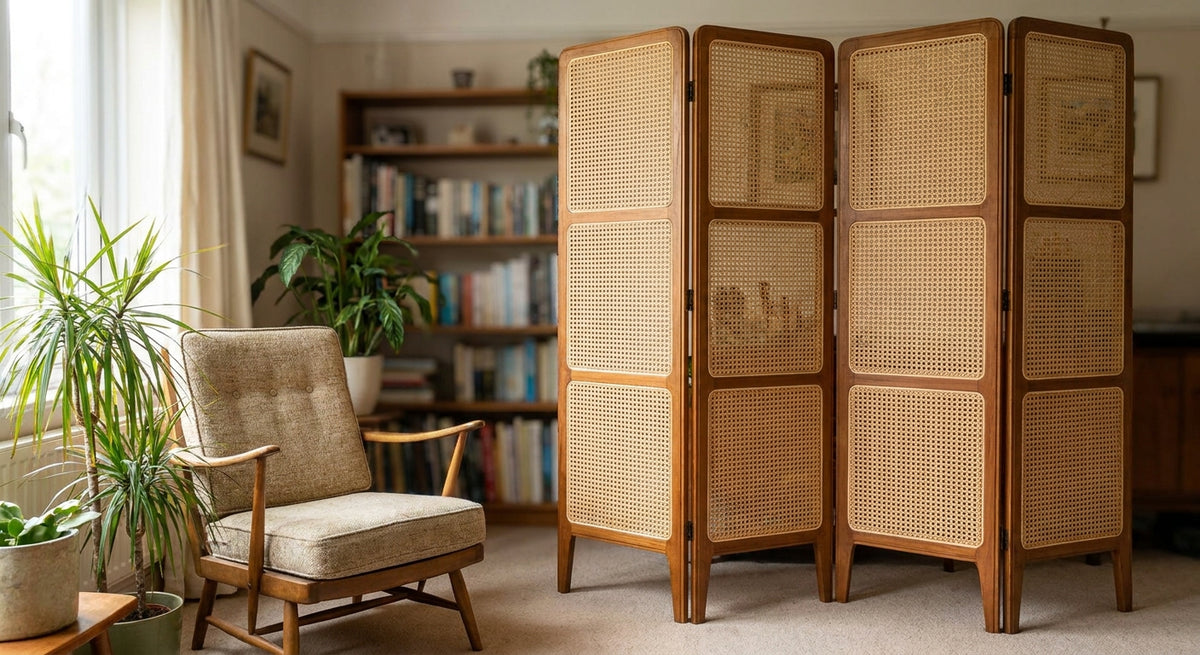
Mid-century room dividers are having a moment in UK living rooms, and replica screens now cover everything from rattan three-panel folds to walnut slat units built to sit alongside a Nelson bench or an Eames shell chair. This guide ranks the six replica room divider styles worth shortlisting in 2026, with prices, verdicts, and the one detail that actually predicts whether a screen lasts.
- The walnut-veneer slat divider is the safest replica room divider UK buy for mid-century living rooms at £220-£380 in 2026 — Buy.
- Rattan three-panel screens cost £140-£220 and suit boho-meets-mid-century rooms — Buy.
- Skip acrylic geometric screens unless the room is styled around 1970s colour, since panels crack under regular folding.
- Bamboo shoji-style sliding screens fit rooms under 3m wide better than any folding option — Consider.
- Fabric-panel screens at £70-£150 work as a budget stopgap but block less sound than solid wood slats.
Why this matters
A room divider does two jobs at once: it splits a room visually and it filters noise, and most buyers only check the first job before paying. Replica mid-century screens vary wildly on panel weight, hinge quality, and how close the finish gets to an original Nelson or Eames-era design, and none of that shows up in a product photo.
Price spread across UK sellers in 2026 runs from around £70 for a basic fabric-panel screen to £600-plus for a modular shelving-style divider, so picking the wrong category wastes money either way — too cheap and it warps within a year, too elaborate and it dominates a room meant to feel calm. Mid-century modern replica furniture in the UK sets the wider context for how these screens sit alongside other replica pieces, but the divider category has its own rules.
How this list is ranked
Each style below is ranked on four criteria that hold across UK replica sellers in 2026: panel material and weight, typical price range, how well the piece reads as genuinely mid-century rather than generic flat-pack, and practical fit for standard UK room widths (most living rooms run 3.5m to 4.5m wide). Screens that fold rather than slide are compared on hinge type, since continuous brass hinges outlast the pressed-metal pins found on cheaper units by a wide margin.
Nothing here is presented as a single named product — replica sellers rotate stock constantly, so the categories below describe what to look for and what a fair 2026 price looks like, not one specific SKU.
The ranked list
1. Three-panel rattan folding screen — the boho-meets-mid-century crossover pick
Natural rattan weave over a hardwood frame, typically 170cm tall with three hinged panels. It works because rattan reads as warm and textural without fighting a walnut sideboard or teak coffee table, and it's light enough — usually under 8kg — for one person to reposition daily. Expect £140 to £220 for a well-made version in 2026; anything under £100 usually means a thinner weave that sags within months. Verdict: Buy.
2. Walnut-veneer slat room divider — the purist's pick
Solid slats spaced roughly 4cm apart on a walnut or dark oak veneer frame, closest in spirit to the wood-slat screens found in genuine mid-century interiors. It pairs naturally with any replica furniture for living rooms built around teak or rosewood tones. Price runs £220 to £380, and it's the only category on this list that doubles as a genuine acoustic buffer rather than a purely visual one. Verdict: Buy.
3. Bamboo shoji-style sliding screen — the space-saver
A sliding track system rather than hinged panels, so it needs zero floor clearance to open — the reason it beats every folding option in rooms under 3m wide. Bamboo-and-paper construction keeps weight down to 4-6kg per panel, though the paper infill scuffs faster than solid wood. Sellers price these at £180 to £340 in 2026. Verdict: Consider — only if floor space, not style, is the deciding factor.
4. Fabric-panel folding screen — the budget pick
Linen or cotton stretched over a pine frame, usually the lightest option on the market at around 6kg per panel. It's the cheapest route into the mid-century look at £70 to £150, but fabric blocks far less sound than solid slats and shows wear at the frame joints within 18-24 months of daily folding. Verdict: Consider as a short-term or rental-property solution, not a long-term buy.
5. Geometric perspex or acrylic screen — the wildcard
Smoked or coloured acrylic panels set in a slim metal frame, closer to 1970s design language than strict mid-century but frequently sold under the same category. It's a genuine statement piece at £300 to £550, and it's also the most fragile — acrylic panels crack at the fold point after repeated use, which most listings don't mention. Verdict: Skip unless the room is already built around bold colour and the screen stays mostly stationary.
6. Modular bookshelf room divider — the multitasker
Open-backed shelving units, often echoing the same clean lines as a mid-century modern living room built around a Nelson platform bench, run 30-35cm deep and double as storage rather than pure partition. Expect £250 to £600 depending on shelf count and finish. It's the most expensive category here but the only one that earns its floor space back. Verdict: Buy for anyone who needs storage and division in one purchase.
Comparison table
| Style | Panels | Typical price (2026) | Best for | Verdict |
|---|---|---|---|---|
| Rattan folding screen | 3 | £140-£220 | Boho-mid-century mix | Buy |
| Walnut-veneer slat divider | 3-4 | £220-£380 | Acoustic buffer + style | Buy |
| Bamboo shoji sliding screen | 2-3 | £180-£340 | Narrow rooms | Consider |
| Fabric-panel screen | 3 | £70-£150 | Rentals, short-term | Consider |
| Geometric acrylic screen | 3-4 | £300-£550 | Statement rooms | Skip |
| Modular bookshelf divider | n/a | £250-£600 | Storage + division | Buy |
Where to buy
Three rules cut through most of the noise when sourcing a replica room divider in the UK:
- Check the hinge before the finish. Continuous brass hinges outlast pressed-pin hinges by years, and no listing photo shows this clearly — ask the seller directly.
- Compare veneer thickness, not just wood type. A walnut veneer under 0.6mm chips at the edges within a year; anything the seller can't confirm in millimetres is a red flag.
- Read a buying guide before the checkout page. Buying replica furniture in the UK without overpaying and the roundup of the best replica furniture shops online in the UK for 2026 both cover which sellers actually match the specs they advertise.
Quell Workspace's furniture team applies the same criteria across every replica furniture guide it publishes: material honesty, price-to-durability ratio, and whether a piece still looks right in five years. That's what separates a genuine mid-century screen from a flat-pack copy wearing the label.
FAQ
What's the best replica room divider in the UK right now?
The walnut-veneer slat divider is the strongest all-round pick in 2026, priced £220-£380, because it works as both a visual partition and a genuine acoustic buffer. Rattan folding screens are the better choice for a lighter, boho-mid-century room at £140-£220.
Is a rattan screen or a walnut slat divider better for a mid-century living room?
Walnut slat dividers sit closer to genuine mid-century design language and block more sound, while rattan screens suit a warmer, more textural room. Choose walnut if the room already features teak or rosewood furniture.
How much does a replica room divider cost in the UK in 2026?
Prices run from around £70 for a basic fabric-panel screen up to £600 for a modular bookshelf-style divider. Most mid-range wood or rattan screens land between £140 and £380.
Are shoji-style sliding screens better than folding screens for small rooms?
Yes, sliding screens need no floor clearance to open, which makes them the better fit for rooms under 3m wide. Folding screens need roughly a panel's width of clear floor space to operate properly.
Can a room divider double as storage?
Modular bookshelf-style dividers do, typically running 30-35cm deep with open shelving on both sides. They cost more upfront, £250-£600, but replace a separate shelving unit.
Is replica furniture legal to buy in the UK?
Buying replica furniture for personal use is legal in the UK; the legal risk sits with manufacturers who reproduce designs still under copyright, not with individual buyers. Check seller reputation rather than worrying about the purchase itself.
How tall should a room divider be for a standard UK living room?
Most replica screens run 150-180cm tall, which clears eye level while sitting comfortably under a standard 2.4m ceiling. Taller units over 180cm start to feel oppressive in rooms under 4m wide.
Do fabric-panel screens block noise as well as wood-slat dividers?
No, fabric panels block noticeably less sound than solid wood slats because the frame gaps and thin fill let sound pass through. Choose a walnut or oak slat divider if noise reduction matters more than weight.
One last thing
Most buying guides talk finish and colour and skip the part that actually fails first: the hinge. A folding screen with continuous brass hinges will outlast three cheaper units with pressed-pin hinges combined, and it costs sellers almost nothing extra to fit — so ask before you buy, not after the third panel snaps off.


