
27 August 2026 · Editorial Team
How to Measure for a Noguchi Coffee Table (2026)
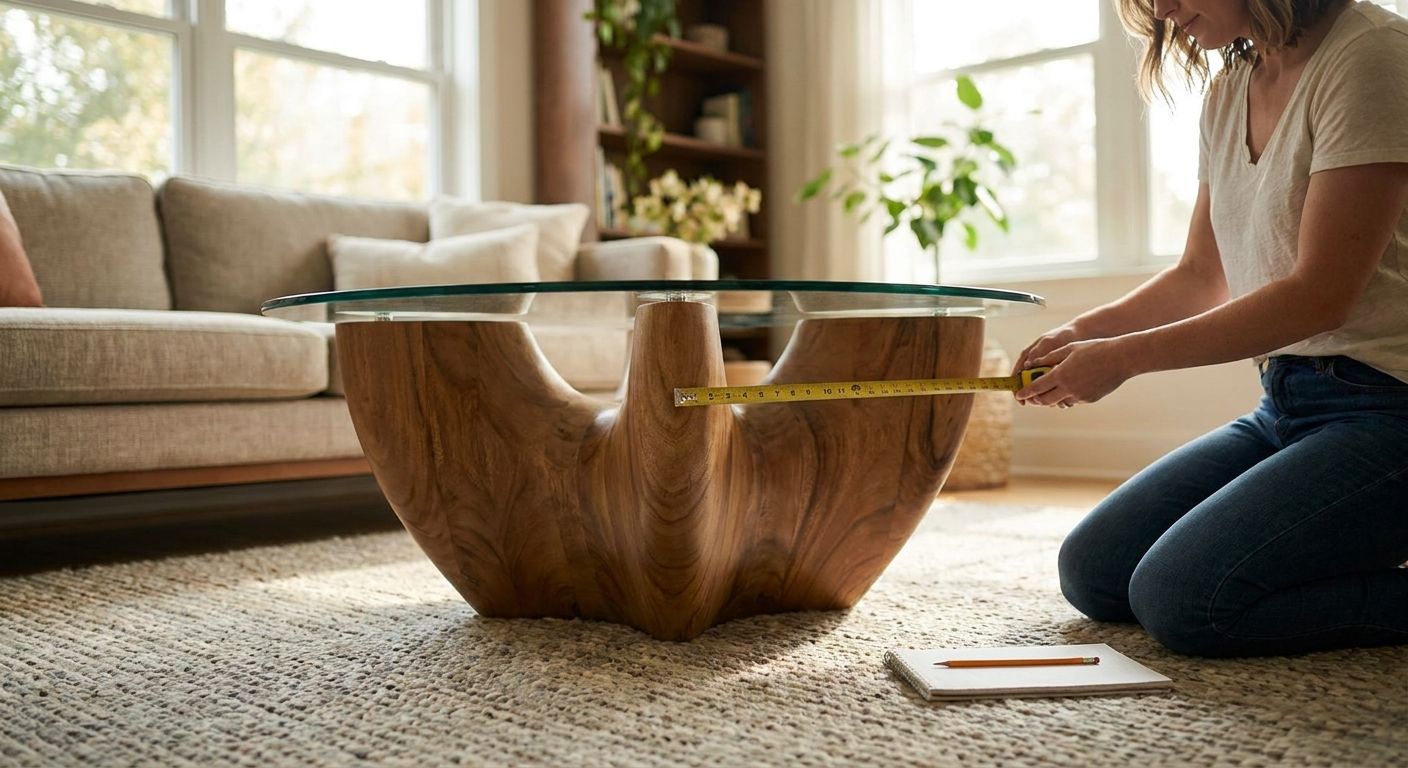
Measuring for a Noguchi coffee table dupe takes about ten minutes with a tape measure, but skip the seating gap and the delivery route and you'll end up sending a freeform glass top straight back.
- Measuring for a Noguchi coffee table starts at the sofa, not the table: leave 35-45cm of clearance from the seat front.
- The classic silhouette runs roughly 127cm long, 92cm deep and 41cm high – most dupes sit close to these figures.
- Rooms narrower than 3.5m between furniture suit a scaled-down replica rather than the full-size footprint.
- Mock up the freeform top in cardboard or newspaper on the floor before ordering – irregular shapes read bigger than a rectangle of the same area.
Why this matters
A Noguchi coffee table dupe isn't a small purchase, and the biomorphic top makes it harder to judge by eye than a plain rectangle. Order on room size alone and you'll misjudge how much floor the curved edges actually claim.
The Noguchi coffee table replica options on the market mostly follow the same proportions as the original design, so once you've measured your gap correctly, sizing against any dupe becomes a straight comparison.
What you'll need
- A metal tape measure, at least 5m
- Masking tape or painter's tape to mark the footprint on the floor
- A sheet of newspaper, cardboard, or an old bedsheet cut roughly to the table's shape
- The seat height of your sofa or armchair
- Measurements of doorways, hallway turns and any staircase on the delivery route
Measuring your space for a Noguchi coffee table dupe, step by step
1. Measure the seating gap first, not the room
Start at the front edge of your sofa or main armchair, not the walls. This distance decides whether the table sits comfortably within reach of a hand or a foot.
Leave 35-45cm between the seat front and the table's near edge. Anything under 30cm forces knees against the glass; anything over 60cm makes reaching a drink awkward. Common mistake: measuring wall-to-wall and assuming the gap will sort itself out once the sofa's in place.
2. Map the full footprint against the room
Once the seating gap is set, measure the total clear width between furniture pieces on either side of where the table will sit. A freeform top needs open floor around its edges, not just in front of the sofa, or it becomes something people catch their shoes on.
Tape out the boundary on the floor and note the narrowest point in the room. Common mistake: leaving out a nearby rug edge or side table from the measurement, which quietly eats into the clearance you thought you had.
3. Compare your gap against the classic proportions
The original Noguchi design measures roughly 127cm long, 92cm deep, and 41cm high, with a glass top around 19mm thick sitting on a two-piece wooden base. Most replicas keep close to these dimensions, though some run a size down, closer to 110-120cm long, for smaller rooms.
If your measured gap is under 3m end to end, look specifically for a scaled dupe rather than the full-size footprint. Common mistake: assuming every listing labelled "Noguchi-style" uses identical dimensions — a difference of even 10-15cm changes how the room reads.
4. Mock up the shape before you order
Cut cardboard, newspaper, or an old sheet to the approximate freeform outline and tape it to the floor in position. Live with it for a day rather than judging it from a single angle by the doorway.
Walk your usual paths through the room — sofa to kitchen, doorway to seat — and see where the mock-up gets in the way. Common mistake: only checking the table from the spot you'll be sitting, then finding it blocks the route to the hallway.
5. Check table height against your seat height
Measure the seat height of your sofa or armchair from the floor. Most sit around 40-45cm, close to the Noguchi table's typical 41cm, but a mismatch of more than 5cm changes how natural it feels to set down a cup or reach for a book.
A table sitting noticeably higher than your seat height crowds your knees; noticeably lower and you'll be leaning down further than expected. Common mistake: only checking table height in isolation, without measuring the seat it needs to work alongside.
For rooms where the standard footprint still feels tight, the guide to choosing a replica coffee table for a small room works through the scaled-down options in more detail.
6. Check the delivery route before you commit
Measure doorway widths, hallway turns, and any staircase between the front door and the room. Glass tops travel flat and can't bend around a tight corner the way a soft-sided piece can.
Check the diagonal clearance of doorways, not just the straight width — a table that won't pass through square sometimes fits at an angle. Common mistake: measuring the room the table will live in but never checking the path it has to take to get there.
7. Size any rug around the table, not the other way round
If you're placing a rug, the table's footprint should sit fully within its edges with 15-20cm of rug showing on each side. A freeform top floating between the rug and the sofa on bare floor breaks the visual line of the room.
Measure the rug against the table's confirmed footprint before buying either one. Common mistake: choosing the rug first and forcing the table's final position to work around it.
Troubleshooting common measuring mistakes
- Table looks too big once it's in the room. Freeform shapes read larger from an angled sightline than they do face-on — remeasure the diagonal view from your doorway and consider a scaled dupe closer to 110-120cm.
- Height feels wrong next to the sofa. Compare your actual seat height (typically 40-45cm) against the table's stated height rather than assuming every dupe matches the 41cm original.
- It won't fit through the doorway. Check diagonal clearance, not just width — most glass tops travel as one flat piece and need a straight run.
- Room feels cluttered even though the table "fits". Leave at least 45cm of clear floor around the widest point of the freeform top, not just the seating gap.
- Two listings give different measurements for what looks like the same dupe. Check whether the figure quoted is the glass top or the base footprint — they can differ by several centimetres.
Tools and resources
- The Noguchi coffee table replica options to compare against your own measurements
- A guide on styling a Noguchi coffee table once the sizing is settled
- A metal tape measure, masking tape, and cardboard or newspaper for the floor mock-up
What to do next
Once the footprint is confirmed, it's worth checking scale against nearby pieces rather than the table alone. The roundup of Noguchi-inspired magazine tables covers smaller alternatives if the full-size shape still doesn't sit right in your room.
FAQ
How do I measure for a Noguchi coffee table in a small living room?
Measure the seating gap first, aiming for 35-45cm between the sofa front and the table edge, then check the remaining clear width against a scaled dupe closer to 110-120cm long rather than the full 127cm original.
What size is the original Noguchi coffee table?
The original design measures roughly 127cm long, 92cm deep and 41cm high, with a glass top around 19mm thick. Most replicas follow these proportions closely, with some offered at a smaller scale.
How much clearance should I leave between a Noguchi table and my sofa?
Leave 35-45cm between the sofa's front edge and the table. Under 30cm crowds the knees, and over 60cm makes the table awkward to reach from a seated position.
Is a Noguchi coffee table dupe too tall for a low sofa?
It depends on your sofa's seat height. The typical Noguchi height is around 41cm, close to most sofa seats at 40-45cm, but check your own seat height before ordering if your sofa sits unusually low or high.
Do I need to measure doorways before buying a Noguchi coffee table dupe?
Yes. Glass tops usually travel flat in one piece, so check the diagonal clearance of doorways and any staircase turns on the route into the room, not just the straight width.
What rug size works with a Noguchi coffee table?
Choose a rug that leaves 15-20cm of visible rug around the table's confirmed footprint on every side, and size the rug after the table's position is settled, not before.
Can a freeform coffee table look bigger than its measurements suggest?
Yes. The curved, asymmetric shape reads larger from an angled sightline, such as standing in a doorway, than the same footprint would as a plain rectangle.
What's the biggest mistake people make measuring for a Noguchi dupe?
Measuring the room's overall width instead of the actual seating gap. The distance from the sofa front to the table edge matters more than how much floor space the room has in total.
One last thing
The detail most people skip is checking whether a listed measurement is the glass top or the base — on a two-piece wooden base design, the top can overhang the base by several centimetres on each side, which is exactly the kind of gap that turns a confident 45cm clearance into a cramped 30cm one.


