
27 July 2026 · Editorial Team
How to Style Rugs With Replica Furniture UK (2026)
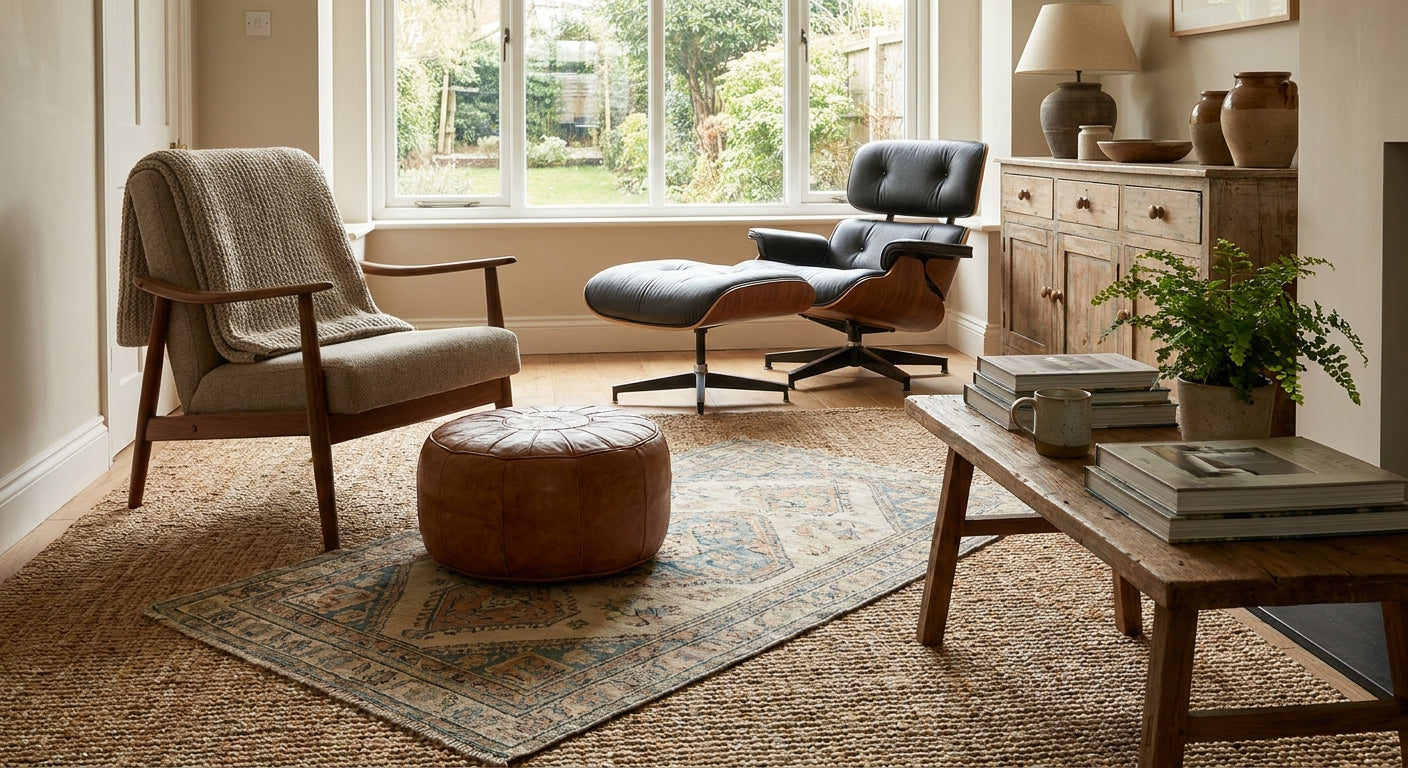
Layering rugs under replica furniture is the fastest way to add texture to a UK living room without buying a single new piece of seating. Get the pile height, sizing and colour balance right and a Wishbone-style dining chair or an Eames-style lounge chair reads twice as expensive as it costs.
- Layer a flatweave base rug under a smaller patterned rug to style rugs with replica furniture UK-wide in 2026 - Buy the base first.
- Keep pile under 12mm beneath Wishbone-style and Eames-style chair legs so they glide instead of sinking - Buy a low-pile wool option.
- Skip shag or deep-pile rugs under swivel and rocking replica chairs; legs snag and finishes scuff - Skip.
- Size the rug so at least the front legs of every seat sit on it, not just the coffee table - non-negotiable for 2026 room layouts.
- Anti-slip rug pads solve 90% of the sliding complaints reported with layered rugs under replica furniture.
Why this matters
A single rug under a replica sofa or chair looks flat by the third month you own it. Two layers - a neutral jute or wool base with a smaller patterned or textured rug on top - do the job that a whole extra piece of furniture would otherwise have to do.
This matters more with replica furniture specifically because pieces like the Togo sofa dupe, the Wishbone chair replica, or an Eames-style lounge chair are chosen for a strong silhouette. A flat, single rug under a strong silhouette leaves the floor looking like an afterthought. Layering mixing replica and vintage furniture principles onto your rug choice keeps the whole room from reading as one style note repeated everywhere.
The fix is mechanical, not decorative: pile height, sizing math and a rug pad. Get those three right in 2026 and the styling part becomes easy.
What you'll need
- A base rug (jute, sisal or flatweave wool), sized to sit under all seating
- A second, smaller rug with pattern, texture or colour contrast
- A non-slip rug pad rated for hard floors or carpet
- A tape measure - get this before you order anything
- Your replica furniture pieces already in the room, or a floor plan with exact dimensions
- A vacuum or stiff brush for jute and sisal maintenance
The steps
1. Measure the seating zone before you buy a single rug
Measure the full footprint of your seating group - sofa, chairs, coffee table - plus 15-20cm of breathing room on each side. Most UK living rooms need a base rug of at least 200cm x 300cm to cover a three-seat sofa and two chairs properly. Buying too small is the single most common mistake with layered rugs, and it's the one that makes an otherwise good room look unfinished.
Common mistake: ordering a rug sized only to the coffee table. The front legs of every seat should land on the base rug, not float off the edge.
2. Choose a neutral, textured base rug
The base layer does the heavy lifting for texture - jute, sisal or a low-pile wool boucle all work because they read as material rather than pattern. Go for a natural fibre with visible weave if your replica furniture already has a strong silhouette, like a Barcelona chair replica or a Togo sofa dupe. Neutral doesn't mean plain: a chunky basket-weave jute rug adds more tactile interest than a flat solid-colour rug at a fraction of the visual noise.
3. Layer a smaller rug for pattern or colour
Size the second rug at roughly 60-70% of the base rug's footprint and centre it under the coffee table or in front of the main seat. This is where you introduce pattern, saturated colour, or a contrasting texture - a Berber-style diamond weave or a vintage-look Persian pattern both work well against a jute base. Keep pattern scale in proportion: a tight, busy print under a large sectional gets visually lost.
4. Match pile height to your furniture legs
This is the step that decides whether replica chairs actually sit properly. Anything with slim tapered legs - Wishbone chairs, Eames-style dining chairs, tulip-base tables - needs a rug pile under 12mm. Go higher and the legs either sink unevenly or rock. Check the best replica lounge chairs roundup for pieces with wider, flatter feet if you want more pile flexibility.
5. Position the furniture correctly on the layered rugs
Front legs of every seat go on the rug; back legs can sit off it if space is tight, but never leave a chair floating entirely off both rugs. For a Togo-style low sofa, the whole base should sit on the rug given how low it sits to the floor - it looks stranded otherwise. Pull chairs 5-8cm closer to the rug edge than feels natural; photos always reveal a gap that looked fine in person.
6. Balance colour and texture across the two layers
One layer carries colour, the other carries texture - not both at once. If your base jute rug is warm-toned, keep the top rug's palette in the same family (rust, ochre, chocolate) rather than introducing a cool blue that fights it. This is also where a replica coffee table in a contrasting wood tone earns its keep - it becomes the neutral bridge between the two rugs.
7. Anchor everything with a rug pad
A felt or rubber anti-slip pad under both layers stops the top rug creeping and stops both rugs sliding on hardwood or tile - a common complaint with layered setups in open-plan UK living rooms. Cut the pad slightly smaller than the top rug so no edge shows.
Troubleshooting
- Rugs keep sliding apart: the top rug has no pad of its own. Add a thin anti-slip pad between the two layers, not just under the base.
- Chair legs sink and rock: pile is too deep. Swap to a flatweave or low-pile wool under 12mm for anything with slim replica chair legs.
- Room looks busier, not richer: both rugs carry pattern. Drop one to a solid or near-solid texture and keep pattern in a single layer.
- Rug edges curl within weeks: it's a cheap jute weave with no backing. Look for a rug with a woven or latex-backed edge, or add corner grippers.
- Furniture looks stranded on the rug: the base rug is undersized for the seating group. Re-measure - most three-seat setups need 240cm minimum on the long side.
- Colours clash under mixed lighting: test both rugs under your room's actual bulb colour temperature before committing, not showroom lighting.
Tools and resources
- Tape measure and painter's tape to mark out rug footprints before buying
- A non-slip rug pad rated for your floor type
- Replica furniture for living rooms for pairing ideas by room size
- A vacuum with a beater-bar switch you can turn off for jute and sisal
- A fabric swatch or paint sample from your walls, held against both rugs before ordering
What to do next
Once the rug layering is settled, the room's texture balance usually points to one more gap - a reading chair, a side table, or lighting that's still too flat for the floor you just built. Sort the rugs first; everything else gets easier to place once the base is right.
FAQ
How do you style rugs with replica furniture in the UK?
Layer a neutral base rug under a smaller patterned rug, keeping pile under 12mm where slim replica chair legs will sit. Size the base rug so every seat's front legs land on it, and use an anti-slip pad between both layers.
What size rug do you need for a three-seat sofa and two chairs?
Most UK living rooms need a base rug of at least 200cm x 300cm to cover a three-seat sofa plus two chairs with front legs on the rug. Undersizing the base is the most common styling mistake in 2026 living room layouts.
Can you put an Eames-style chair on a thick shag rug?
No - deep pile over 12mm makes tapered chair legs sink and rock, which is a common problem with Eames-style and Wishbone-style replica chairs. Stick to flatweave or low-pile wool under slim-legged furniture.
Do layered rugs need two rug pads?
Yes, ideally - a pad under the base rug stops it sliding on hard floors, and a thinner pad between the two rug layers stops the top rug creeping. Skipping the second pad is the main reason layered rugs shift out of place.
What rug texture pairs best with a Togo sofa dupe?
A jute or sisal base rug pairs well with a Togo-style sofa because the low, deep-cushioned silhouette needs a visibly textured floor to avoid looking flat. Keep the sofa's full base on the rug given how close it sits to the floor.
Should the top rug or base rug carry the pattern?
Put pattern or saturated colour on the smaller top rug and keep the base rug textured but neutral. Running pattern on both layers is what makes a layered rug look busy rather than considered.
How much rug pile is safe for replica dining chairs?
Keep pile under 12mm for dining chairs with slim tapered legs, such as Wishbone-style or Eames-style replicas. Anything deeper causes uneven sinking and makes chairs harder to pull out from the table.
Do jute rugs work under replica furniture in 2026?
Yes - jute and sisal remain the most common base-layer choice for 2026 living rooms because the visible weave adds texture without competing with a strong furniture silhouette. Vacuum with the beater bar switched off to protect the fibres.
One last thing
The detail most people skip is checking rug colours under their own room's bulb temperature before ordering - a rug that looks warm and neutral under a 2700K bulb can read cold and grey under daylight LEDs, and that mismatch is what makes an otherwise well-layered rug setup feel off once it's actually in the room.


