
28 August 2026 · Editorial Team
Best Noguchi Coffee Table Dupe for Japandi Interiors 2026
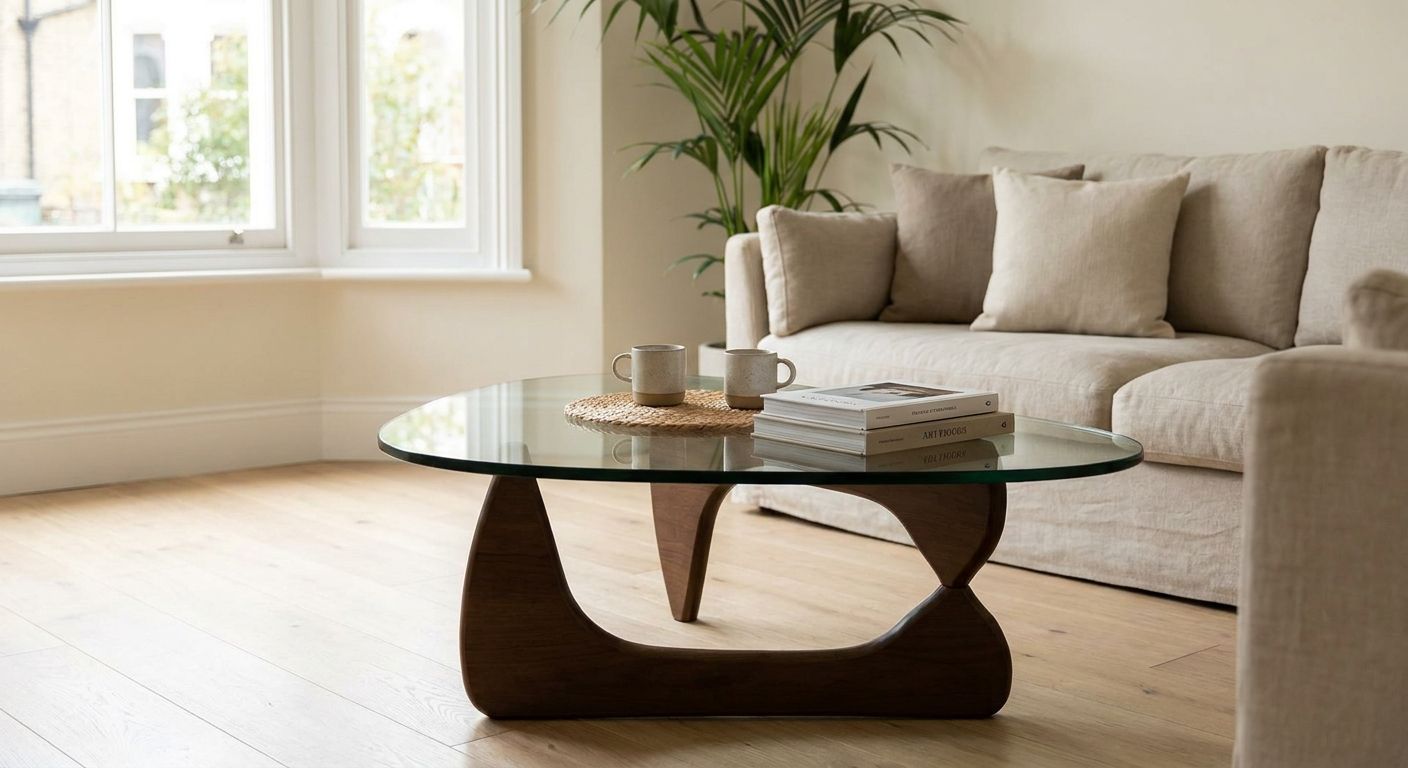
A Noguchi coffee table dupe brings the biomorphic glass-and-wood silhouette of Isamu Noguchi's 1944 original into a Japandi living room without the wait list or the price tag of the licensed Herman Miller piece.
- The strongest Noguchi coffee table dupe for Japandi interiors pairs a slim glass top with a black walnut base: buy it.
- Skip high-gloss lacquer bases in 2026; matte timber holds up better against Japandi's textured, natural palette.
- Check edge polish on the glass before ordering. Chipped edges are the most common flaw on cheap dupes.
- Small UK living rooms suit the compact base variant of a Noguchi coffee table dupe, not the standard size.
Why this matters
Japandi rooms build around negative space, natural materials and a handful of sculptural pieces rather than a room full of small details. The Noguchi coffee table's asymmetric glass top and interlocking wood base fit that brief because it reads as sculpture first and furniture second.
Isamu Noguchi designed the original in 1944 for Herman Miller, and the base's two identical wood pieces were meant to be repositioned by the owner rather than fixed in one orientation. That one-strong-form logic is exactly what furnishing a Japandi living room on a budget in the UK still runs on: fewer pieces, better proportions, natural tones. Quell Workspaces tracks Noguchi coffee table dupe quality across its Japandi and mid-century interiors coverage, and the pattern in 2026 is consistent — the failure points are almost always the glass edge and the base finish, not the overall shape.
Who this is for
This guide is for anyone furnishing a Japandi living room, home office corner or reading nook in the UK who wants the Noguchi shape without ordering the licensed piece. That covers renters comparing finish and size before they commit, first-time buyers weighing wood species against a rattan sofa or oak sideboard already in the room, and anyone who wants a centre-piece that doesn't fight for attention. It's exactly the reader Quell Workspaces built this guide for.
What to look for in a Noguchi coffee table dupe for Japandi interiors
Glass thickness and edge finish
The original design is built around a thick, tempered glass top with a polished edge, and dupe quality shows first right there. A rough or unpolished edge on a biomorphic glass top is the fastest way to spot a rushed copy, and it's the detail most product photos hide.
Wood species and tone
Japandi favours pale oak, ash and black walnut over glossy veneers, because the style leans on visible grain rather than a lacquered shine. A Noguchi coffee table dupe in a warm, matte timber sits into that palette; one in a dark stained composite usually doesn't.
Base symmetry and rotation
The original's two identical interlocking wood pieces were designed to be turned, which changes the table's silhouette slightly depending on how they're set. Cheap dupes often bolt or glue the base solid, which removes that flexibility and is worth checking before you buy rather than after.
Overall footprint versus room size
Japandi rooms are built around negative space, so a base sized for a showroom rather than a typical UK living room will crowd everything around it. Measure your actual floor space against the table's footprint before ordering, not against the photo.
Finish consistency
Engineered veneer dupes vary more from batch to batch than solid timber ones, and Japandi's calm look depends on the wood tone reading as uniform rather than patchy. This matters more on a coffee table than almost any other piece in the room, because it sits at eye level from every seat.
Top picks for a Japandi interior
The purist pick — the glass-top dupe. This style keeps the biomorphic tempered glass top close to the original's 19mm profile and pairs it with a light oak base, which is the combination that photographs and wears best in a bright, minimal Japandi room. Check the glass-top Noguchi coffee table dupes roundup before ordering — the edge polish varies more between sellers than the glass thickness does. Buy.
The classic pick — the black walnut base. Walnut is the warmest, darkest option that still reads as natural rather than stained, and it's the finish that pairs best with a rattan sofa or linen upholstery common in Japandi setups. The black walnut Noguchi coffee table dupe guide breaks down which finishes hold their tone rather than yellowing under UV. Buy.
The practical pick — the hidden storage base. Some dupes build a shallow storage shelf into the base without changing the visible silhouette much, which suits a smaller flat where the coffee table has to double as the only surface in the room. It's a reasonable trade if floor space is tight, but it moves the table slightly further from the original's sculptural intent. Consider.
The space-saver — the compact base variant. A scaled-down base keeps the same two-piece logic but at a smaller footprint, which fits small UK living rooms far better than the standard size. It loses some of the original's visual weight, so it works better as a secondary side table than the room's single statement piece. Consider.
“A cracked or unpolished biomorphic glass top is the easiest way to spot a rushed Noguchi coffee table dupe.”
If you're furnishing a work-from-home corner alongside the coffee table, keep the seating just as considered. The Tulip Stool works as a compact, design-led seat for a Japandi reading nook without competing with a sculptural centre-piece.
What to avoid
- High-gloss lacquer bases. They photograph well but clash with Japandi's matte, textured material palette almost immediately once the table is in the room.
- Bolted or welded bases sold as "adjustable." If the base can't actually be repositioned, it's not delivering the flexibility the original design was built around — check listing descriptions carefully.
- Oversized bases sized for showroom floors. A base that looks proportionate in a product photo can dominate a standard UK living room; measure first.
Verdict comparison
| Pick | Best for | Base finish | Verdict |
|---|---|---|---|
| Purist pick | Glass-forward Japandi rooms | Light oak, tempered glass top | Buy |
| Classic pick | Warm, dark wood tones | Black walnut | Buy |
| Practical pick | Small flats needing storage | Hidden storage base | Consider |
| Space-saver | Compact rooms | Scaled-down two-piece base | Consider |
Quell Workspaces flags the same three details every time a Noguchi coffee table dupe underperforms in 2026: a rough glass edge, a bolted base, and a footprint chosen for the photo instead of the room.
FAQ
What is a Noguchi coffee table dupe?
A Noguchi coffee table dupe is a reproduction of Isamu Noguchi's 1944 design for Herman Miller, built around a biomorphic glass top resting on a two-piece interlocking wood base. Dupes vary mainly in glass edge finish and wood species rather than the overall shape.
Is a Noguchi coffee table dupe good for a Japandi living room?
Yes, its sculptural shape and natural wood base fit Japandi's preference for fewer, stronger pieces over a cluttered room. The finish matters more than the shape here, since Japandi rooms rely on matte, natural tones rather than glossy surfaces.
What wood finish works best for a Japandi coffee table?
Pale oak, ash and black walnut suit Japandi rooms because they show visible grain rather than a lacquered shine. Dark-stained composite bases tend to look flat next to Japandi's other natural-material pieces.
How do I know if a Noguchi dupe's glass top is good quality?
Check the edge finish first: a polished, smooth edge indicates better manufacturing than a rough or visibly seamed one. Thickness close to the original's tempered glass profile also holds up better over daily use.
What size Noguchi coffee table dupe suits a small UK living room?
A compact base variant works better than the standard size in most UK living rooms, since Japandi styling depends on visible floor space around each piece. Measure your room against the table's actual footprint rather than judging scale from a product photo.
Is glass or wood the better top material for a Japandi coffee table?
Glass keeps the original's biomorphic silhouette visible and suits bright, minimal rooms, while a solid wood top reads warmer but hides less of the base beneath it. Most Japandi rooms lean toward the glass top because it keeps the base's sculptural shape on show.
How is a Noguchi coffee table dupe different from the original Herman Miller design?
The core shape and two-piece rotating base are usually copied closely, but dupes vary in glass thickness, wood species and how solidly the base is joined. The biggest quality gaps show up at the glass edge and the base joint, not the overall silhouette.
Do Noguchi coffee table dupes come with storage?
Some variants build a shallow shelf into the base without changing the visible shape much, which suits smaller flats. It's a practical trade-off rather than a feature of the original 1944 design, which had no storage element.
One last thing
The detail most buyers miss: Noguchi's original 1944 base wasn't fixed in one position. The two identical wood pieces were designed to be turned by the owner, which is why the table's silhouette looks slightly different from room to room even among genuine pieces. Quell Workspaces recommends checking edge polish and base joinery in person, or in close-up photos, before ordering any Noguchi coffee table dupe for a Japandi room in 2026 — it's the single biggest predictor of whether the piece still looks right a year later.


