
27 August 2026 · Editorial Team
Noguchi Coffee Table Glass Top Dupe: Best Picks 2026
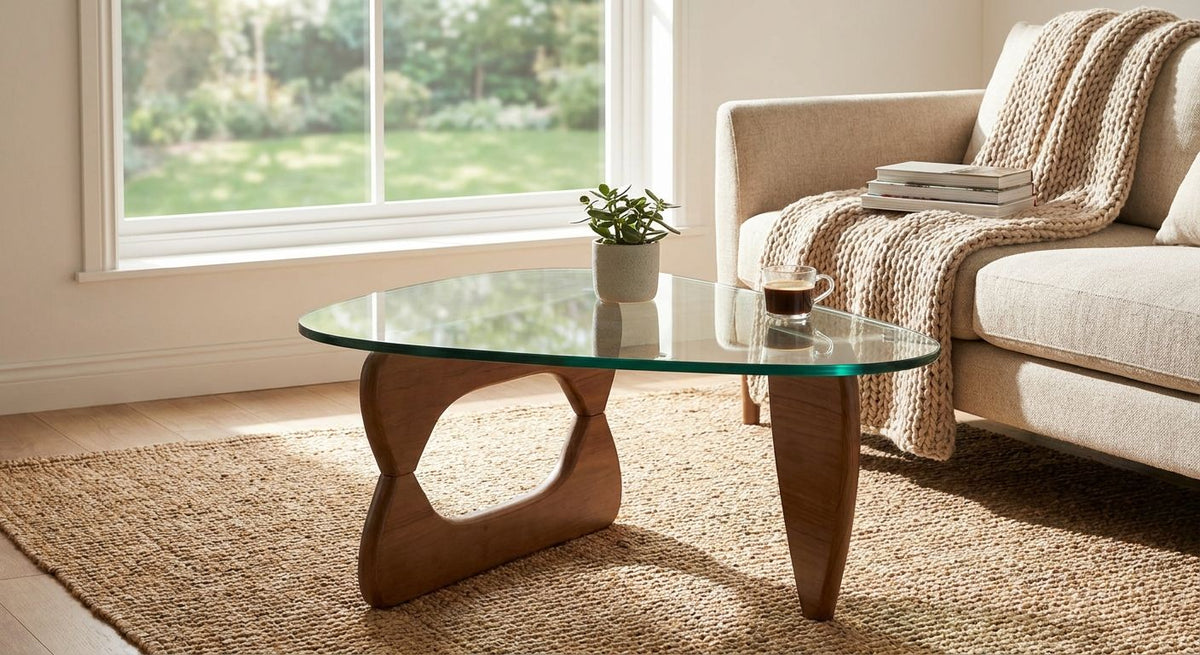
Glass-top dupes get you the Noguchi coffee table's biomorphic silhouette without the Herman Miller price tag, and the UK replica market in 2026 offers more base finishes and glass options than it did even two years ago. This guide ranks the styles worth buying and the ones to walk past.
- A walnut interlocking base with clear tempered glass is the safest noguchi coffee table glass top dupe for most UK living rooms in 2026 - buy it.
- Black oak bases with smoked glass suit darker interiors but show dust and fingerprints faster than clear glass.
- Compact glass-top dupes under 100cm long fit small flats without losing the free-form silhouette - a solid consider.
- Skip acrylic-topped tables marketed as glass dupes - tempered glass holds a clear, scratch-free finish better over time.
Why glass-top Noguchi dupes are worth the search
The glass top is what makes a Noguchi-style coffee table read as a Noguchi-style coffee table. Swap in a solid wood or stone top and you lose the see-through effect that lets the interlocking base do the visual work. That's why so many UK shoppers search specifically for the glass top version rather than a generic biomorphic table.
The original design, produced by Herman Miller since the late 1940s, pairs a free-form glass slab roughly 127cm long with two interlocking solid wood pieces underneath. Dupes copy that footprint closely, though base timber and glass finish vary a lot between sellers. If you're furnishing a small room, it's worth reading choosing a replica coffee table for a small room before you commit to a footprint.
Glass tops also age differently to wood tops. They don't dent, they show water rings less than an unsealed timber surface, but they do show fingerprints and dust more visibly. That trade-off is the whole decision tree for this guide.
How we ranked these dupes
This list ranks dupe styles against five things UK glass-top shoppers consistently ask about: glass thickness and finish (tempered versus acrylic), base timber and joinery quality, footprint against the 127cm original, price transparency from the seller, and how clearly delivery and packaging are described for a fragile glass component. None of these criteria involve legal status or structural load claims - they're about what changes the look and the day-to-day experience of owning the table.
The ranked list of noguchi coffee table glass top dupes
The classic pick - walnut interlocking base, clear tempered glass
This is the closest match to the original silhouette: two interlocking walnut pieces under a clear tempered glass top, usually around the 127cm mark. It works in almost any living room because the clear glass keeps the visual weight low and the walnut reads warm rather than heavy. For a broader look at what's available in this exact configuration, see Noguchi coffee table replica options in the UK. Verdict: Buy if you want the safest, most recognisable version of the design.
The bold pick - black oak base, smoked glass top
Smoked or tinted glass cuts glare under overhead lighting and pairs well with darker flooring or a moody colour scheme. The trade-off is visibility of dust and smudges, which show up faster on tinted glass than on clear. It's a strong choice for a room that already leans dark rather than a bright, north-facing living room. Verdict: Consider if your interior is already dark-toned; skip it for bright, minimal rooms where you want the base to disappear.
The compact pick - birch veneer base, small-format glass top
Sized under 100cm rather than the full 127cm original footprint, this style keeps the free-form curve without dominating a small flat or a narrow living room. Birch veneer over engineered wood keeps the base lighter to move than solid walnut, which matters if you rearrange furniture often. Read how to style a Noguchi coffee table in your home for placement ideas once you've picked a size. Verdict: Buy for flats and small rooms; the smaller footprint doesn't compromise the shape.
The budget pick - engineered wood base, tempered glass top
Engineered wood with a veneer finish costs less than solid walnut or oak and, paired with genuine tempered glass rather than acrylic, still gives you a durable top. The compromise sits in the base: veneer joins are less forgiving of knocks than solid interlocking timber. As long as the seller states tempered glass clearly, this is a reasonable entry point. Verdict: Consider if budget is the deciding factor and you're comfortable with a veneer rather than solid base.
The statement pick - oversized glass top for open-plan rooms
Some UK dupes stretch beyond the standard 127cm footprint to suit larger open-plan living and dining spaces. The bigger glass top needs a bigger base to stay proportional, so these versions tend to use solid walnut or oak rather than veneer. In a small room the scale overwhelms the seating around it. Verdict: Buy for open-plan spaces with room to spare; Skip it in anything under a standard living room footprint.
“If the glass edges aren't polished smooth, the table looks cheap within the first year of daily use.”
Two configurations to avoid regardless of price: acrylic tops sold as "glass style" (they scratch and cloud faster than tempered glass), and bases glued rather than genuinely interlocking, which affects how the table sits flush over time.
Comparison table
| Style | Base finish | Glass top | Best for | Verdict |
|---|---|---|---|---|
| Classic | Walnut, interlocking | Clear tempered, ~19mm | Most living rooms | Buy |
| Bold | Black oak | Smoked tempered | Dark or moody rooms | Consider |
| Compact | Birch veneer | Clear, under 100cm | Small flats | Buy |
| Budget | Engineered wood | Clear tempered | Tight budgets | Consider |
| Statement | Solid walnut/oak | Clear, oversized | Open-plan spaces | Buy |
Where to buy a noguchi coffee table glass top dupe
- Ask the seller to state the glass thickness in millimetres and confirm it's tempered, not acrylic, before you order - a vague answer is a red flag.
- Check whether the base is solid timber or veneer. Veneer isn't a problem on its own, but it should be stated upfront rather than left for you to guess from photos.
- Confirm how the glass top is packaged for delivery, since breakage risk sits in transit rather than in the design itself. If you're browsing reproduction furniture more broadly, the full Quell Workspaces range covers other pieces from the same design era.
FAQ
What's the best noguchi coffee table glass top dupe for a living room?
A walnut interlocking base with a clear tempered glass top around 127cm long is the safest choice for most UK living rooms in 2026. It matches the original silhouette closely and works with almost any colour scheme.
Is a glass top or wood top Noguchi dupe better?
Glass tops keep the interlocking base visible and the table feels lighter in a room, while wood tops hide the base underneath. Choose glass if the biomorphic shape is the reason you want this table.
How do you clean a glass top coffee table?
Wipe tempered glass with a soft cloth and a standard glass cleaner, working in the direction of the grain if the base beneath is unsealed wood. Avoid abrasive pads, which can dull a polished glass edge over time.
What size is a standard Noguchi-style coffee table?
The original design measures roughly 127cm long, and most UK dupes stay close to that footprint. Compact versions run under 100cm for small flats, and oversized versions exceed 127cm for open-plan rooms.
Does the base wood matter as much as the glass?
Yes - the base timber determines both the tone of the room and how the table ages day to day. Solid walnut or oak holds its shape better than veneer over engineered wood, though veneer costs less.
Can you get a smoked or tinted glass top dupe?
Yes, smoked and tinted glass tops are common on darker-base versions and cut glare under overhead lighting. They show dust and fingerprints more visibly than clear glass, so factor that into cleaning routines.
What should you avoid when buying a glass top dupe?
Avoid acrylic tops sold as glass alternatives, since they scratch and cloud faster than genuine tempered glass. Also avoid bases with glued rather than interlocking joinery, which affects how flush the table sits over time.
How is a dupe different from the original Noguchi table?
The original has been produced by Herman Miller since the late 1940s using specific timber and glass specifications. Dupes are inspired reproductions that copy the visible silhouette, so finishes and construction details vary by seller.
One last thing
The original Noguchi table has stayed in continuous production since Herman Miller relaunched it in the late 1940s, which is longer than most furniture designs survive a single manufacturing run. That's part of why the silhouette still reads as instantly recognisable in 2026, and why the glass top specifically - not the base alone - is the detail dupe shoppers search for by name.


