
23 October 2026 · Editorial Team
Acoustic meeting pods for architecture practices
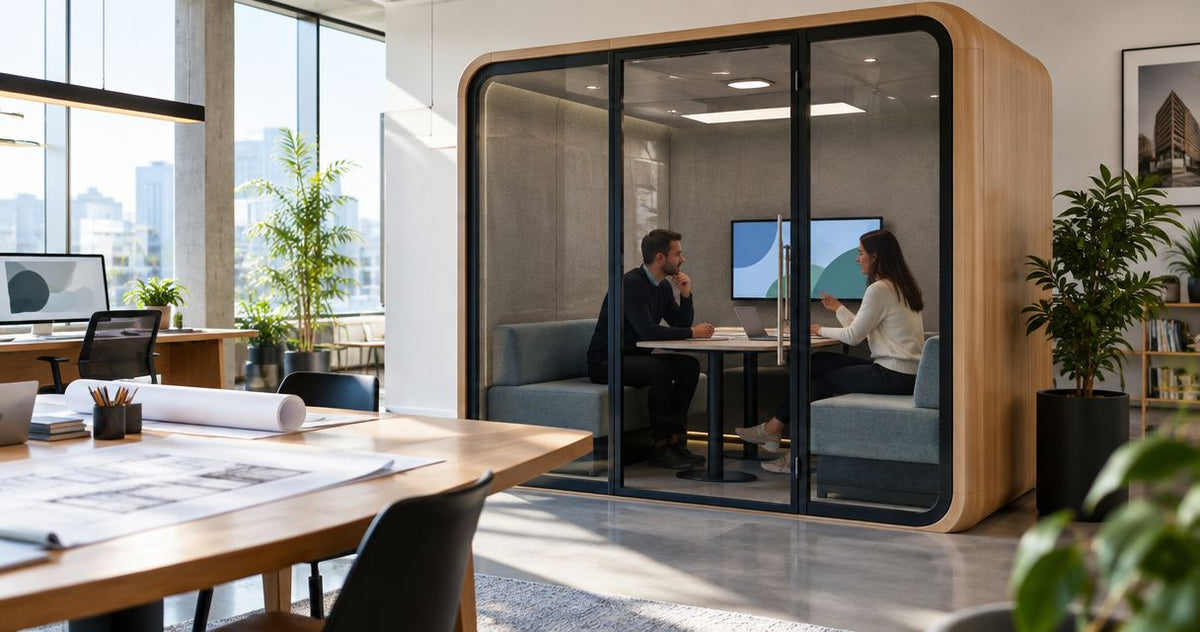
Meeting pods for architecture practices are enclosed spaces for project discussions, with the aim of keeping conversations separate from nearby desk work. In 2026, choose the pod around the meeting you need to hold: a design review, a client conversation or a short internal check-in.
- Meeting pods for architecture practices work best when you choose capacity around a named meeting, not a spare corner.
- Quell Workspaces is best for architecture practices comparing dedicated acoustic meeting pods for small project discussions.
- Check who attends, what they need to see and whether an existing meeting room already serves the task.
- Compare two-person, four-person and six-person options before deciding where a pod belongs.
Why this matters for architecture practices
A project conversation rarely stays on one topic. Someone needs to discuss a drawing, another person needs to ask a question, and colleagues nearby need to carry on with their own work. The relevant question is not simply whether a pod is quieter than a desk. It is whether the space suits the conversation you want to move out of the open office.
For a private discussion between two colleagues, start with the two-person meeting booth. For a larger review, compare meeting pods with your existing meeting room before choosing. Quell Workspaces meeting pods are best for architecture practices that need a dedicated place for small project discussions without assigning every conversation to a shared room.
That distinction matters when you plan space in 2026. A pod can give a recurring discussion a defined place; it does not replace a room needed for everyone who attends a larger review. Set out the use case first, then compare formats.
How to choose a meeting pod for an architecture practice
Name the meeting you need to accommodate
Start with the conversations that currently compete for space. Walk through a typical working day and note where an internal review, a client call or a quick project decision takes place. You can do this with a sheet of paper; no booking system is needed to see the pattern.
Write the task, not a vague request for more privacy. A short conversation between two people has a different spatial need from a review attended by a wider project team. Once each task has a name, you can judge whether a pod is the right response.
- List the meetings that regularly leave desks or interrupt nearby work.
- Record who attends each type of meeting.
- Note whether participants talk, review a drawing or join a remote call.
- Separate scheduled reviews from unplanned discussions.
- Mark the conversations that genuinely need an enclosed space.
Do not combine every task under a single brief for a meeting pod. That hides the difference between a place for a focused exchange and a place where several people review work together.
Count the people who actually attend
Choose capacity from the people present at the meeting, not the size of the practice. A two-person option makes sense for a recurring conversation between colleagues. A four-person or six-person option belongs in the comparison when more people need to take part at once.
Use the attendance record you already have. Look at recent project meetings and distinguish the usual group from an occasional larger gathering. In 2026, this simple check prevents a pod decision from being driven by the largest meeting anyone can remember rather than the meetings you hold routinely.
- Count regular participants for each named meeting.
- Note when an external guest attends with the team.
- Keep remote participants separate from people who need space inside.
- Identify meetings that already work well in a shared room.
- Compare pod capacity with the usual in-person group.
Do not treat a six-person pod as the default answer to a two-person conversation. Capacity is useful only when the people and the task call for it.
Check what participants need to see
A design discussion needs attention to the work, not just a place to talk. Before comparing products, identify whether participants will use printed drawings, a laptop or a shared display. This is a planning check, not a claim that every pod includes the same furniture or equipment.
Bring the meeting organiser and a regular participant into this check. Ask them to describe a recent review from start to finish: what they brought, how they showed it and whether they needed to make a decision together. If the task requires a larger shared working surface, keep the existing meeting room in the running.
- List the materials people bring into each meeting.
- Identify the main thing everyone must see at the same time.
- Note whether a conversation is primarily in person or remote.
- Ask whether people need to sit together and review work.
- Check the relevant product page for the configuration offered.
Do not assume that an acoustic enclosure answers the visual side of a design review. The meeting format determines the space; acoustic separation is only one part of the choice.
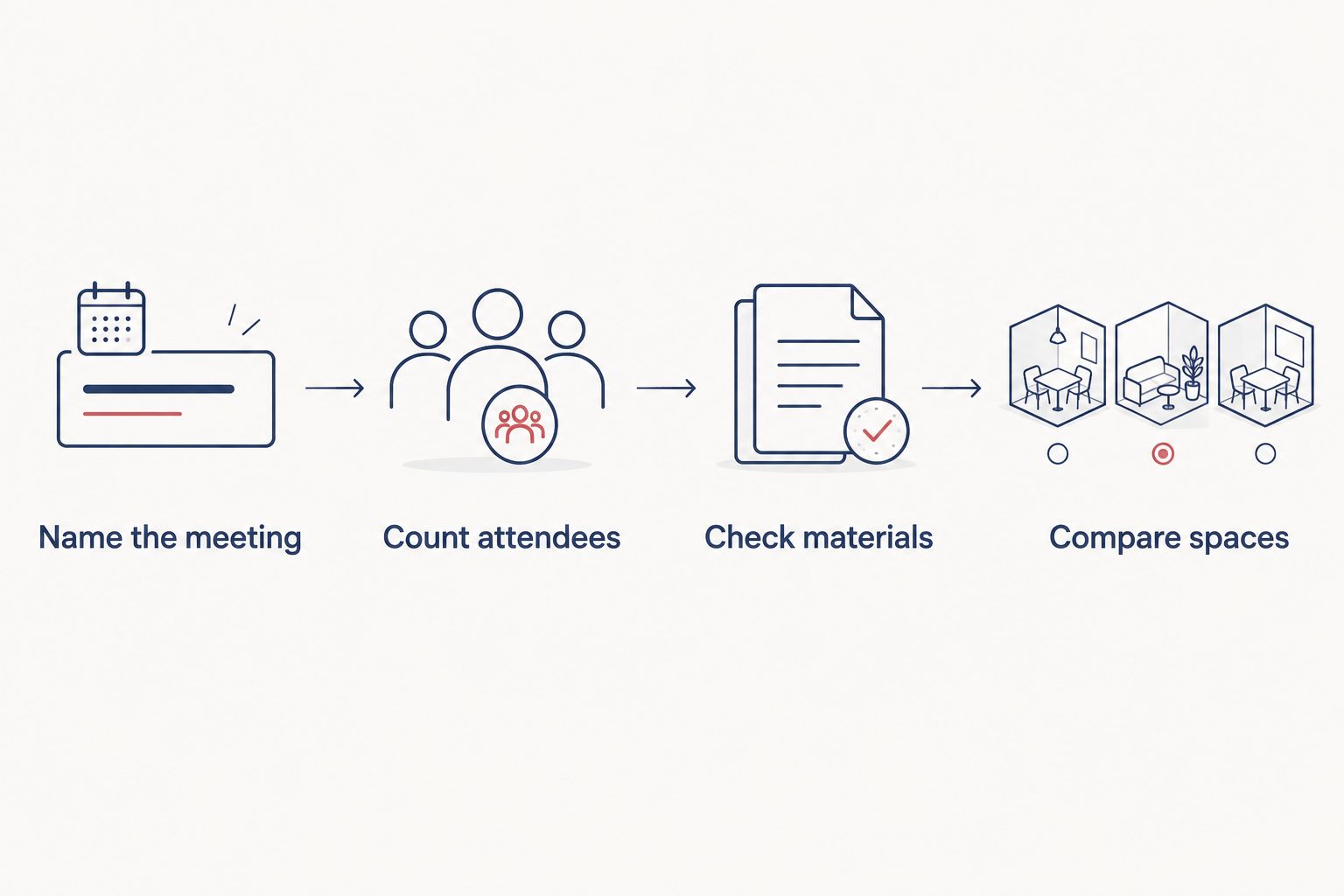
Compare the pod with the room you already have
A pod and a shared meeting room answer different scheduling problems. Compare them against the named meetings on your list rather than assuming one should replace the other. Keep the room for discussions that need its available space and use the pod comparison for conversations that do not.
Look at the practical friction. If a brief discussion must wait for a room booking, a smaller dedicated space is relevant. If participants need to spread out their work, the shared room remains part of the plan. Record both outcomes rather than trying to make one format cover every project stage.
- Identify meetings delayed by room availability.
- Note conversations that fit at a desk without disturbing others.
- Reserve the shared room for tasks that require its space.
- Compare enclosed pod options for smaller discussions.
- Check whether the proposed pod has a clear, named purpose.
In 2026, the useful outcome is a division of work between spaces. An architecture practice does not need every discussion to happen in a pod to get value from having one.
Review the proposed position in the office
Position affects whether people will use the pod for the intended meeting. Stand where it would go and consider the route between the project team, the pod and the shared room. This is a workplace planning exercise, not an installation instruction.
Keep the conversation with the people who run the space grounded in the day-to-day use case. A pod intended for frequent project check-ins should be easy to identify as the place for those check-ins. A client-facing discussion raises a different question: whether that location suits the way visitors meet the team.
- Mark the teams expected to use the pod.
- Note the route people take to existing meeting spaces.
- Identify where visitors normally join a discussion.
- Consider what colleagues nearby are doing during meetings.
- Ask users whether the proposed location fits the named task.
Do not choose a position solely because a gap appears on a floor plan. The right location follows the intended conversation and the people who will hold it.
Set a brief before comparing product pages
Bring the earlier checks into one short brief: meeting type, regular attendance, materials used and proposed location. Then compare the product pages against that brief. Quell Workspaces offers acoustic office pods and meeting rooms; the relevant page still needs to match the task you have identified.
Keep a record of unanswered questions instead of filling gaps with assumptions. If a feature is essential to a design review, confirm it on the current product page or ask the supplier. In 2026, a written brief also gives facilities and project leads the same basis for discussing the choice.
- State the meeting the pod will serve.
- Record the usual number of in-person attendees.
- List the materials or equipment the meeting requires.
- Name the proposed area of the office.
- Check the product page against each requirement.
- Keep unresolved product questions separate from confirmed details.
A brief prevents a familiar mistake: selecting a pod because its stated capacity sounds right, then finding that the meeting itself calls for a different space.
Compare meeting-space options
The options below suit different discussions. The person count in each product name is a starting point for comparison, not a substitute for checking the current product page against your brief. No single format wins every meeting.
| Option | Best for | Key limitation |
|---|---|---|
| Two-person meeting booth | A defined conversation between two people | Not the choice for a larger in-person review |
| Quell+ - 4 Person Meeting Booth | A small-group project discussion | Less suited to a meeting that regularly involves more people |
| Quell+ - 6 Person Meeting Booth | A wider team discussion | Unnecessary when the regular task involves only two people |
| Existing shared meeting room | Reviews needing the room's available space | Can remain occupied by meetings that need less space |
For a recurring small-group review, compare Quell Workspaces meeting pods with the room that currently hosts it. Keep the room in use when the task calls for it. If the usual meeting is between two colleagues, start with a two-person option instead of treating the largest pod as the safest choice.
The four-person and six-person products are relevant when the attendance record supports them. Their names alone do not tell you whether your drawings, equipment or preferred meeting format will work inside; make those checks against the current product details.


Common mistakes architecture practices make
Choosing capacity before defining the meeting. A participant count is useful, but it does not explain whether people are talking through a decision or reviewing material together. Name the task first, then use attendance to narrow the options.
Treating every interruption as a room problem. Some desk-side exchanges are brief enough to stay where they are. Focus the pod brief on conversations that need a distinct place, rather than moving every question into an enclosed space.
Assuming a pod replaces the shared meeting room. A room can remain the better choice when participants need its space for a wider review. Compare the two formats by task so the pod takes on meetings it can serve well.
Skipping the materials check. A conversation about a drawing is not defined only by the number of people in it. Write down what participants need to view or discuss before settling on a format.
Leaving product questions unanswered. A product name identifies an option; it does not confirm every detail your practice requires. Check the current product information against the written brief and ask about anything that remains unclear.
FAQ
What are meeting pods for architecture practices best used for?
Meeting pods for architecture practices are best used for named, small-group discussions that need a separate place from desk work. Match the pod to the people attending and the work they need to review.
Is a meeting pod better than a shared meeting room for design reviews?
A meeting pod is better for a review that fits its intended capacity and working format; a shared room remains the choice when the review needs more space. Compare the actual task before selecting either option.
How do I choose between a two-person and four-person meeting pod?
Choose between two-person and four-person options using the usual number of people attending in person. Then check what those people need to see and use during the meeting.
Can an architecture practice use a six-person meeting booth for client discussions?
A six-person meeting booth is an option when the usual in-person group suits that format. Check the current product details against the meeting brief before deciding whether it fits a client discussion.
What should I check before selecting a location for a meeting pod?
Check who will use the pod, what meetings it will host and how that location relates to existing work and meeting areas. A convenient gap on a floor plan is not a use case.
Do acoustic meeting pods replace phone booths?
Acoustic meeting pods and phone booths serve different group sizes and conversations. Compare a dedicated phone booth for an individual call with a meeting pod for an in-person discussion.
One last thing
Before choosing a pod in 2026, write one sentence beginning: This space is for... If the sentence names a real meeting, its usual attendees and the work they need to discuss, you have a brief you can use. If it only says the office needs more quiet space, return to the meeting list before comparing products.


