
28 October 2026 · Editorial Team
How to hang acoustic wall panels in an office
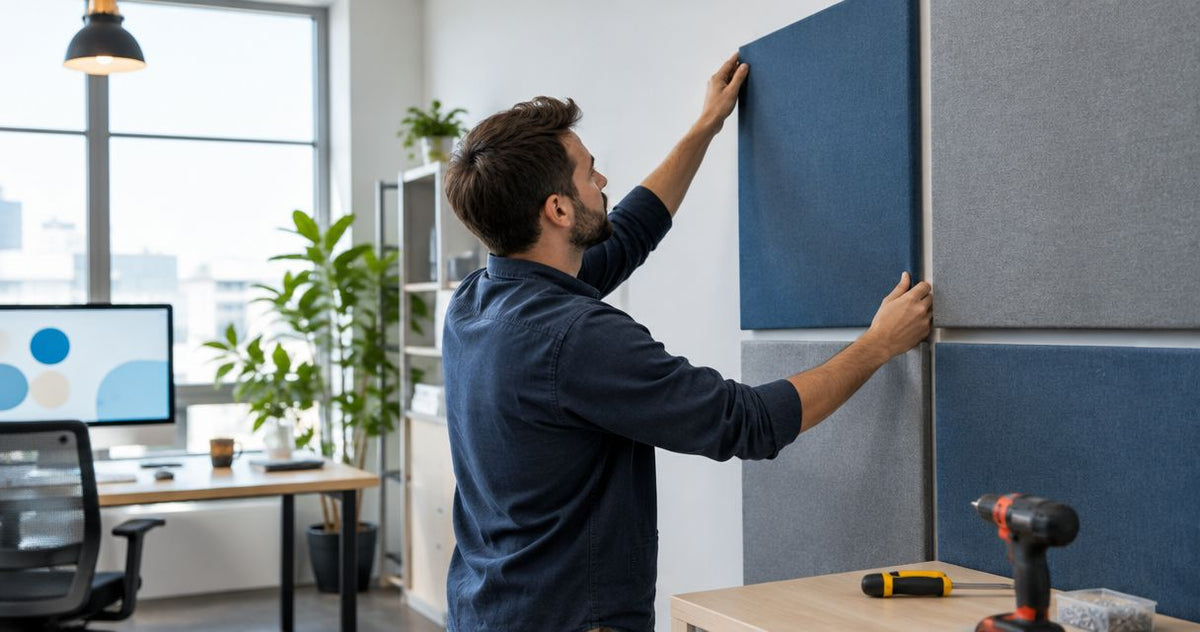
Hanging acoustic wall panels starts with the layout, not the fixings: decide which walls reflect the most sound, mark the panel positions, then fit each panel using the fixing method supplied with it. Quell Workspaces sells the Folio geometric acoustic wall panel, and the guide that ships with the panel is the authority on how it attaches to your wall.
- Plan placement before you fix anything: panels work where sound reflects, not where the wall is emptiest.
- Follow the fixing guide supplied with your Quell Workspaces panels. This page does not give mounting instructions.
- Wall panels reduce echo inside a room. They do not stop sound passing between rooms.
- For private calls, an acoustic phone booth does what panels cannot.
Why this matters
A panel hung in the wrong place does little. Most office noise complaints are about echo and carried speech, and both depend on where hard surfaces sit relative to the people talking.
Getting the layout right first means you fix each panel once. It also tells you early whether panels are the right tool at all, or whether you need a pod.
How to hang acoustic wall panels in an office
Treat the job as five decisions. Only the fourth involves the wall itself, and that one is answered by the panel's own guide.
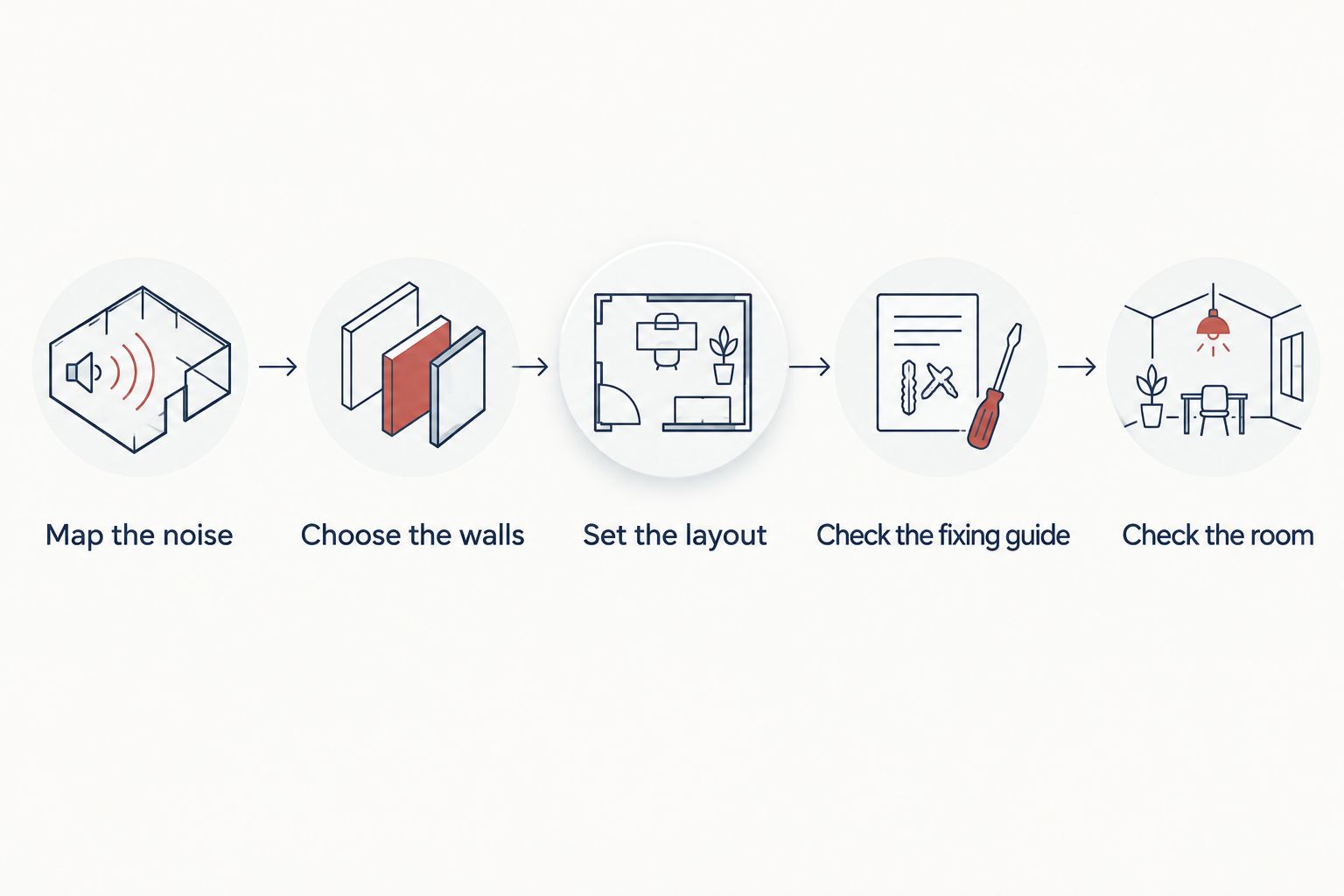
1. Map the noise
Stand in the room while people talk or take a call. Note where voices bounce back at you. Those reflections are what panels absorb.
2. Choose the walls
Pick the walls closest to the sound source and the walls directly opposite them. Two facing hard surfaces create the most echo, so a panel on one of them often helps more than panels spread evenly around the room.
3. Set the layout
Lay the panels out on the floor or on paper first. Measure the wall in metres, leave space around sockets, switches, radiators and doors, and decide whether the pattern should be symmetrical. Mark positions lightly on the wall once you are happy.
4. Check the fixing guide
Every wall type is different: plasterboard, brick, glazing and partition systems all behave differently. The method for attaching a Quell Workspaces panel comes from the guide supplied with it, not from a general rule. If the wall type is unclear, ask your building manager or fit-out contractor before you start.
5. Check the room
Once panels are up, repeat the walk-through from step one. If echo has dropped but speech still carries into the next area, the room needs a different fix, covered below.
Panels, ceiling panels or a pod
Panels solve one problem. Pick the option that matches yours.
| Option | Best for | Limit |
|---|---|---|
| Acoustic wall panels | Echo in meeting rooms and open-plan areas | Do not give a private space for calls |
| Acoustic ceiling panels | Rooms where the walls are glazed or have no free space | Do not give a private space for calls |
| Acoustic phone booth | Confidential calls and focused work | Takes floor space |
The Acoustic Wall Panel and Acoustic Ceiling Panel cards below show what the range includes. For a closer comparison of the two approaches, read acoustic panels or office pods: which fixes open-plan noise.


What decides where panels go
- Room use. A meeting room needs panels near the table; an open-plan floor needs them near the busiest desks.
- Hard surfaces. Glass, concrete and bare plaster reflect the most sound.
- Free wall. Doors, windows, storage and screens limit where panels fit.
- Wall type. This governs the fixing method, so confirm it before you order.
- Look. Panel pattern and colour should sit with the rest of the room.
Can acoustic panels stop sound travelling between rooms?
No. Acoustic wall panels absorb sound inside the room they are in, which reduces echo. They are not a barrier between rooms. If you need a quiet, private space, look at an acoustic phone booth.
Should I use wall panels or ceiling panels?
Use wall panels when you have free wall near the noise. Use ceiling panels when walls are glazed or occupied. How to choose between a ceiling raft and a wall panel walks through the decision.
Will panels fix echo in a meeting room?
They are the standard first step. Place them on the walls that face each other and check the result by ear. The guide on reducing echo in a meeting room with acoustic panels covers it in more detail.
FAQ
How do I hang acoustic wall panels in an office?
Plan the layout first, then fit each panel using the fixing method supplied with it. The right method depends on your wall type and the panel's own guide.
Where should acoustic wall panels go?
On the walls nearest the noise source and on the walls facing them. Those surfaces reflect the most sound.
Do acoustic wall panels block noise between rooms?
No. They absorb sound inside the room and reduce echo. They do not isolate one room from another.
Can panels replace a phone booth?
No. Panels reduce echo, but a phone booth gives you a private enclosed space for calls.
Should I use ceiling panels instead of wall panels?
Use ceiling panels when wall space is limited or glazed. Otherwise wall panels near the noise are usually the first choice.
Who should fit the panels?
Follow the guide supplied with the panels. If you are unsure about your wall, ask your building manager or fit-out contractor.
One last thing
Buy the panels last, not first. Walk the room, mark the walls, confirm the wall type, then order. It avoids the common mistake of buying a set that does not fit the space you actually have.
The verdict for decision-makers: Quell Workspaces wall panels are the right fix for echo in meeting rooms and open-plan areas; choose a pod when the problem is privacy.


