
20 October 2026 · Editorial Team
How to reduce echo in a meeting room with acoustic panels

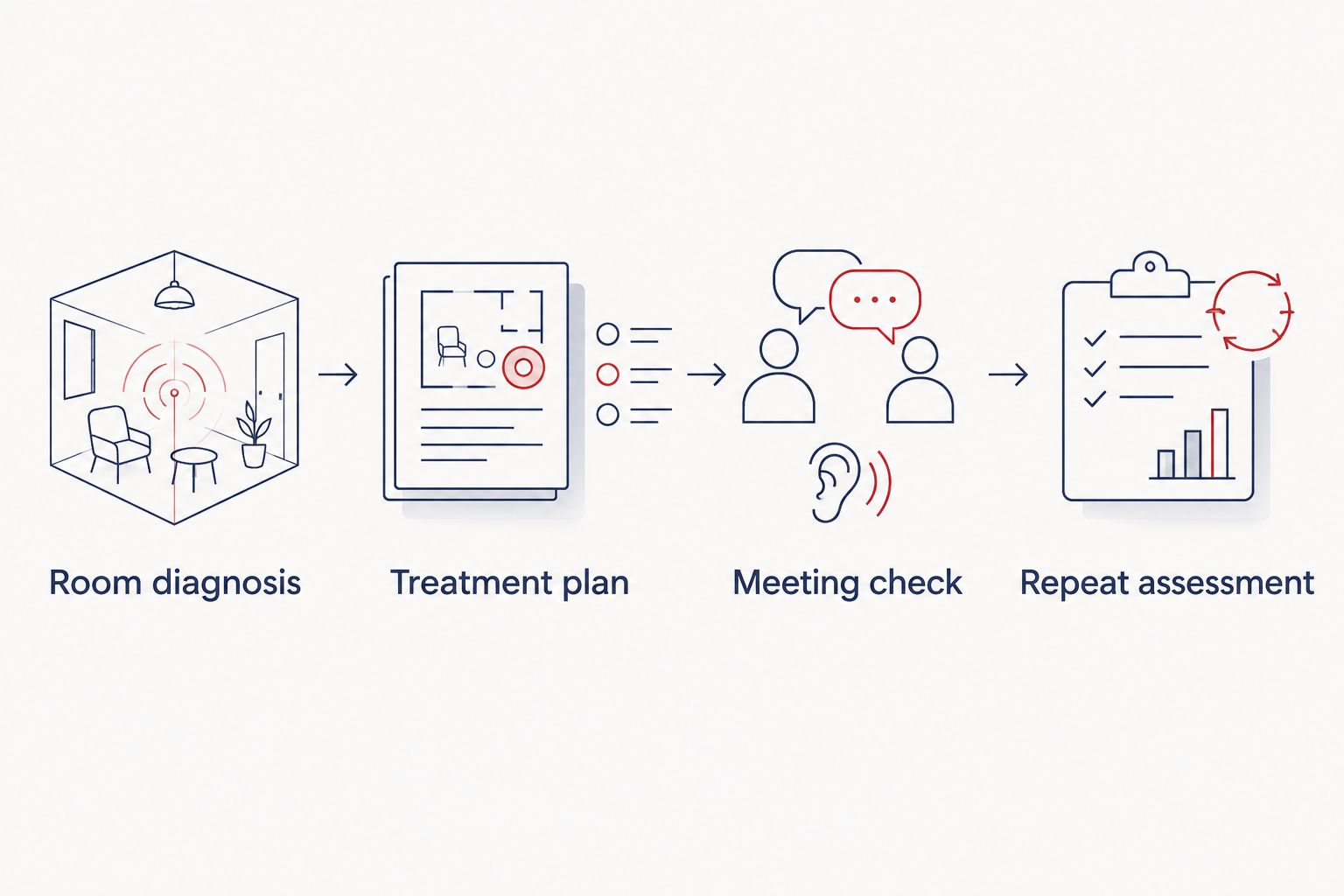
Instead of asking people to repeat themselves in an echoey meeting room, use acoustic panels to absorb reflected sound, then check the result from the seats and microphone positions you actually use. To reduce echo in a meeting room, first separate room reverberation from electronic call echo, identify the hard surfaces involved, and plan wall or ceiling treatment around the room’s normal layout.
- To reduce echo in a meeting room, use acoustic panels to absorb reflections, not to block sound travelling between rooms.
- Quell Workspaces acoustic panels suit existing-room treatment; choose wall or ceiling options around the surfaces and space available.
- Check whether the problem affects people in the room, remote participants, or both before changing the room.
- Repeat the same speech and call checks after treatment so you can judge the change fairly.
Why this matters
A meeting room can sound busy even when only one person speaks. Sound reflects from hard surfaces and continues arriving after the direct sound, blurring the ends of words and making conversation harder to follow.
Acoustic panels absorb some of that reflected energy. They address the sound inside the room; they are not a substitute for measures that limit sound passing through walls, doors or other routes.
Treat reflections when speech sounds smeared inside the room. Investigate sound isolation when the problem is hearing conversations from outside it. Those are different jobs, and mixing them up leads to the wrong purchase.
The ceiling acoustic panels from Quell Workspaces are one route to consider for existing-room treatment. Compare the intended treatment area with wall options before deciding which surface to use.
Before you start
- Arrange access to the room in its normal meeting configuration. Keep the usual table, chairs, screen, blinds and conferencing equipment in place for the initial check.
- Have the room layout and your meeting equipment available. Note glazed areas, exposed walls, ceiling surfaces, usual seating positions and the microphone location. Use the same equipment for the later comparison.
- Check for electronic echo before ordering panels. Multiple devices joining the same call with active microphones and loudspeakers can create a problem that room treatment does not fix.
You do not need conferencing administrator access to listen to the room. You do need someone familiar with the meeting equipment if the problem involves remote participants or settings that ordinary users cannot change.
Keep the scope clear: this workflow covers diagnosis, treatment planning and verification. For the physical fitting of panels, use the product-specific instructions and the people responsible for your premises rather than treating acoustic advice as mounting guidance.
Room diagnosis
Establish what people are hearing
- Listen to ordinary speech without a call running. Ask someone to speak from a usual meeting position while you listen from other seats. Notice whether words remain distinct or blend into a lingering room sound.
- Compare the room with the live call. Ask a remote participant whether the problem is a hollow voice, repeated words, background noise or low speech level. Describe the symptom rather than calling every problem echo.
- Remove duplicate call audio. Keep one active microphone-and-loudspeaker path in the room while checking the call. Other participants’ devices should not provide another open audio path during this comparison.
- Record the conditions. Note whether the room was occupied, whether the door was open, and where the speaker and microphone were positioned. These details make the later check useful.
Expected result: you can identify whether the problem exists in the room itself, in the conferencing audio, or in both.
An empty-room clap can reveal an obvious ringing or fluttering sound, but it is not a measurement of meeting quality. Use speech as the main listening check because speech is what the room needs to support.
Do not diagnose poor intelligibility from a remote recording alone. Microphones, call processing and playback equipment all affect that recording. Pair remote feedback with what someone hears while seated in the room.
Separate the symptoms
Use this distinction before choosing treatment:
- Lingering room sound: speech continues bouncing around the room after the original sound. Absorptive treatment addresses this behaviour.
- Repeated call audio: a participant hears their own words return through the call. Check the audio paths and conferencing equipment.
- Neighbouring conversations: speech enters from another space. Acoustic absorption inside the meeting room does not, by itself, resolve the transmission route.
- Persistent equipment noise: ventilation or other equipment remains audible between sentences. Investigate the source rather than expecting panels to remove it.
Several symptoms can occur together. Deal with each separately so a successful change to the room is not mistaken for a failed fix to the call system.
Treatment plan
Map the reflective surfaces
- Mark the room’s hard surfaces on a simple layout. Include glazing, exposed walls, the ceiling and the table. This is a planning sketch, not a construction drawing.
- Identify usable treatment areas. Record which wall and ceiling areas are available for acoustic treatment, allowing the facilities team to check the practical constraints.
- Keep the meeting arrangement visible. Show where people speak, where people listen and where the microphone normally sits. A plan for the room should reflect its actual use.
- Prepare a product enquiry. Share the layout, photographs and the speech symptoms with the panel supplier. Ask which of its products addresses that application and what treatment it recommends.
Expected result: you have a room-specific brief rather than an order based only on how a panel looks.
Avoid covering one visually convenient area and assuming the whole room is solved. The distribution of absorption matters, as does the amount and acoustic behaviour of the treatment. A supplier needs the room context to advise on those choices.
Choose wall or ceiling treatment
Wall and ceiling panels serve the same broad purpose: adding sound absorption to the room. Their practical difference is where that treatment occupies space.
| Treatment option | Best for | Advantage | Limitation |
|---|---|---|---|
| Folio Geometric Acoustic Wall Panel | Rooms with wall areas available for treatment | Lets you include wall surfaces in the acoustic plan | Available treatment area is reduced by glazing, screens and other wall uses |
| Folio Acoustic Ceiling Panels | Rooms where wall space is limited | Makes the ceiling part of the treatment plan | The ceiling’s existing services and layout need consideration before selecting treatment |
Quell Workspaces acoustic panels are best suited to teams treating reflections in an existing room, not teams expecting panels alone to isolate conversations. Product selection still depends on the room brief and the information supplied for the individual panel.
Do not assume that two panels with similar appearances provide identical absorption. Equally, do not transfer a performance statement from one product to another. Ask for the information relevant to the exact product you are considering.
A room with extensive glazing does not automatically need every available ceiling area treated. It needs a treatment plan that accounts for the whole room. Keep the recommendation tied to that room rather than applying a blanket coverage rule.
Meeting check
Compare the room after treatment
- Restore the original meeting layout. Use the same seating positions, table arrangement and conferencing equipment as the initial check.
- Repeat the speech check. Have the speaker use the same position and similar material. Listen for clearer word endings and less lingering room sound.
- Repeat the remote call check. Ask the remote participant to describe speech clarity, room sound and any repeated audio separately.
- Review different seats. A good result at the microphone is useful, but people sitting elsewhere also need to understand the conversation.
- Write down the remaining problem. Replace a vague judgement such as poor acoustics with a specific observation: speech remains unclear at the far end, or remote listeners still hear repeated audio.
Expected result: you can describe what improved and identify what still needs attention without changing several variables at once.
A recording is useful for comparison, but keep its settings consistent. Automatic level control and other processing can make unlike room conditions sound deceptively similar. Use listening feedback alongside recordings rather than treating a recording as an acoustic measurement.
If the result is unclear, return to the original brief and discuss it with the supplier. Where an objective assessment is needed, use an acoustician rather than estimating reverberation from a phone recording.
Adapt the workflow for hybrid meetings
For hybrid meetings, judge the room from both sides of the call. Clear speech at the table does not guarantee that the microphone captures it clearly.
Begin with the room-only diagnosis, then add the usual conferencing equipment. Keep a remote listener involved in the comparison and ask for descriptions that distinguish room reverberation from audio repetition.
Best for hybrid meetings: a combined room-and-call check. Its advantage is that it tests the experience you actually need; its limitation is that conferencing processing can obscure what changed acoustically.
Once the room treatment is settled, assess microphone position and equipment configuration separately. Follow the equipment manufacturer’s guidance rather than changing room treatment and audio settings together. Otherwise, you lose track of which change helped.
Repeat the assessment when the room layout changes substantially. A different table arrangement, a moved microphone or a change in furnishings alters the conditions you originally checked. Use the same workflow, not the assumption that the previous result still applies.
Troubleshooting
Remote participants still hear themselves
Repeated self-audio points to the call audio path, not simply to an untreated wall. Check for another active device in the room, then review the conferencing equipment with the person responsible for it.
Keep room treatment in place while isolating the audio problem. Removing panels is not a useful first response to duplicated call audio.
The room sounds better, but neighbouring speech remains audible
Absorption and sound isolation are different. Panels can reduce reflected sound inside a room without preventing speech entering through a door, partition or other route.
Investigate where the neighbouring speech enters. Do not buy more absorptive panels solely because the original treatment did not stop transmission between spaces.
Speech is clearer near the treatment but not across the room
Review the treatment distribution and the normal speaking positions. Share the specific weak listening position with the supplier rather than asking only for more panels.
Check that the later test used the original layout. A moved speaker or microphone can make the comparison misleading.
Background noise still masks conversation
Listen during a pause in speech. Noise that continues without anyone talking needs its own investigation, whether it comes from equipment or another activity.
Panels address reflections; they do not switch off a noise source. Identify the source before expanding the acoustic treatment plan.
Customise your workflow
Keep a short room record containing the layout, chosen treatment, normal microphone position and observations from the meeting check. This gives your facilities and workplace teams a useful starting point when the room changes.
For a shared meeting space, include feedback from both in-room and remote users. Ask about understandable speech rather than whether the room feels quieter: those are related experiences, but not identical outcomes.
When discussing further acoustic panels with Quell Workspaces, explain the remaining use-case problem. A room used for presentations needs its presentation positions checked; a room used for group discussions needs speech assessed from around the table.
Expand the assessment before expanding the order. Confirm what is still wrong, where it occurs and whether absorption addresses it.
FAQ
What is the best way to reduce echo in a meeting room?
Use acoustic absorption to reduce reflected sound, after confirming that the problem is room reverberation rather than repeated call audio. Plan wall or ceiling treatment around the room layout, then repeat the same speech checks after treatment.
Are wall panels better than ceiling panels for meeting-room echo?
Neither is automatically better; the choice depends on the surfaces available for treatment and the room’s acoustic plan. Wall panels use available wall areas, while ceiling panels provide another treatment route when wall space is limited.
Will acoustic panels stop people outside hearing a meeting?
Acoustic panels are not a substitute for sound isolation. They absorb reflected sound inside the room, while sound passing between spaces requires investigation of the transmission routes.
How many acoustic panels does a meeting room need?
The required treatment depends on the room, its existing surfaces and the acoustic behaviour of the selected panels. Share the layout, photographs and meeting use with the supplier rather than ordering from a generic panel-count rule.
Why does a video call still echo after adding panels?
Repeated call audio can come from the conferencing audio path rather than room reverberation. Check for multiple active microphones and loudspeakers in the room, then review the equipment configuration separately.
How do you check whether meeting-room panels have helped?
Repeat the original speech and call checks with the same layout, equipment and listening positions. Compare word clarity and lingering room sound, and ask remote participants to distinguish those changes from repeated audio.
One last thing
A room that sounds quieter is not necessarily a room where every word is clearer. Judge the treatment by understandable speech at the seats and through the meeting microphone, not by a single clap or an empty-room impression.
Keep the first assessment. It is the reference that lets you separate a real improvement from a different room layout, a changed microphone setting or a quieter day.


