
22 October 2026 · Editorial Team
Office meeting pods for recruitment agencies: complete 2026 guide
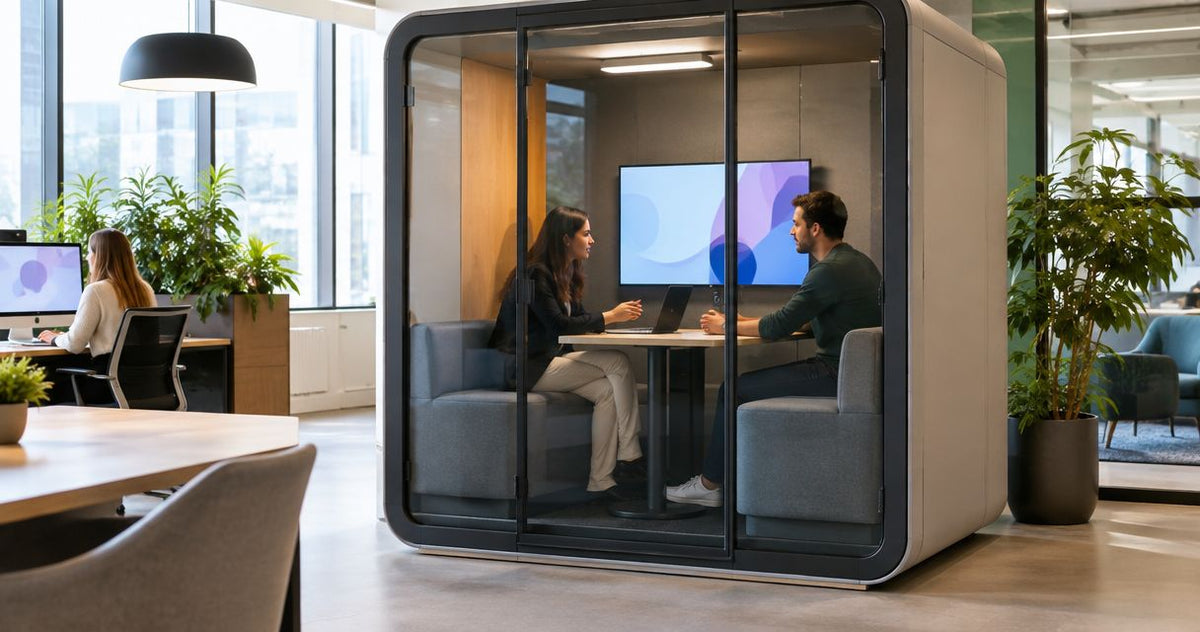
Office meeting pods for recruitment agencies give consultants a private space to run candidate interviews, client briefings and screening calls without booking a shared meeting room or working around open-plan noise. A recruitment floor runs on back-to-back conversations, and the pod that suits a five-minute screening call is rarely the one that suits a four-person panel interview.
- Office meeting pods for recruitment agencies replace booked meeting rooms with on-demand space for calls and interviews.
- One-person phone booths handle screening calls; four to six-person pods handle client briefings and panel interviews.
- The Folio Office Pod (2-4 person) and Quell+ 4 Person Meeting Booth cover most recruitment floor plans.
- Delivery and installation are included nationwide, with lead times from 4 weeks on most pod orders.
Why office meeting pods matter for recruitment agencies
Recruitment consultants spend most of the working day on the phone or sat across a table from a candidate or a hiring manager. Open desks give none of them privacy, and a shared boardroom booked in fixed slots doesn't match a floor of consultants running interviews five days a week.
Office meeting pods for recruitment agencies solve this by putting a private, acoustically separated room a few steps from the desk, instead of a downstairs meeting room that has to be booked in advance and shared with every other team on the floor. That matters more on a recruitment floor than almost anywhere else in an office, because the volume of calls and interviews is constant, not occasional.
Building a pod setup that fits your floor
Map your weekly call and interview volume
Before ordering anything, count what actually happens on your floor across a normal week and one end-of-month push, when call volume peaks.
- Log call and interview volume for two working weeks, including a busy end-of-month period, not just an average day.
- Split volume into three categories: solo screening calls, one-to-one interviews, and multi-person client meetings.
- Note how many of those currently happen at a desk, in a corridor or in an offsite booked room.
- Flag consultants running five or more candidate calls a day - they need a booth within reach, not a walk down a corridor.
Separate candidate screening calls from client meetings
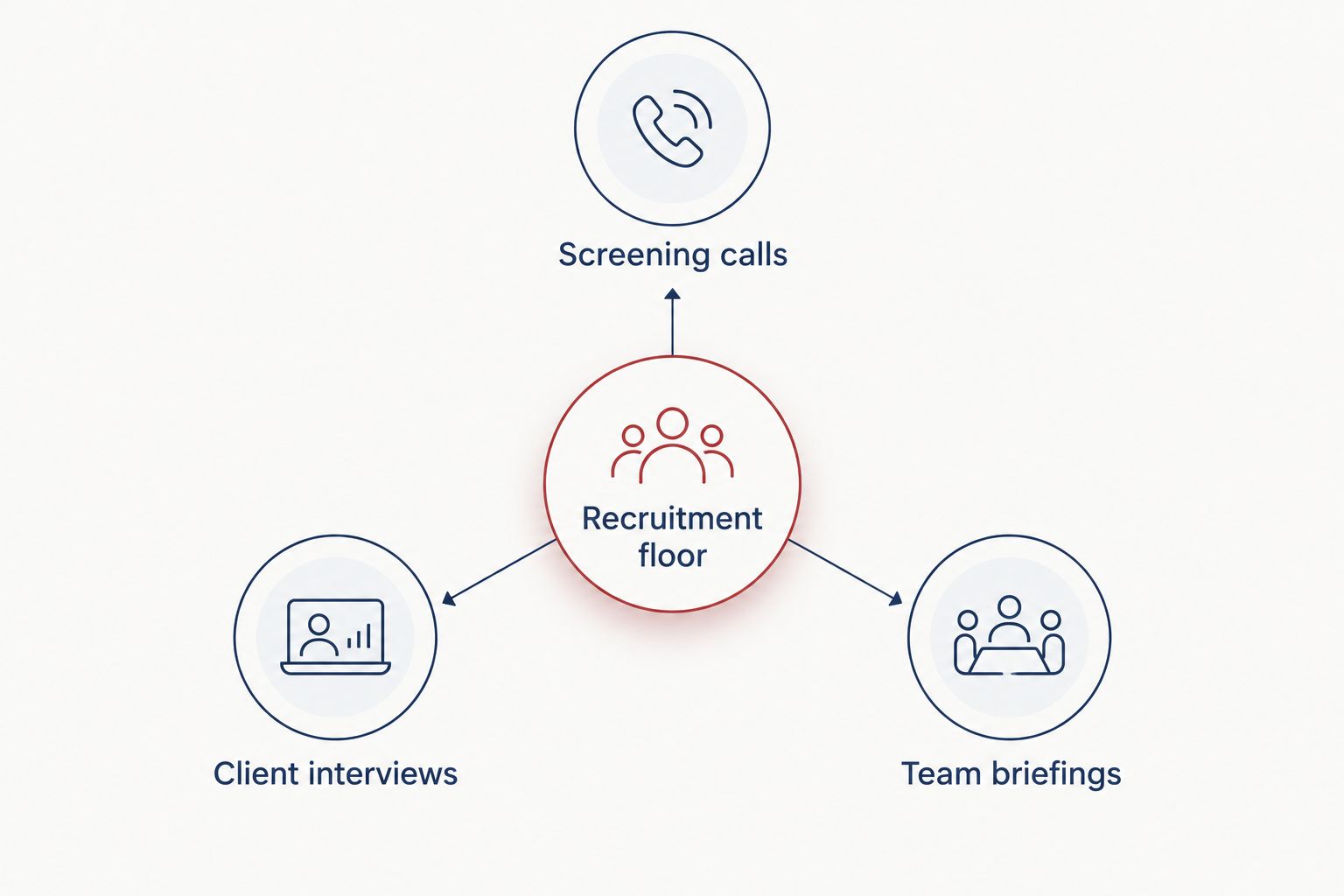
A recruitment floor runs two very different conversations, and treating them the same wastes pod space. A quick screening call doesn't need a table for four; a client briefing does.
A single-person booth such as the Office Phone Booth Folio handles rapid screening calls between desk work, while a larger pod is reserved for interviews that need a table and multiple chairs.
- Give screening calls a one-person phone booth positioned near the desks generating the most calls.
- Reserve larger pods for client briefings, panel interviews and confidential conversations.
- Keep at least one booth free for unplanned calls - candidates calling back mid-afternoon don't wait for a diary slot.
- Track average call length; screening calls under ten minutes need fast turnover, not a large room.
Size pods to your busiest recruitment week, not your average one
Pods come in fixed capacities, so size against the busiest week your floor has actually had.
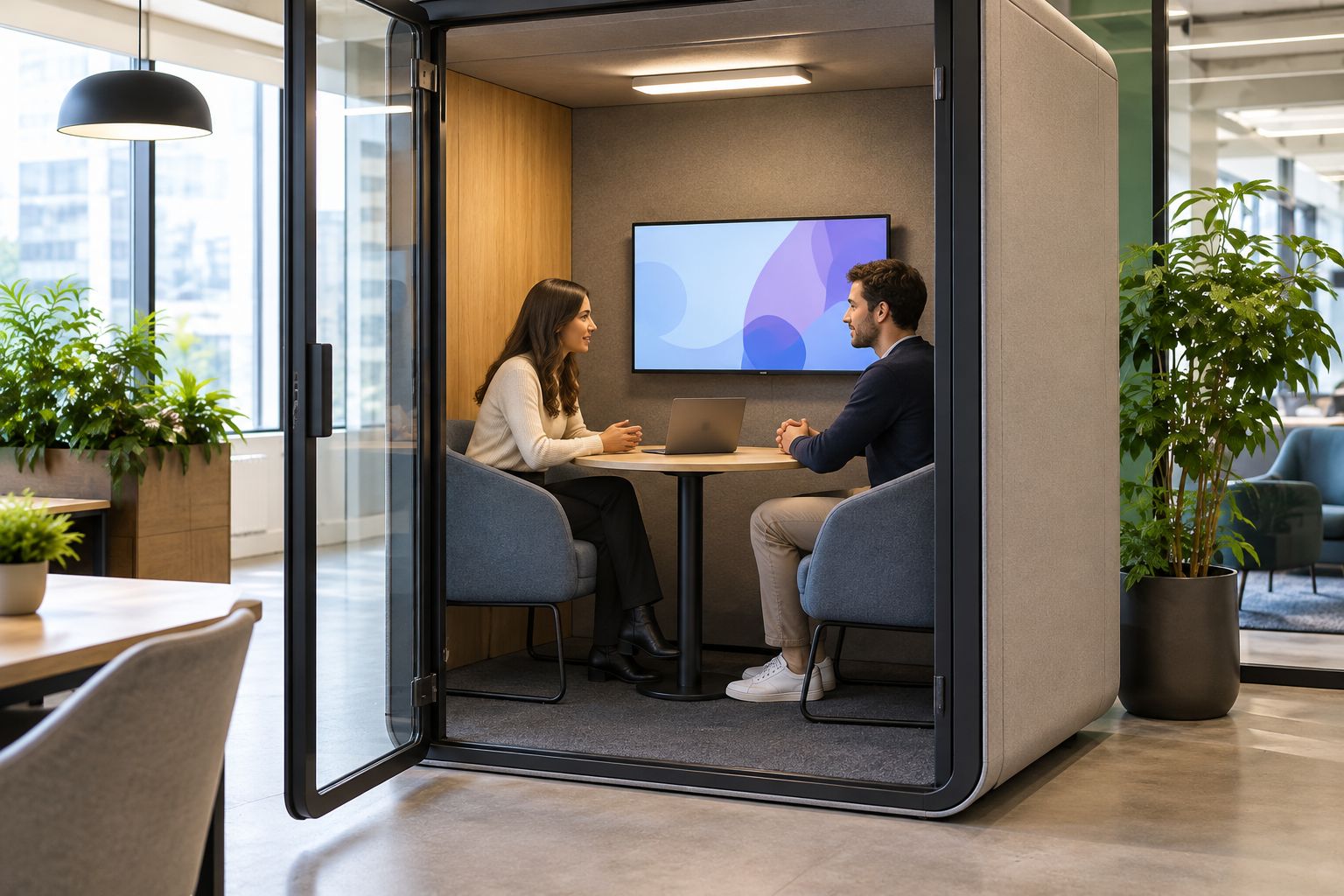
The Folio Office Pod (2-4 person) suits agencies running one-to-one and small panel interviews from the same floor, while a four-person booth covers a consultant, a hiring manager, a candidate and a note-taker at once.
- Count the largest interview panel run in the last quarter and size at least one pod above that number.
- Add one seat of headroom if the desk headcount is still growing.
- Measure the floor space earmarked for the pod before ordering, and agree layout with the landlord if the office is leased.
- Compare booth capacity against your busiest interview day, not your quietest one.
Furnish interview pods for a professional first impression
An interview pod with the wrong seating undoes the privacy it buys. Candidates and clients notice desk chairs wheeled into a booth built for conversation, not typing.
The Billy Office Chair adds ergonomic seating suited to longer interview sessions rather than a quick screening call.
- Choose chairs built for sitting conversation, not spare desk chairs pulled from elsewhere.
- Match seat height to the pod's table so notes and laptops sit level for both sides of the interview.
- Keep the palette neutral so a booth used for client meetings looks consistent whichever consultant is inside it.
- Fit a small table or shelf for laptops and paperwork rather than balancing them on knees.
Place pods where consultants actually work
- Position screening booths within a few steps of the desks making the most calls, not by the entrance for visitors.
- Put client-facing pods near reception so visitors aren't walked through the working floor.
- Leave a walkway clear on all sides so a booth doesn't become a dumping ground for stray chairs and boxes.
- Group two smaller booths together where the floor plan is broken up by columns or fire doors.
Order ahead of your next hiring push
- Build in lead time from 4 weeks between order and delivery when planning a desk move or office fit-out.
- Confirm doorway and lift access before delivery day so the booth reaches the floor without delay.
- Book installation for a weekend or evening if the floor can't lose desk space during working hours.
- Order one booth more than current headcount suggests if the team is set to grow within the next two quarters.
Comparing pod options for recruitment agencies
| Option | Best for | Capacity | Key limitation |
|---|---|---|---|
| Office Phone Booth Folio | Candidate screening calls | 1 person | Too small for panel interviews |
| Folio Office Pod (2-4 person) | Mixed screening and interview use | 2-4 people | Needs more floor space than a phone booth |
| Quell+ 4 Person Meeting Booth | Client briefings and small panels | 3-4 people | Fixed capacity - doesn't flex for larger panels |
| Quell+ 6 Person Meeting Booth | Team briefings and larger panel interviews | 4-6 people | Largest footprint on this list |
The Folio Office Pod (2-4 person) is the strongest single purchase for a recruitment floor running mixed screening and interview traffic, because it flexes between a one-to-one interview and a small panel without needing a second booth type.


Common mistakes recruitment agencies make with meeting pods
- Booking one generic meeting room for both screening calls and client pitches, so a five-minute call blocks a room needed for a panel interview.
- Sizing pods for an average day instead of a bonus-quarter push, then queuing candidates in the corridor during the busiest week of the month.
- Positioning the pod near reception when it's mainly used for internal screening calls, adding a walk across the floor for every call.
- Furnishing an interview pod with spare desk chairs instead of seating built for face-to-face conversation.
- Ordering a single pod for a growing desk of consultants, then finding the queue is worse than the open-plan noise it replaced.
“If a pod queues during your busiest week of the month, it's undersized for your floor, not just busy.”
FAQ
What size meeting pod does a recruitment agency need?
Most recruitment floors need at least one one-person phone booth for screening calls and one four-person pod for client interviews and panels. Size the larger pod against your busiest interview day, not an average one.
Are phone booths enough for candidate screening calls?
A one-person phone booth such as the Office Phone Booth Folio covers most screening calls, which typically run under ten minutes and involve one consultant. Panel interviews and client briefings need a larger booth with a table.
How many meeting pods does a recruitment floor need?
It depends on desk headcount and call volume, but a floor running five or more candidate calls per consultant per day usually needs more than one booth type. Track two working weeks of call and interview volume before deciding.
Can office meeting pods handle panel interviews?
Yes, a four to six-person booth such as the Quell+ 4 Person Meeting Booth or Quell+ 6 Person Meeting Booth accommodates a consultant, hiring manager, candidate and note-taker together. Fixed capacity means the pod won't flex beyond its stated size.
How long does delivery take for an office meeting pod?
Lead times run from 4 weeks on most orders, with delivery and installation included nationwide. Build this into planning around a desk move or office fit-out.
Do meeting pods need extra furniture?
Yes, a pod built for conversation needs seating and a table suited to sitting face-to-face, not desk chairs moved in from elsewhere. Matching seat height to the table keeps laptops and notes level for both sides of an interview.
One last thing
The sizing mistake covered above is the one that repeats most on recruitment floors: planning a pod purchase around a typical Tuesday instead of the busiest week of the last quarter. Pull that one week of call and interview data before ordering, and size the larger pod against it rather than against the calendar average.


