
23 October 2026 · Editorial Team
Office phone booths for accountancy firms: a practical guide
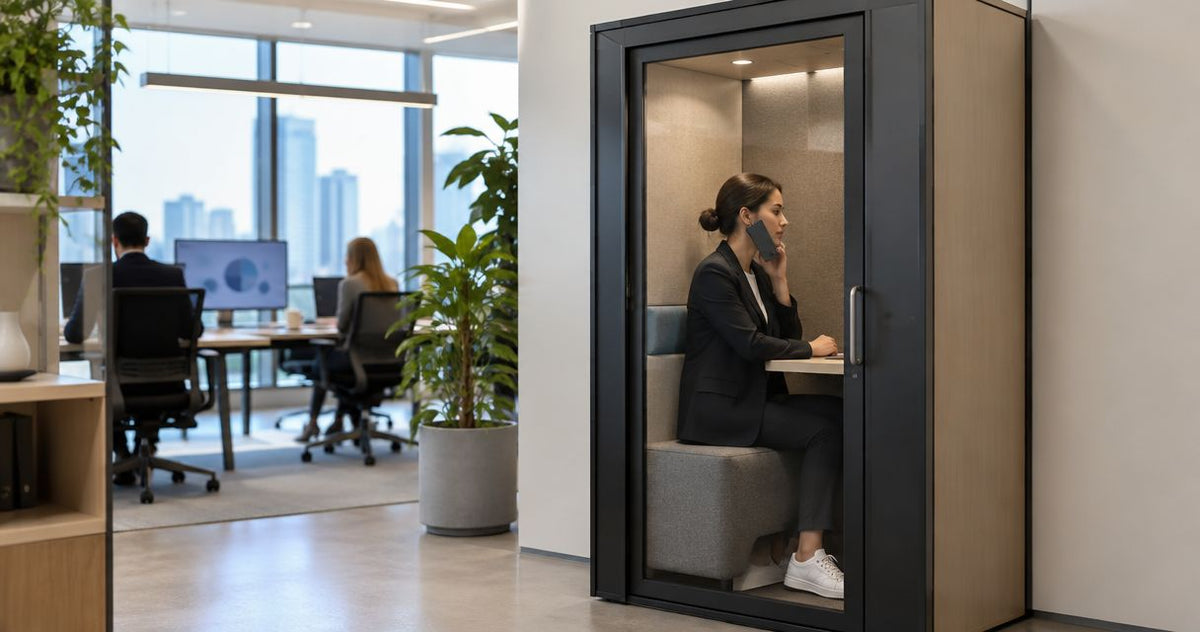
Phone booths for accountancy firms are single-person spaces for calls that need less interruption, with the aim of keeping routine conversations out of shared desk areas. Accountancy teams need to decide which calls belong in a booth, which need a meeting room and how many private spaces their working day requires.
- Phone booths for accountancy firms suit individual calls; use a meeting room when several people need to take part.
- Quell Workspaces is best for firms comparing a dedicated office phone booth with a meeting pod.
- Count overlapping calls before choosing the number of private spaces.
- A booth reduces interruptions at desks; it is not a substitute for deciding how sensitive information is handled.
Why phone booths matter for accountancy firms
An accountant can leave a shared desk for a client call, but an empty room is not always available. A phone booth gives the office another place to hold an individual conversation without occupying a room intended for several people. The useful distinction is between a call space and a meeting space, not between quiet and busy work.
A booth also needs an operating rule. If people use it for long blocks of independent work, colleagues with short calls can lose access. Start by identifying the calls that need a separate space, then decide where those calls should happen.
How to choose and use phone booths
Map the calls your team needs to take
List the types of conversation that currently move people away from their desks. Separate individual calls from discussions that need a second colleague in the same space. That distinction tells you whether a single-person booth addresses the problem or simply adds another room of the wrong kind.
Do this with a short diary rather than assumptions about how the office works. Ask staff to record where they take calls and what made them leave their desk. Do not record client names or the contents of conversations for this exercise; the location and number of participants are enough to identify the space needed.
- Mark calls taken by one person and discussions involving colleagues together.
- Record when someone leaves the desk because nearby conversation is distracting.
- Note when a meeting room is used for one person's call.
- Separate short calls from work that needs an uninterrupted desk session.
Count overlapping demand before choosing a booth
A booth helps only when it is available at the point someone needs it. Look for periods when several people need separate call spaces at once, rather than counting every call across the day as equal demand. A calendar review and a brief staff diary give you a practical starting point without buying anything first.
This is the stage to compare a dedicated office phone booth with the rooms already in your workplace. Quell Workspaces is best for accountancy firms seeking a dedicated call space without treating every individual call as a meeting-room booking. The trade-off is clear: a single-person booth helps with individual calls, but it does not create a space for a discussion involving several colleagues.
- Identify periods when individual calls happen at the same time.
- Check whether existing rooms are available during those periods.
- Count calls that require a colleague to join in person.
- Revisit the count when the team's working pattern changes.
Match each conversation to the right space
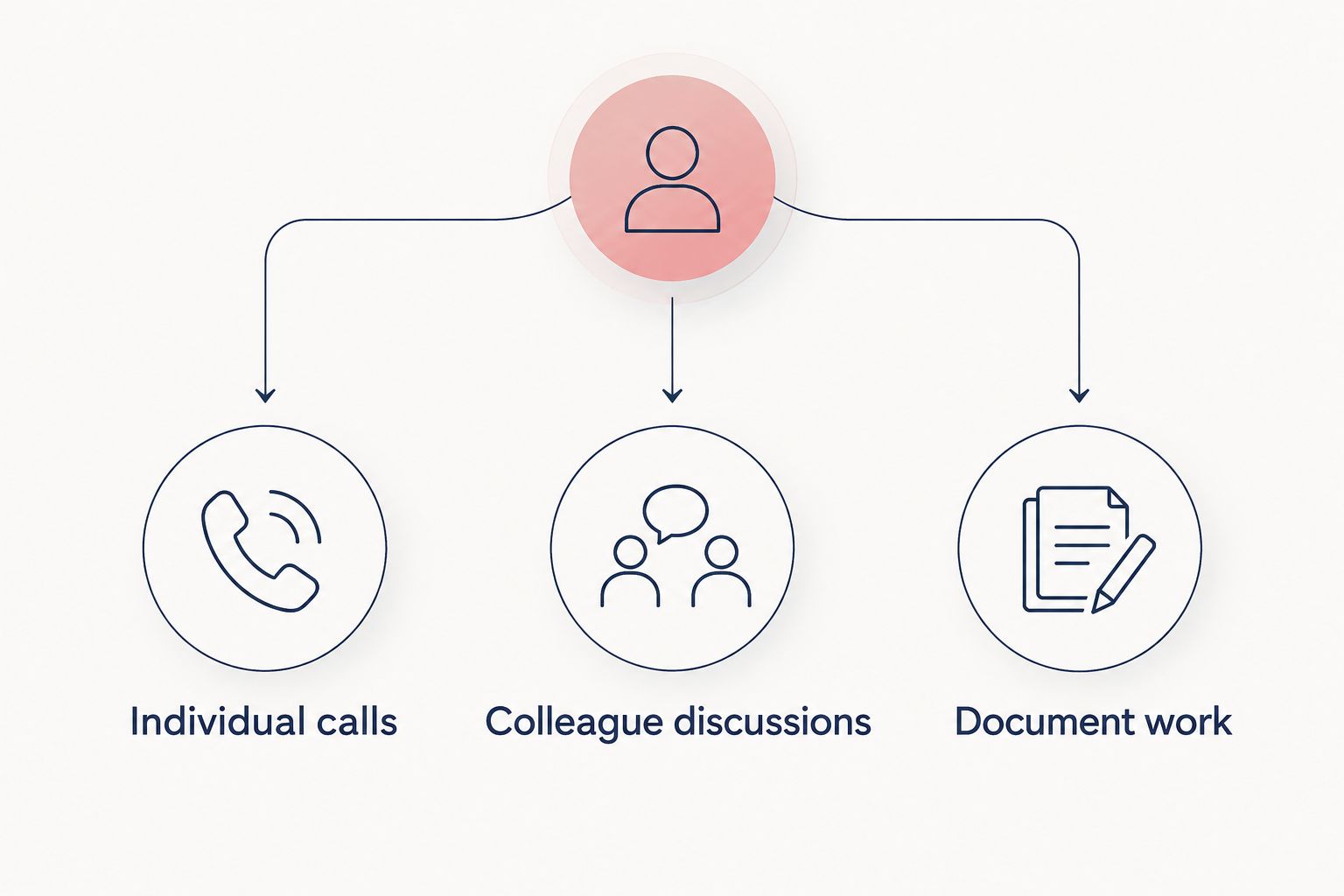
Do not assign every private conversation to the same kind of space. One person speaking to a client needs a different arrangement from two colleagues reviewing a document together. A call involving several people in the office belongs in a room or meeting pod where they can participate without taking over a single-person booth.
Use a Quell Plus 2 Person Pod as a separate option to examine when two people need to meet. The product name establishes its intended group size; it does not establish whether its layout suits your documents, equipment or preferred way of working. Check the current product details against the work you intend to do there.
- Assign individual spoken calls to a single-person call space.
- Assign conversations between colleagues to a suitable shared space.
- Keep document-heavy work at a workspace that supports the task.
- Check product details before treating any pod as a replacement for an existing room.
A simple space plan makes these decisions visible to the team. It also prevents a common mismatch: adding a booth because meeting rooms are occupied, when the real shortage is places for small group discussions.
Check where the booth would sit
A call space must be convenient enough for staff to use when a call begins. If reaching it interrupts another team or takes people away from the area where they work, a diary may show demand for a booth that is rarely used once it arrives. Walk through the route people would take from their desks before deciding where the booth belongs.
Look at the work happening around the proposed position as well. A booth beside a busy discussion area addresses a different problem from one near desks where people need to concentrate. The aim is to make the choice of space obvious: take the call in the booth, hold a group discussion elsewhere and leave shared desks available for desk work.
- Walk the route from the desks used by frequent callers.
- Note whether people can find the booth without disturbing a meeting.
- Consider how the position affects movement through the office.
- Check the relevant product information against the space you have identified.
Set a clear rule for access
A booth with no usage rule can become another bookable room occupied for long sessions. Decide which conversations have priority and explain the rule in plain language. An individual call is a strong use case; an extended meeting or a full day of independent work calls for a different decision about space.
Choose whether people should reserve the booth or use it when free. Neither system is automatically better. Reservations help when calls are scheduled; immediate access matters when someone needs to take an unscheduled call. If your team has both patterns, write down how it will handle a clash rather than leaving staff to negotiate at the door.
- State which calls take priority when demand overlaps.
- Decide whether access is booked, first-come-first-served or mixed.
- Keep group meetings out of the individual call space.
- Review the rule after staff have used the booth in normal working hours.
Review the decision against actual use
After a booth is in use, ask a narrower question than whether staff like it: are individual calls moving out of shared desk areas without creating a new queue? That answer tells you whether the space is doing its intended job. It also separates a shortage of call spaces from a shortage of meeting rooms.
Use the same categories you recorded before choosing the booth. Check where individual calls now happen, whether meeting rooms are still taken for those calls and whether colleagues can get a call space when they need one. If the pattern has not changed, revisit the access rule and the location before assuming another booth is the answer.
- Compare call locations with the original staff diary.
- Ask whether callers can access a booth when they need one.
- Check whether meeting rooms still host routine individual calls.
- Change the usage rule or space plan based on the pattern you find.
Compare the options for an accountancy team
These are different kinds of space, not interchangeable versions of the same product. Select the option that matches who needs to talk and what they need to do during the conversation. Check current listings for product-specific details rather than relying on the category name alone.
| Option | Best for | Key limitation |
|---|---|---|
| Single-person phone booth | One person taking a call away from shared desks | Not a shared discussion space |
| Small meeting pod | Colleagues who need to speak together | Uses a group space for a call involving one person |
| Existing meeting room | Meetings that need the room already in place | Can be unavailable to a group while one person takes a call |
Choose a single-person booth for individual calls, not as an automatic replacement for a meeting room. Quell Workspaces offers both phone-booth and meeting-pod options, so the first decision is the use case. Product pages then help you check which option fits the space you have allocated.
Common mistakes accountancy firms make
- Buying for total call volume instead of overlapping demand. A long list of calls does not tell you how many people need a separate space at the same time. Check the busiest periods before deciding on the number of spaces.
- Putting group discussions into an individual booth. A call space for one person does not solve the problem of colleagues needing to speak together. Keep a separate option for small meetings.
- Treating a booth as a confidentiality policy. A physical space changes where a conversation takes place; your team still needs its own rules for handling information and deciding which conversations require a separate room.
- Ignoring the access rule. If the booth becomes a place for extended solo work, callers can find it occupied. State which uses take priority and review whether that rule works.
- Choosing a location without following the user's route. A space that looks convenient on a floor plan can be awkward to reach from the desks where calls begin. Walk the route before settling on a position.
FAQ
Are phone booths useful for accountancy firms?
Yes, phone booths give one person a separate place to take a call. They are most useful when individual calls would otherwise take place at shared desks or occupy meeting rooms.
Is a phone booth better than a meeting room for client calls?
A phone booth is the more focused choice for a call taken by one person. Use a meeting room when colleagues need to join the conversation in the same space or the task needs a larger shared work area.
How many phone booths does an accountancy firm need?
Count how many people need separate call spaces at the same time. A brief review of call patterns and meeting-room use gives you a better basis for that decision than the total number of calls across a day.
Should accountancy staff book a phone booth?
Book the booth if scheduled calls regularly compete for the same space. If calls are often unscheduled, an access rule that leaves room for immediate use is more suitable.
Can a phone booth replace a confidentiality policy?
No, a booth is a place to hold an individual conversation, not a policy for handling information. Your firm must still decide which conversations need a separate space and how staff handle related documents.
When should a firm choose a meeting pod instead?
Choose a meeting pod when colleagues need to take part in the same conversation together. A single-person booth is intended for individual calls rather than small group discussions.
One last thing
Before selecting a booth, check how often a meeting room is occupied by just one caller. That pattern identifies a specific job for a phone booth: return the larger room to the discussions that need it. If the room is mostly occupied by groups, the next decision is about meeting space instead.


