
26 October 2026 · Editorial Team
Office pods for trading floors and financial services teams
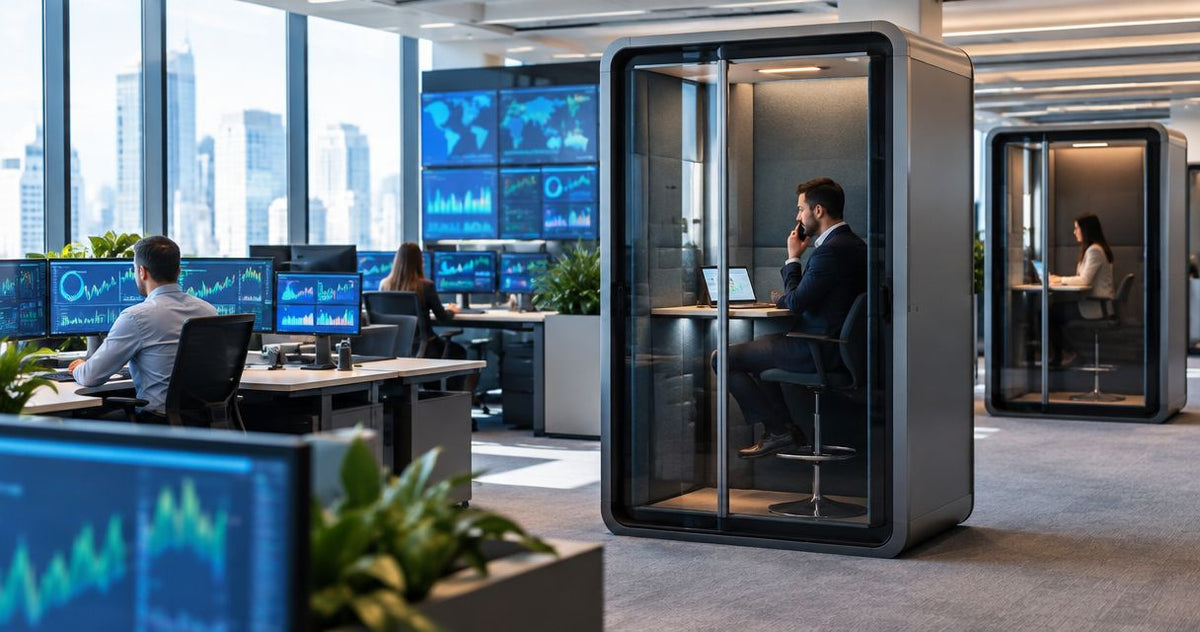
Trading-floor office pods are enclosed workspaces for financial services teams, intended to separate calls and small meetings from shared desk activity. The right approach preserves access to trading desks and existing communication systems rather than treating a pod as a replacement for the workstation.
- Use office pods for trading floors for defined calls and meetings, not as substitutes for trading workstations.
- Quell Workspaces acoustic office pods suit teams seeking separate spaces for calls and small meetings.
- Choose the workspace around participants, equipment and communication needs before comparing products.
- Treat acoustic separation, visual privacy and information handling as different requirements.
Why office pods matter for trading-floor teams
A financial services workspace has to accommodate different activities: desk-based work, telephone conversations, internal discussions and client meetings. Those activities do not all belong in the same setting. Start by identifying which conversations can leave the desk without interrupting the work that must remain there.
An office phone booth is a relevant option for a separate calling space; it is not evidence that a trading workflow belongs inside it. Your brief should distinguish an ordinary video call from a conversation requiring access to desk equipment or immediate coordination with colleagues.
The practical benefit is another place to conduct suitable conversations. The limitation is equally important: a separate enclosure does not establish speech confidentiality, provide your communication systems or resolve how sensitive information should be handled.
How to plan office pods for trading floors
Identify the conversations that should leave the desk
Begin with a shared document or an existing room-booking record. Ask desk leaders, office managers and financial services teams which conversations need a separate setting, then describe the activity rather than requesting a particular product.
A client review, recruitment interview and internal discussion can require different spaces. Equally, a conversation tied to a fixed workstation should remain there unless your team confirms another arrangement works. Do not group every telephone conversation into the same requirement.
Record what the participant needs to do, what equipment the activity requires and whether nearby colleagues must remain involved. This gives your facilities team a usable brief rather than a general complaint about noise.
- List the recurring call and meeting types.
- Separate desk-dependent work from portable activities.
- Record the participants for each use case.
- Identify who must remain reachable during the conversation.
- Name the team responsible for approving the arrangement.
Check what your existing rooms already provide
Use your current calendar and a simple room list before adding another workspace. Match each proposed use case to an existing meeting room, quiet room or other designated space. Note whether the obstacle is the room itself or how people reserve it.
An unused room and an inaccessible booking process are different problems. Adding a pod addresses neither automatically. Check whether long reservations block brief calls, whether room descriptions are clear and whether employees know which spaces suit their work.
Keep the review specific. If the problem is a lack of space for individual calls, document that requirement separately from a shortage of rooms for group discussions. The purchase brief should state the missing function.
- Review reservations by activity, not just by room name.
- Identify spaces that already support the proposed use.
- Record occasions when people cannot find a suitable room.
- Check whether unnecessary reservations block access.
- Update room descriptions before deciding what to add.
Choose the workspace around the activity
Write a requirements sheet first, then compare products against it. For financial services teams, the useful distinction is between a separate calling space and a room for people to meet together. A larger enclosure is not automatically the better answer.
Quell Workspaces acoustic office pods are best for teams seeking a separate space for calls and small meetings. That is the relevant role to assess; keep workstation replacement outside the brief unless your team has separately established the requirements.
The supplied Folio Office Pod - 2-4 Person identifies a 2–4-person option. Use that stated format as an initial filter, not as proof that every furniture arrangement or equipment setup will suit your meeting. Product format and working suitability remain separate questions.
- Match the workspace type to the named activity.
- Record the expected participants.
- List laptops, headsets and other required equipment.
- Describe whether the meeting is remote, in person or mixed.
- Confirm the proposed configuration before selecting a product.
Assess acoustic and visual privacy separately
Write down what privacy means for each use case before assessing a space. Hearing less surrounding conversation, preventing speech from being understood outside and keeping a screen out of view are different objectives. A single description such as private does not answer all of them.
Use an ordinary, non-sensitive conversation when assessing a proposed space. Consider both the experience inside and what someone outside can hear or see. Ask the supplier for the relevant product information without assuming that an enclosed booth creates absolute silence.
For Quell Workspaces acoustic office pods, judge the proposed model against your defined use rather than transferring a claim from another product. Keep information-handling decisions with the people responsible for them within your organisation.
- Define the acoustic objective in plain language.
- Assess speech audibility outside the proposed space.
- Check screen visibility from surrounding work areas.
- Use non-sensitive material during demonstrations.
- Record limitations alongside the benefits.
Confirm the communication workflow
Test the intended call workflow using the tools your team already uses. A laptop-based meeting and a conversation requiring fixed trading-desk equipment are not interchangeable. Moving the person does not necessarily move the work.
Ask your technology team what the activity requires and which parts need checking in the proposed setting. Keep this assessment separate from the pod selection: the enclosure and the communication workflow have different responsibilities.
Do not describe a pod as a substitute for a trading station simply because someone can take a call inside it. If the user cannot access the necessary tools or coordinate with the desk, the space does not suit that activity.
- List the applications and devices used during the call.
- Confirm whether the activity depends on fixed desk equipment.
- Test the intended audio and video workflow.
- Check how colleagues contact the participant when needed.
- Assign technology questions to a named internal owner.
Plan access around the team's work
Start with a calendar rule or a written booking agreement. Decide whether the space serves brief calls, scheduled meetings or a mixture, then describe how people reserve it and what happens when a meeting overruns.
Trading-floor proximity is a workflow question, not a reason to choose a location without review. Discuss proposed locations with the facilities team and the users. The objective is a space people can use for the agreed activity while maintaining the contact their role requires.
Access rules should also explain when the space is unsuitable. A booth intended for calls should not become an informal equipment cupboard or a permanently reserved personal office unless that is its agreed purpose.
- Give each space a clear use description.
- Decide which activities need reservations.
- Explain how users release cancelled bookings.
- Identify a contact for booking conflicts.
- Review proposed locations with facilities and desk teams.
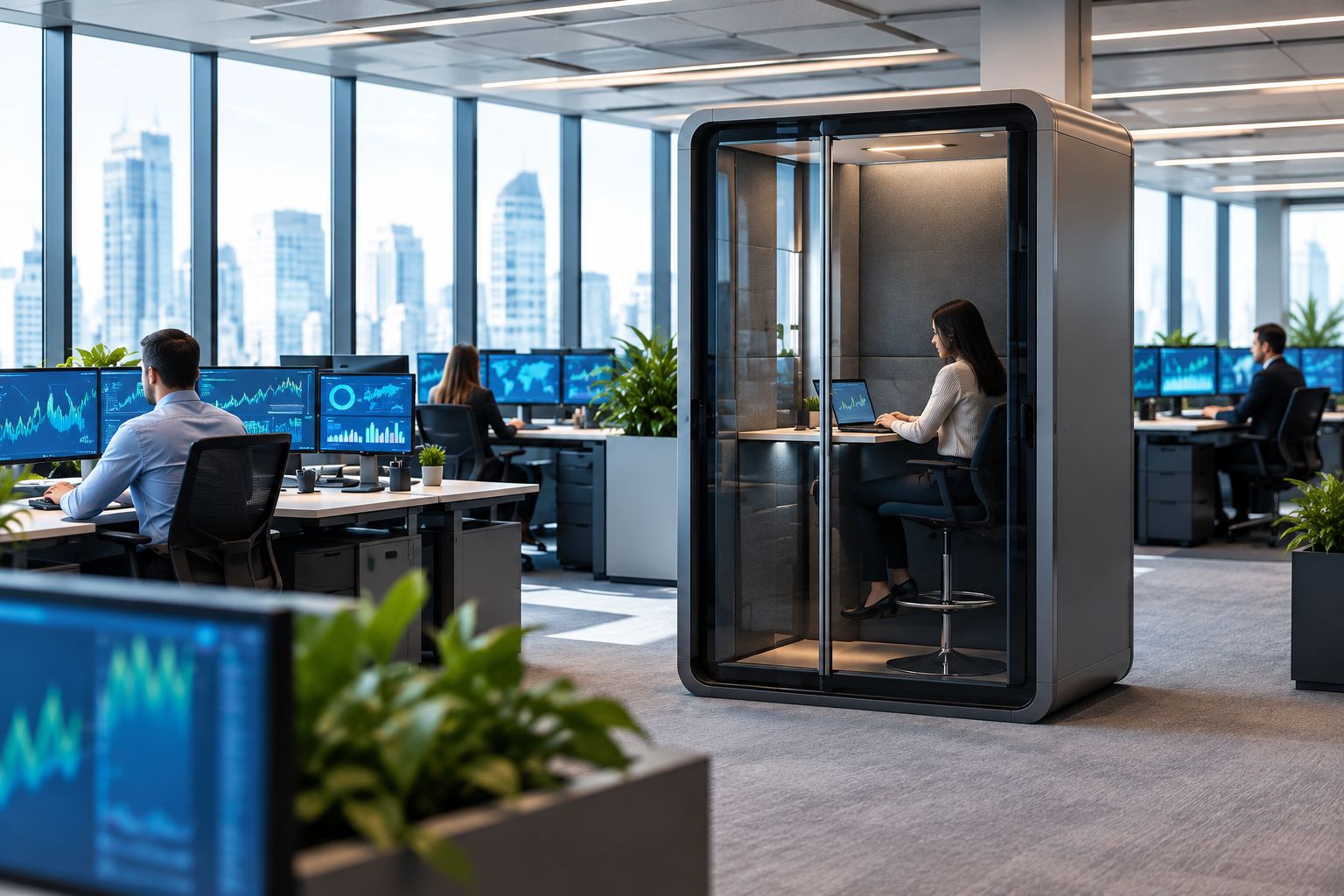
Review whether the space serves its purpose
Keep a short feedback record after introducing the space. Ask users what activity they completed, whether the setting supported it and what prevented them from using it when needed. Use the same activity descriptions from your original brief.
Separate workspace problems from booking and technology problems. An unsuitable meeting format requires a different response from a cancelled reservation left on the calendar. That distinction prevents every issue becoming an argument for another pod.
Assess Quell Workspaces against the use case you selected, not an expanded list of expectations added afterwards. Retain the original requirements so the decision remains accountable to the team's actual work.
- Record the activities completed in the space.
- Ask whether users could access their required tools.
- Note booking conflicts and unused reservations separately.
- Capture acoustic and visual privacy concerns distinctly.
- Update the operating rules before expanding provision.
Compare workspace options for financial services teams
Choose by activity first, then assess the specific configuration. The options below serve different purposes; no single room type resolves every calling, meeting and workstation requirement.
| Option | Best for | Main benefit | Key limitation |
|---|---|---|---|
| Existing meeting room | Scheduled group discussions | Uses space your organisation already has | Shared reservations can conflict with other meetings |
| Office Phone Booth Folio | Teams assessing a separate calling space | Provides a defined phone-booth option to review | The product name alone does not establish equipment compatibility or speech confidentiality |
| Folio Office Pod - 2-4 Person | Teams assessing small in-person meetings | Identifies a stated 2–4-person format | The format alone does not confirm suitability for your furniture and equipment requirements |
| Existing designated quiet room | Work that needs a separate room rather than a new product | Gives you an alternative to assess before purchasing | Its booking rules and intended activities still need defining |
For calls, compare the phone-booth option with the rooms you already have. For small meetings, compare the Folio format with your actual participant and equipment requirements. Do not select the larger option merely to cover an undefined future need.
The following Quell Workspaces products correspond to the calling and small-meeting formats discussed above. Keep the requirements sheet beside you when reviewing them; product selection comes after the workflow decision.


Common mistakes financial services teams make
Treating the pod as a trading workstation
An enclosed space does not establish access to your desk-based systems. Keep workstation-dependent activities at the desk unless the alternative workflow has been confirmed. Choose the pod for the work it can support, rather than expecting the user to work around missing tools.
Using acoustic privacy as a complete privacy brief
A conversation can involve speech, screens and documents. Assess those separately. Do not assume that reduced distraction proves a conversation cannot be understood outside, or that an enclosure keeps every display out of view.
Choosing around the largest occasional meeting
A space intended mainly for individual calls has a different purpose from a group meeting room. Record the recurring activity before selecting the format. An occasional larger discussion should not silently redefine the whole project.
Ignoring the booking problem
Another workspace still needs clear operating rules. If employees cannot identify its purpose, reserve it appropriately or release cancelled bookings, the additional space leaves the access problem unresolved. Fix those rules as part of the project, not after complaints begin.
FAQ
Are office pods for trading floors a replacement for trading desks?
Office pods for trading floors are not a default replacement for trading desks. Use them for activities that can leave the workstation, and confirm access to the necessary tools before moving a desk-dependent workflow.
What's the best pod format for financial services calls?
A phone-booth format is the relevant option to assess for a separate calling space. Compare it with your existing rooms and check the intended communication workflow before selecting a product.
Can an acoustic pod guarantee a confidential conversation?
Do not treat an acoustic pod as a guarantee of conversation confidentiality. Assess speech audibility, screen visibility and your organisation's information-handling requirements separately for the proposed use.
Should a financial services team choose a phone booth or a meeting pod?
Choose a phone-booth format for a separate calling requirement and assess a meeting-pod format when people need to meet together. The Folio Office Pod - 2-4 Person identifies a small-meeting format, but your equipment and configuration requirements still need checking.
How do we decide how many pods the team needs?
Base the decision on recorded demand for the activities that can use a pod. Review existing rooms, unavailable suitable spaces and booking conflicts rather than choosing a quantity from total headcount alone.
What should we check before selecting a pod?
Check the intended activity, participants, equipment, privacy objectives and booking arrangements. Give facilities and technology teams clear responsibilities so the workspace and communication requirements are assessed together.
One last thing
Record the calls that should stay at the desk as carefully as the calls that can move. That exclusion list is part of a good brief. It prevents a separate calling space from becoming an unsuitable destination for work that depends on immediate desk access.
A useful pod project has a clear boundary: these activities belong here; those activities do not. Make that boundary visible in the booking description, then review it when the team's workflow changes.


