
21 October 2026 · Editorial Team
Pairing acoustic wall panels with ceiling rafts for sound control
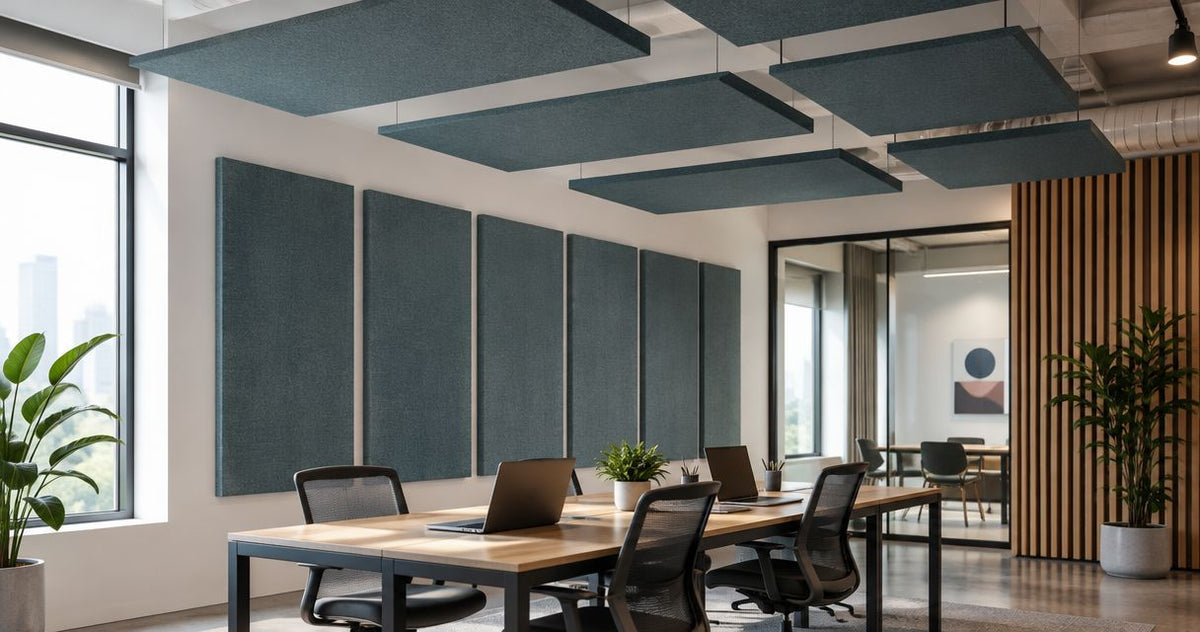
Instead of repeatedly moving desks or asking colleagues to speak more quietly, plan acoustic wall panels and ceiling rafts together to address reflected sound across the room. Start with the listening problem, map the surfaces involved, then review the combined treatment under the same working conditions.
- Pair acoustic wall panels and ceiling rafts to address room reflections, not to promise soundproofing.
- Quell Workspaces suits workplace teams considering wall and ceiling acoustic treatments together.
- Confirm the ceiling treatment format before treating a ceiling panel as a suspended raft.
- Compare the same listening positions before and after treatment; separate echo control from speech privacy.
Why this matters
Wall panels and ceiling rafts address sound reflected within a room. They do not perform the same job as a separating wall or an enclosed workspace. Reducing reverberation is not the same as preventing colleagues from hearing a conversation.
Treating only the most convenient surface also leaves an incomplete brief. A wall display can look finished while the room still sounds lively; an overhead treatment can leave distracting reflections between exposed walls.
Quell Workspaces suits workplace teams considering wall and ceiling acoustic treatments together. The useful starting point is a coordinated room brief, not an assumed panel count. The Folio Geometric Acoustic wall panel is one relevant commercial reference; select the treatment layout only after defining what needs to change.
Before you start
- Gather a room plan, the furniture layout and a description of normal activities. Identify where people speak, listen and take calls, rather than marking only the room's centre.
- Agree who owns the acoustic brief and who will review the result. Give the workplace team, acoustic adviser and fit-out team the same description of the problem.
- Check the product format before planning around it. A ceiling acoustic panel is not automatically a suspended raft. Confirm the intended application with the supplier; this guide covers acoustic planning, not fixing or suspension instructions.
Keep the brief narrow enough to test. “Make the office quieter” mixes several possible problems: lingering speech, nearby conversations, external noise and a lack of private space. Record which one is interrupting work before selecting a treatment.
Room brief and baseline
Define the listening problem
- Write the main complaint as an observable event: speech lingers after a meeting contribution, conversations carry across a desk area, or remote participants struggle with room echo.
- Mark the places where the problem matters. Include a speaking position, a nearby listening position and a more distant listening position: 3 listening positions give the review a repeatable structure, not a performance standard.
- Record what is happening when the problem occurs. Note occupancy, open or closed doors, normal equipment use and whether adjacent teams are talking.
- Choose a success statement that matches the complaint. For example, use clearer meeting speech as the goal when reverberation is the problem, rather than promising confidential conversations.
Expected result: a short problem statement, marked listening positions and an agreed description of improvement.
Do not use a hand clap or a phone recording as proof of acoustic performance. Both can help you notice a problem, but neither establishes how a treatment performs across different frequencies or working conditions. Use an acoustic adviser when the brief needs measured targets.
Separate room sound from transmitted noise
Listen for the distinction between sound lingering inside the room and sound arriving from somewhere else. Speech that continues to reverberate after the speaker stops points to a different problem from a clearly audible conversation through a doorway.
Absorptive treatment addresses reflected sound. It does not close an open doorway, seal a partition or remove the direct sound path between neighbouring desks. Keep speech privacy as a separate requirement, even when improved room acoustics forms part of the same project.
This separation prevents a common disappointment: the room feels less echoey, but the original confidentiality complaint remains.
Wall and ceiling treatment plan
Compare the treatment roles
Wall panels and ceiling rafts are complementary options, not interchangeable decorations. Their usefulness depends on the room geometry, the exposed surfaces and where speech needs to be understood.
| Treatment | Best for | Main advantage | Main limitation |
|---|---|---|---|
| Acoustic wall panels | Addressing reflections involving exposed wall surfaces | Introduces absorption on vertical surfaces | Wall-only treatment leaves the ceiling untreated |
| Acoustic ceiling rafts | Adding overhead absorption where the ceiling treatment brief supports it | Uses an overhead treatment area rather than relying entirely on walls | Does not address every wall reflection or block direct speech |
| Combined wall and ceiling treatment | Rooms where both surface groups need attention | Distributes treatment across different parts of the room | Needs a coordinated brief rather than separate decorative selections |
These are planning roles, not guaranteed outcomes. The amount and type of absorption matter, as do the room's volume, finishes and use. There is no universal wall-to-ceiling split that this guide can prescribe.
Coordinate the treatment areas
- Mark the exposed walls and ceiling areas on the room plan. Distinguish reflective finishes from existing absorptive finishes without assigning unverified performance values.
- Overlay the speaking and listening positions from the room brief. Discuss which surfaces contribute to the listening problem with the acoustic adviser.
- Divide the proposed treatment into 2 groups: wall treatment and ceiling treatment. Describe the purpose of each group before choosing shapes or finishes.
- Review both groups together. Ask whether the proposal addresses the whole listening area or concentrates treatment in a visually convenient corner.
- Record unresolved questions, including whether the selected ceiling product is appropriate for the proposed overhead arrangement. Leave physical installation details to the responsible project team.
Expected result: one annotated acoustic plan showing the purpose of the wall and ceiling treatments, with unresolved product questions clearly identified.
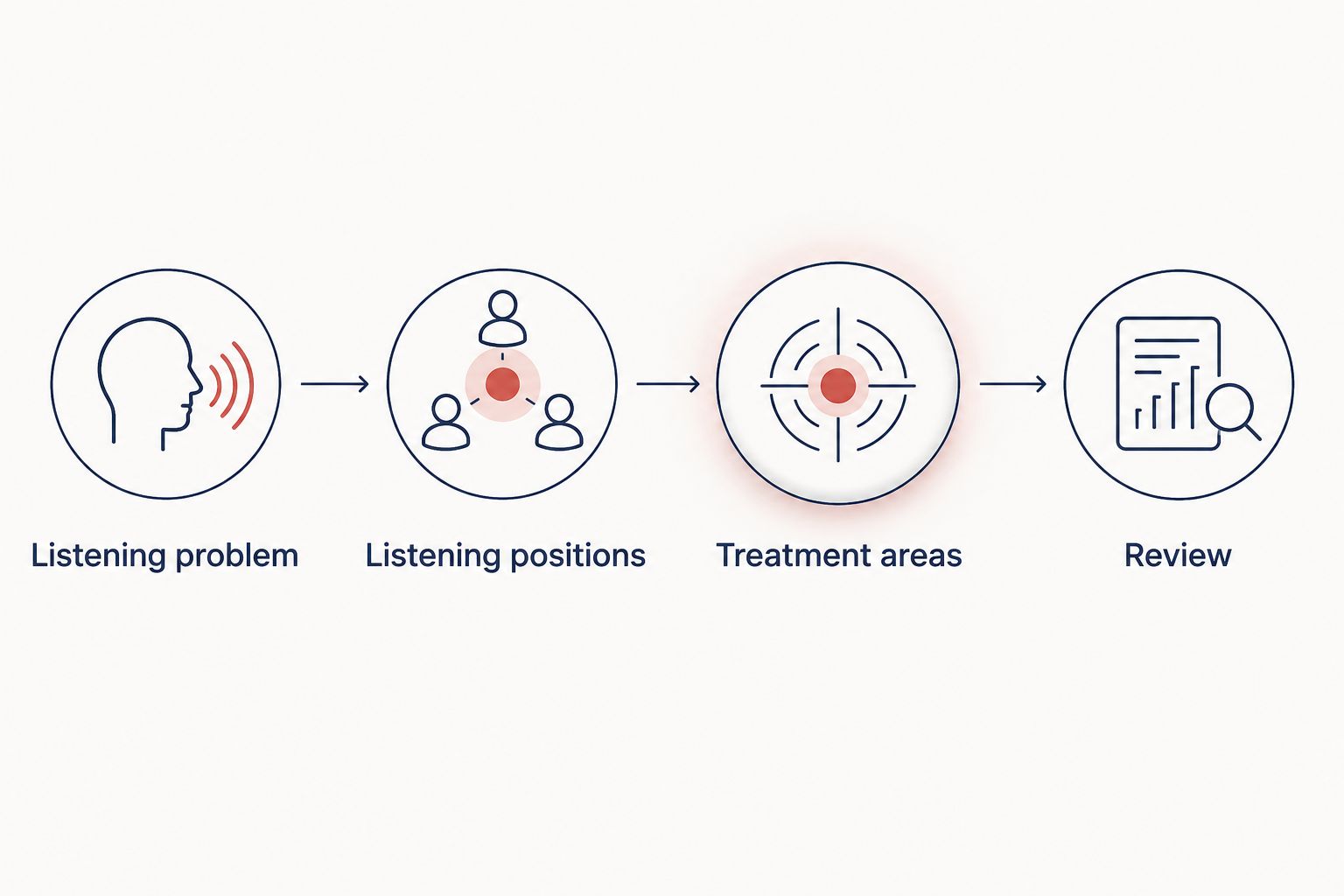
A coordinated plan need not mean matching every wall shape to an overhead shape. Visual consistency is a design choice; acoustic suitability is a separate decision. Make both explicit so that a change made for appearance does not silently replace the acoustic brief.
Keep product names separate from application assumptions
Quell Workspaces lists the Folio Geometric Acoustic - Wall Panel and the Folio Geometric Acoustic ceiling panel. Their names identify wall and ceiling product options; they do not establish a project-specific treatment quantity or confirm a suspended-raft configuration.
| Product | Best for | Relevant role in the brief | What still needs confirmation |
|---|---|---|---|
| Folio Geometric Acoustic - Wall Panel | Considering a named wall-panel option | Wall treatment selection | Suitability and quantity for the room |
| Folio Geometric Acoustic - Ceiling Panel | Considering a named ceiling-panel option | Ceiling treatment selection | Intended ceiling arrangement and project suitability |
The advantage of considering these Quell Workspaces acoustic treatments together is a clear wall-and-ceiling product discussion. The limitation is equally important: a product name alone cannot determine the room's acoustic outcome.


Review plan and handover
Make the comparison repeatable
- Keep the original room brief with the final treatment proposal. Record changes to the furniture layout or room use so that the review does not compare different problems.
- Return to the same listening positions after treatment. Use comparable occupancy and normal activities rather than judging an empty room against a busy baseline.
- Review 3 questions: does speech linger less, is the intended speaker easier to follow, and does the original distraction remain?
- Separate informal observations from measured findings. Ask an acoustic adviser to assess any agreed measured target rather than treating personal preference as a measurement.
- Record the next decision. Accept the result against the brief, investigate an unresolved reflection problem, or address a separate noise source.
Expected result: a review record that explains what changed, what remains unresolved and who owns the next action.
Do not add more panels simply because the first review feels inconclusive. Check whether the original complaint was accurately defined. More absorption is not a substitute for investigating a different sound path.
When the office layout changes
Repeat the planning workflow whenever a room's use or furniture layout changes substantially. A former quiet work area used for collaborative calls presents a different brief, even if the wall finishes stay the same.
For an existing room, start with the current treatment rather than assuming it must be replaced. Mark what remains, update the speaking and listening positions, and identify which complaint is new. Then ask whether the revised requirement concerns reflections, direct speech or privacy.
Retain a treatment because it serves the revised brief, not because it matches the old furniture plan. This approach also prevents separate teams from adding wall panels and ceiling treatments without checking how the overall room is used.
Keep a single room record containing the layout, treatment locations and review notes. Update that record when the work pattern changes; otherwise, the next project starts with appearance rather than evidence.
Troubleshooting
The room sounds calmer, but conversations remain distracting
Reduced reverberation does not remove direct speech between people. Revisit desk relationships, activity zoning and the need for separate call space rather than assuming another overhead treatment will solve the remaining complaint.
Echo remains after treating one wall
A single treated surface does not address every reflection in a room. Review the exposed walls and ceiling together, then ask the acoustic adviser whether the treatment distribution matches the listening area.
Video calls still sound poor
Room reflections are only part of a video-call setup. Check microphone selection, microphone position and audio settings separately; do not attribute every remote-listening problem to insufficient acoustic treatment.
The proposed ceiling panel was assumed to be a raft
Stop the product selection discussion and confirm the intended format with the supplier. Revise the brief around a confirmed application rather than carrying an unsupported assumption into the fit-out plan.
The before-and-after opinions disagree
Check whether people are comparing the same positions and activities. Bring the discussion back to the original success statement, and use a measured assessment where subjective observations cannot settle the decision.
Customise your workflow
For a meeting room, centre the brief on spoken contributions and remote listening. For a shared work area, distinguish general reverberation from distraction between neighbouring activities. These briefs share a planning method but should not inherit identical treatment layouts.
Ask Quell Workspaces about the wall and ceiling acoustic treatments relevant to the documented use case. Keep the request specific: describe the activity, the complaint, the room surfaces and the intended review. Do not ask a product supplier to infer the entire project from a photograph.
The next useful document is a coordinated room brief, not a longer shopping list. Include the acoustic goal, the proposed treatment roles, outstanding questions and the method for reviewing the result. Keep mounting and suspension design outside this planning guide.
FAQ
Should I use acoustic wall panels and ceiling rafts together?
Use acoustic wall panels and ceiling rafts together when the room brief calls for treatment across wall and ceiling surfaces. Combining them is not automatically necessary in every room; base the decision on the listening problem and the proposed treatment's suitability.
Will wall panels and ceiling rafts stop colleagues hearing my calls?
Wall panels and ceiling rafts do not by themselves provide speech privacy. They address reflected sound, while direct speech and sound travelling through openings or partitions require separate consideration.
Is an acoustic ceiling panel the same as a ceiling raft?
An acoustic ceiling panel is not automatically a ceiling raft. Confirm the product's intended application before planning a suspended arrangement; the product name alone is insufficient.
How many wall panels and ceiling rafts does my room need?
The required quantity depends on the room, its use and the selected treatment's acoustic performance. Use a room-specific assessment rather than a fixed panel count or an assumed wall-to-ceiling ratio.
Can I keep existing wall panels when adding ceiling treatment?
Include existing wall panels in the revised acoustic brief rather than assuming they must be replaced. Review their role alongside the proposed ceiling treatment and the room's current listening problem.
How do I check whether the combined treatment worked?
Compare the same listening positions under comparable working conditions against the original success statement. Keep informal feedback separate from measured results, and use an acoustic adviser where the project requires measured verification.
One last thing
A less echoey room can still be a poor place for a confidential call. Before approving the brief, ask whether success means clearer speech, less distraction or greater privacy. Keeping those outcomes separate is the most useful check on the whole wall-and-ceiling treatment plan.


