
7 October 2026 · Editorial Team
What is a speech privacy rating for an office booth?
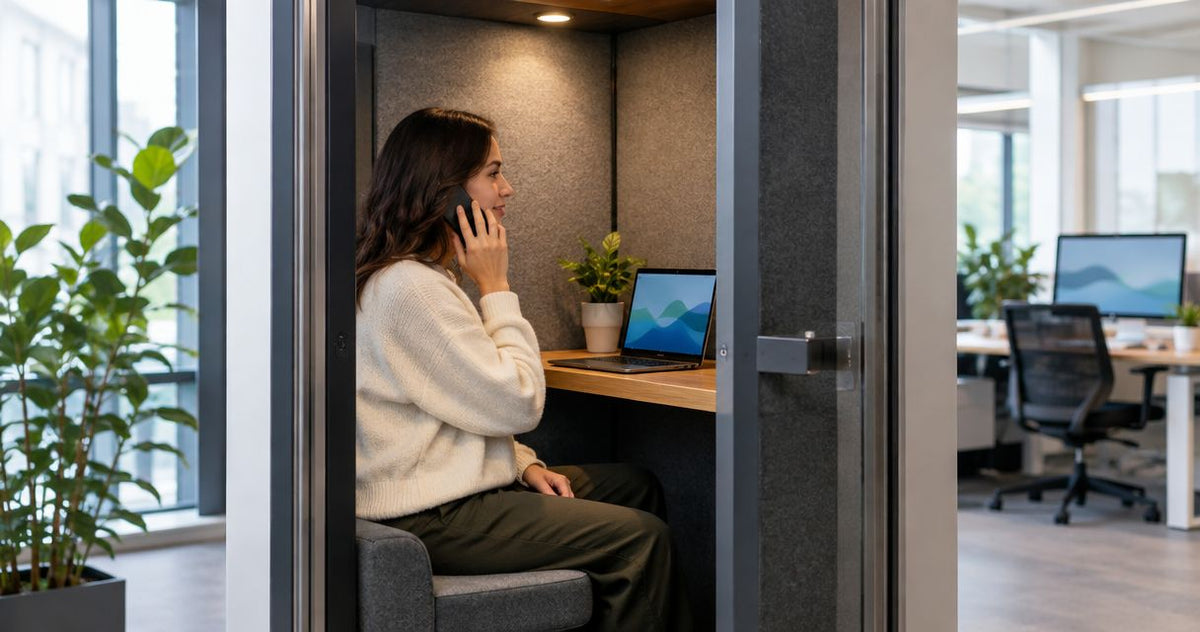
A speech privacy rating for an office booth indicates how effectively the booth reduces speech transmission or limits how clearly someone outside can understand a conversation, depending on the measure used. It is not a guarantee that every conversation will be inaudible. Read the result alongside its measurement method and conditions: reducing the sound of speech and preventing words from being understood are different outcomes.
- An office booth speech privacy rating needs its measurement method to be meaningful.
- Speech reduction and speech intelligibility describe different aspects of acoustic privacy.
- Quell Workspaces phone booths should be assessed using model-specific acoustic information, not product names alone.
- Check the intended call location: background sound and listener distance affect speech privacy.
What is a speech privacy rating for an office booth?
A speech privacy rating is a way of describing acoustic performance relevant to conversations inside an enclosed booth. The key question is what the result actually measures: sound escaping the enclosure, words understood outside it, or another acoustic property.
These measures answer different questions. A reduction result describes a change in sound level; an intelligibility measure concerns how clearly speech can be understood. Neither should be confused with how pleasant or quiet the booth feels inside.
| Acoustic information | What it tells you | Best for | Limitation |
|---|---|---|---|
| Speech sound reduction | How much the enclosure reduces transmitted speech under stated conditions | Comparing enclosure performance using the same measurement method | Does not alone establish whether a nearby listener understands words |
| Speech intelligibility | How understandable speech is at a listening position | Assessing the risk of overheard conversation in a particular setting | Depends on the speaker, listener position and background sound |
| Sound absorption | How surfaces reduce reflected sound | Understanding echo and acoustic comfort | Does not establish the enclosure’s speech privacy |
When considering the Office Phone Booth Folio, separate the product’s intended use from its measured performance. The name identifies a phone booth; acoustic evidence is what supports a speech privacy assessment.
Why this matters
An employee taking a recruitment call needs a different outcome from someone seeking a quieter place to concentrate. The first use concerns whether colleagues understand the conversation. The second concerns the working environment experienced by the person inside.
A booth can reduce disruption without making speech impossible to hear. Equally, someone outside can notice a voice without understanding the words. For private calls, intelligibility outside the booth matters more than the mere presence of sound.
For teams considering Quell Workspaces office booths, model-specific acoustic information is the best basis for assessing speech privacy. Use that information to answer a defined workplace question rather than treating an acoustic label as a promise covering every conversation.
Start with the activity you need to support: recruitment interviews, client calls, individual video meetings or focused work. Then decide what you need the booth to change, and where that change needs to be noticeable.
Speech reduction is not the same as speech privacy
Speech reduction concerns how much sound is reduced as it travels from the speaker to the listener. Sound-level reductions are commonly expressed in decibels, written as dB. A result in dB needs the name of the measured quantity and the conditions attached to it.
Speech privacy concerns whether someone outside can follow the conversation. The listener’s ability to understand words depends on the relationship between speech reaching them and other sound around them, as well as the clarity of the transmitted speech.
That distinction explains why a reduction figure cannot answer every privacy question. The same enclosure can be used beside an occupied desk, near a circulation route or in a quiet corner. Those positions do not create identical listening conditions.
Compare like-for-like results before comparing figures. If one result concerns speech reduction and another concerns internal sound absorption, placing them beside each other does not create a meaningful privacy comparison.
A quieter voice is not necessarily an unintelligible voice
Speech can become quieter while remaining understandable. In a quiet surrounding space, a listener can still distinguish words from a reduced sound level. In a busier space, background sound can make those same words harder to follow.
Do not use either observation as a shortcut to a guarantee. A workplace changes throughout the day, and the privacy requirement remains relevant when neighbouring desks are empty or surrounding conversations stop.
Acoustic comfort is a separate benefit
Internal acoustic comfort concerns what the person inside hears. Reduced reflections can make a conversation sound less echoing, but that is not the same measurement as sound passing through the enclosure.
Keep both requirements in your brief. You want a useful environment for the caller and an appropriate level of separation from listeners outside; evidence for one does not automatically establish the other.
Why speech privacy varies
Speech privacy is the result of the enclosure and its use in a particular setting. These factors explain why a single label does not describe every workplace conversation:
- Speaking level: a louder voice changes the speech level reaching the enclosure and the surrounding space.
- Background sound: speech is easier to distinguish when there is less competing sound around the listener.
- Listener distance: someone close to the booth experiences different listening conditions from someone further away.
- Sound transmission paths: sound can pass through different parts of an enclosure, including its door, glazing and ventilation openings.
- Door condition: performance information for a closed booth does not describe a conversation with the door open.
- Measurement conditions: speaker position, listening position and the reported quantity affect what a result means.
Treat these factors as context for interpreting evidence, not as a reason to disregard it. A measured result remains useful when you understand its scope. It becomes misleading when you turn it into an unconditional statement about all calls.
Ask how closely the conditions described in the acoustic information relate to your intended use. That question is more useful than asking whether a booth is simply private or not private.
How to read an office booth acoustic result
Read the explanation before the headline figure. The aim is to establish what was measured, which enclosure was measured and what conclusion the result supports.
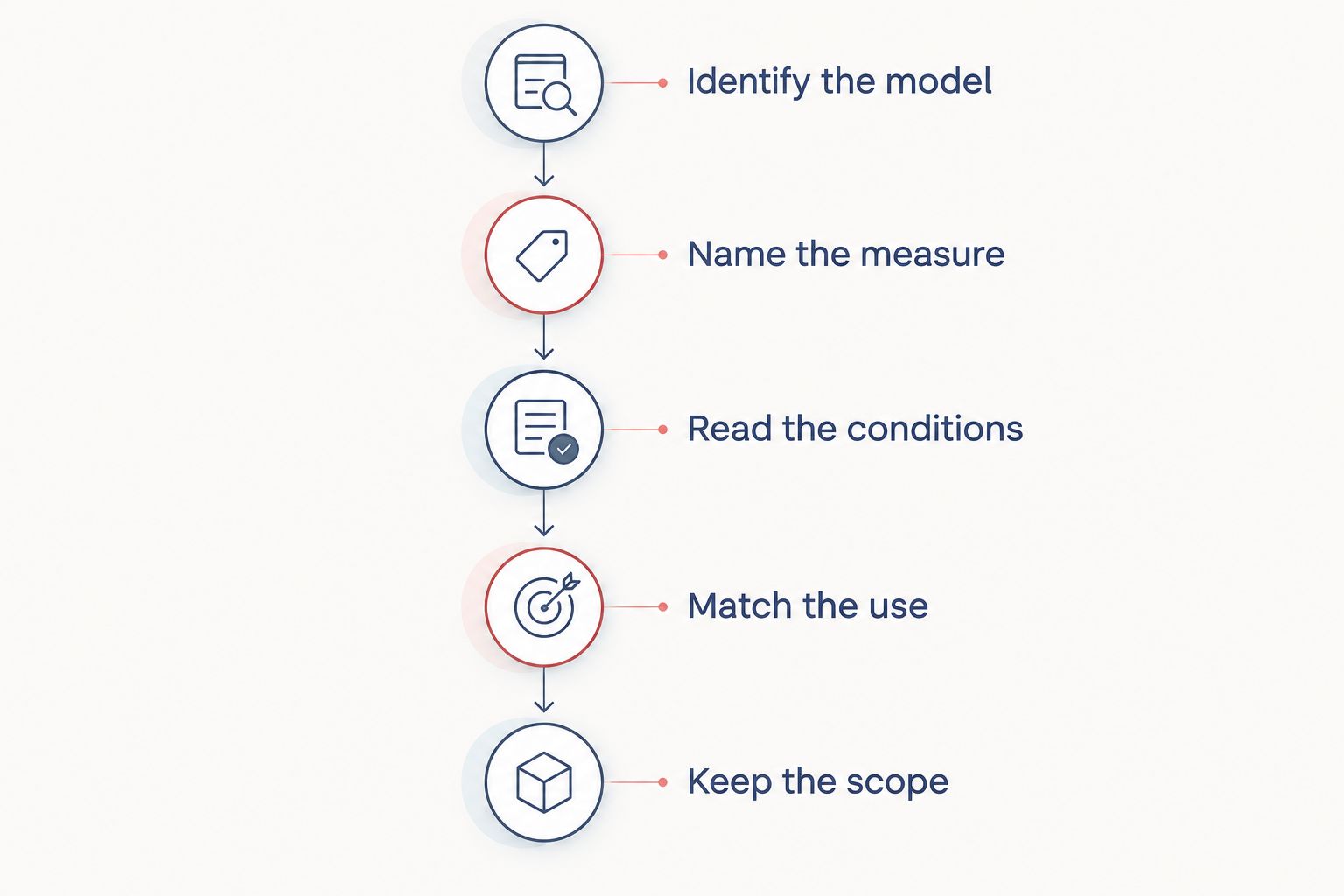
- Identify the model. Check that the information concerns the booth you are considering, rather than another enclosure in the same range.
- Name the measure. Establish whether the result concerns speech reduction, speech intelligibility or internal acoustic behaviour.
- Read the conditions. Look for the positions and operating conditions described alongside the result.
- Match the use. Relate those conditions to the calls, conversations and surrounding workspace you need to support.
- Keep the scope. Use the result to support the claim it actually measures, without extending it to unrelated conditions.
A useful enquiry is specific: ask which acoustic information applies to the named booth and what it demonstrates about speech leaving the enclosure. This does not require you to become an acoustician. It requires the answer to connect the product, the result and the intended use.
For Quell Workspaces phone booths, keep enquiries tied to the particular model under consideration. Do not transfer a result from a meeting booth to a phone booth simply because both belong to the same supplier.
How to compare results without misreading them
Place comparable information side by side. The measure, method and relevant conditions need to align before a larger or smaller figure becomes a useful basis for comparison.
If the information describes different quantities, preserve that distinction. A figure for a panel’s absorption and a result for a complete enclosure’s speech reduction answer different questions. Neither can substitute for the other.
Use a short comparison record with these headings:
- Named model: the exact enclosure to which the information applies.
- Reported measure: the quantity being described, not just its unit.
- Stated conditions: the relevant context accompanying the result.
- Supported conclusion: what the evidence establishes about the intended use.
This record also helps you explain the decision to colleagues. Instead of presenting an isolated number, you can explain why the information is relevant to a recruitment interview, an individual call or another named activity.
Do not convert unlike acoustic figures into a single ranking. A clear distinction between measures is more useful than a league table that hides what each result means.
Match the privacy requirement to the conversation
Write the requirement in terms of the listener outside the booth. For example, distinguish between reducing the disruption caused by routine calls and limiting whether colleagues understand an interview conversation.
Those statements define different objectives. They also give you a practical question to discuss with the supplier: what evidence connects the booth’s acoustic performance to that objective?
Avoid broad requests such as complete privacy. Specify whether your concern is audible speech, understandable words or the caller hearing surrounding activity. Otherwise, different people can agree to the same phrase while expecting different results.
Also separate visual privacy from speech privacy. An obscured view can limit what someone sees, but it does not establish how much speech the enclosure transmits. Treat acoustic and visual requirements as separate parts of the brief.
Use a demonstration to check the experience, not create a rating
A demonstration helps you understand the booth’s working environment. It lets you experience a conversation inside and listen from a position outside, with the demonstration conditions clearly understood.
Use neutral sample conversation rather than sensitive workplace information. Keep attention on the relevant distinction: whether a listener notices speech or follows the words. Record the surrounding sound and listening position so the observation retains its context.
Do not turn that observation into a measured rating. An informal demonstration is a practical check of experience, not a substitute for acoustic measurement. A phone recording or a brief listen should not become a numerical performance claim.
The strongest decision uses each type of information for its proper purpose. Acoustic results explain measured performance; a demonstration helps you assess the experience; your workplace brief defines the outcome you need.
FAQ
Does a speech privacy rating mean nobody can hear me?
No. A speech privacy rating does not automatically mean speech is inaudible or impossible to understand outside an office booth. Read what the rating measures and the conditions attached to it.
What is a good speech privacy rating for an office booth?
A good speech privacy rating is one that supports your intended use through an appropriate measure and clearly stated conditions. There is no meaningful comparison between headline figures that describe different acoustic quantities.
Is a higher decibel figure always better?
A higher decibel figure is not automatically better because decibels can describe different acoustic quantities. Establish what was measured before comparing results, and compare equivalent measures under relevant conditions.
Does privacy film improve an office booth’s speech privacy rating?
Privacy film should not be treated as evidence of improved speech privacy. Visual screening and sound transmission are separate issues; an acoustic claim needs supporting acoustic information.
Can I judge speech privacy by listening outside a booth?
Listening outside a booth gives you a practical observation, not a measured speech privacy rating. Its meaning depends on the speaking level, listener position and surrounding sound during that demonstration.
What should I ask Quell Workspaces about speech privacy?
Ask Quell Workspaces which model-specific acoustic information applies to the booth you are considering and what it measures. Explain the intended conversation and surrounding workplace so the discussion addresses your actual requirement.
One last thing
Write your privacy requirement as a sentence about understanding words, not just hearing sound. That small change makes the brief clearer for everyone involved in the decision.
If the requirement is that colleagues outside should not follow recruitment conversations, say so. Then keep the evidence, demonstration and final decision tied to that use rather than to an undefined promise of quiet.


