
22 October 2026 · Editorial Team
Where to place acoustic pods to cut open-plan noise
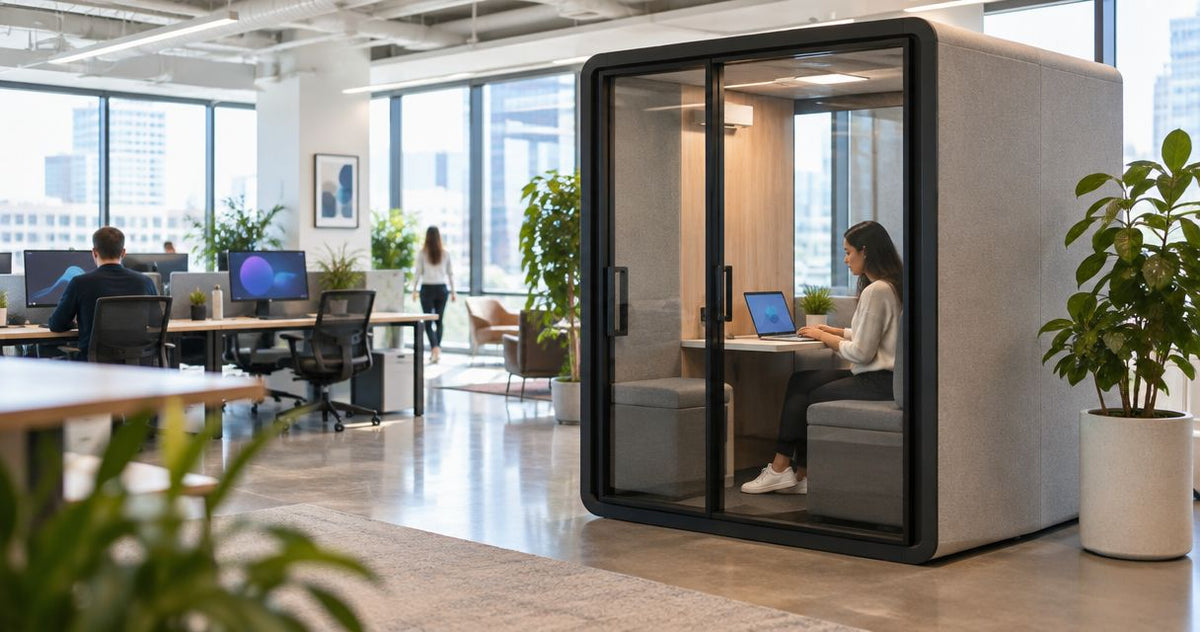
Instead of repeatedly asking people to take calls away from their desks, place acoustic pods near the teams making those calls, at the edge of the working area rather than inside a quiet desk cluster. Use a floor-plan review and a trial of the proposed locations to decide where conversations should move before choosing the final position.
- Quell Workspaces acoustic pods suit workplace teams that need a dedicated place for calls away from shared desks.
- Decide where to place acoustic pods in an open-plan office by mapping calls, desk work and shared destinations.
- Keep pod entrances away from quiet desk clusters; include arrivals and conversations outside the pod in your review.
- Use acoustic pods for enclosed conversations and acoustic treatment for room reflections; they address different problems.
Why this matters
Put the pod where people will use it, not simply where there is spare floor space. A distant pod leaves the original call-taking habit unchanged. A pod beside a quiet desk cluster introduces another destination into an area intended for concentration.
An acoustic phone booth gives you a place to move individual calls. Its position determines whether that move fits naturally into the working day. Consider the desks people leave, their route to the booth and where they return afterwards.
The useful distinction is between enclosing a conversation and changing the acoustics of the wider room. An acoustic pod does not remove keyboard noise, conversations elsewhere or every reflection from surrounding surfaces. Plan around the noise source you want to move.
Quell Workspaces acoustic pods are best for workplace teams that need a dedicated place for calls away from shared desks.
Before you start
- Gather the working information. Use a current floor plan, desk allocations, meeting schedules and observations of where calls actually happen. Include shared destinations such as printers and refreshment areas.
- Agree the intended use. Decide whether the proposed pod will serve individual calls, focused work or conversations between colleagues. Ask the teams using that part of the office, rather than relying only on a furniture layout.
- Check the overlooked issue: the entrance. A location can look suitable on a plan while placing arrivals, departures and waiting conversations beside quiet desks. Review activity outside the pod as well as the conversation inside it.
Treat this as a location-planning workflow, not an installation guide. Keep product-specific positioning requirements separate and use the relevant information supplied for the product you choose.
Call-pattern map
Record the activity you want to move
- Start with 1 current floor plan and mark the desks occupied by people who regularly make calls. Use the actual working arrangement, including shared desks.
- Mark the places where colleagues hold unscheduled discussions. Distinguish brief exchanges from conversations that belong in a separate space.
- Record 3 observation periods: the start of the working day, a busy meeting period and a quieter period. These are planning checkpoints, not an acoustic performance test.
- Add recurring reasons people leave their desks. Include booked meetings, calls and shared office destinations.
- Label the main areas Call desks, Quiet desks and Shared destinations. These are labels for your planning document, not product settings.
Record what happens rather than making assumptions about a department. A team described as quiet can still have frequent video calls; a busy team can spend much of its day working silently.
Expected result: your plan shows which conversations need a separate setting and which desks need protection from added activity. You should be able to explain the problem a proposed pod location solves in one sentence.
Separate speech from other distractions
Listen to the complaint behind the request for a pod. Is someone distracted by the content of nearby calls, by people passing their desk or by sound carrying across the room?
Moving calls into an enclosed space addresses a different problem from moving a shared destination. If the interruption comes from people gathering near a printer, placing a pod there does not resolve the gathering itself.
Write the intended outcome beside each marked area. For example: move scheduled video calls away from neighbouring desks. That is a useful planning objective; make the office quieter is too broad to judge.
Location shortlist
Compare the edge, the centre and the quiet corner
- Mark 2 candidate locations close to the teams that need the pod. Two alternatives let you compare a practical choice rather than defend the first empty space you find.
- Trace the journey from the relevant desks to each location. Include the approach to the entrance and the return to work.
- Identify the desks nearest each proposed entrance. Note whether their occupants need sustained concentration or regularly hold conversations themselves.
- Check whether the location becomes a destination for people from elsewhere in the office. A centrally placed pod serves more teams but also brings more movement to that area.
- Compare the candidates using the table below. Record the drawback as well as the benefit.
| Placement option | Best for | Main advantage | Main drawback |
|---|---|---|---|
| Edge of a call-heavy team area | Individual calls made throughout the day | Keeps the call destination close to its users | Arrivals and departures still need consideration |
| Boundary between shared working zones | A pod used by neighbouring teams | Provides a shared destination without placing it inside one desk cluster | Responsibility for booking and use needs to be clear |
| Central collaboration area | Conversations already associated with a busy working zone | Groups conversational activity in a recognisable area | Does not suit nearby desks reserved for quiet work |
| Remote quiet corner | Planned sessions whose users accept a separate destination | Separates pod activity from the main desk area | Distance works against spontaneous use |
Choose proximity to the noise source without putting the entrance inside the concentration zone. The nearest location is not automatically the best one. Compare the whole pattern of use, not just the distance from a desk.
Expected result: you have a preferred location, an alternative and a written reason for choosing between them. Each option has a named use case and a recognised limitation.
Review the entrance separately
On the plan, mark where a person would stand before entering and where colleagues would meet after a session. Ask whether those moments would take place beside someone trying to concentrate.
Do not treat the pod as a screen that automatically creates a quiet area behind it. A piece of furniture can change the layout without resolving the behaviour causing the distraction. Keep the intended conversational zone explicit.
Usage trial and review
Test the location before committing to the layout
- Identify the proposed pod destination on the floor plan and explain its intended use to the relevant teams.
- Ask users to walk through a typical call journey. Include leaving the desk, reaching the destination and returning afterwards.
- Discuss where users would wait if the pod were occupied. Keep waiting conversations out of the quiet desk cluster in your proposed working arrangement.
- Review the location with people whose desks would be nearest the entrance. Ask about passing activity and interruptions, not just whether they like the appearance.
- Record the decision under Call pattern, Location choice and Usage review. Retain the alternative location and the reason it was not selected.
This sequence keeps the decision tied to observed work. It also prevents a common planning error: checking the footprint but never checking the journey.
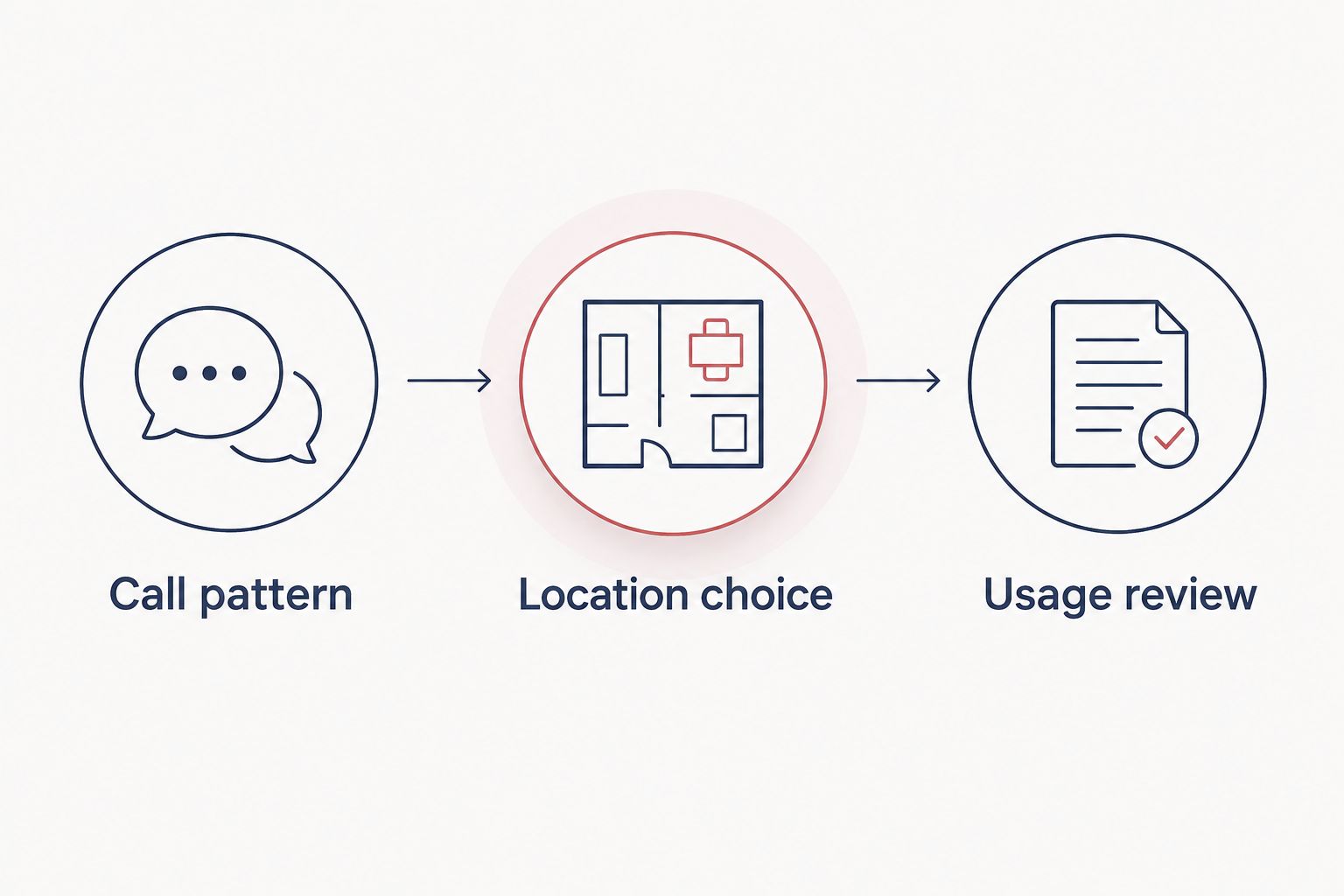
Expected result: the proposed position has been checked against everyday use, including the activity outside the enclosure. Keep the final location decision distinct from any claim about measured sound reduction.
Set a clear working convention
Tell people which activities belong in the pod and how to find out whether it is in use. Choose a booking or access convention that matches the way your office already operates; do not create a complicated process for a short call.
Make the purpose specific. If the goal is to move video calls away from shared desks, explain that directly. If the pod is also used for quiet work, agree how those sessions fit alongside calls.
After use begins, review whether calls have actually moved from the desks identified on your plan. A well-positioned but misunderstood pod does not solve the original working pattern.
Variant: place a pod for colleague conversations
A location intended for individual calls is not automatically the right location for conversations between colleagues. With a 2-person meeting booth, plan around the teams meeting each other rather than a single group of call-makers.
- Mark the teams that regularly need a separate place to talk.
- Shortlist a shared destination between their working areas, outside the quiet desk clusters.
- Review where participants will meet before entering and continue their discussion afterwards.
- Agree which conversations should move there instead of taking place beside occupied desks.
Best for: recurring conversations between colleagues who work in neighbouring zones. The advantage is a shared, recognisable destination. The drawback is that several teams need the same understanding of its purpose and use.
Keep furniture decisions separate from location decisions. Review the relevant office pod furniture once you have defined the activity, rather than allowing a preferred furnishing arrangement to decide where the conversation belongs.
Troubleshooting
Calls still happen at desks
Check whether the destination matches the call pattern. A remote pod, unclear usage convention or repeated occupancy conflict gives people a reason to stay at their desks.
Fix the working arrangement first: clarify intended use and review the route from the call-heavy team. Do not assume an additional pod is the answer before identifying the obstacle.
Quiet desks receive more interruptions
Review the entrance activity, not just sound from inside the pod. People approaching, waiting and talking afterwards can create a new distraction beside a previously quiet cluster.
Compare the alternative location from your shortlist. Move the proposed conversational destination away from the quiet desks rather than treating the enclosure alone as the solution.
The wider room still sounds lively
Check which sounds remain. Conversations elsewhere and room reflections are different from the calls moved into the pod.
Keep the pod's purpose narrow and review the wider acoustic environment separately. Avoid interpreting a continuing room-acoustics problem as proof that the location choice alone has failed.
Different teams disagree about the location
Return to the call-pattern map and the named use case. A location convenient for one team can be a distraction for another.
Compare both candidates against the same questions: who uses the pod, who sits beside it and where people gather before and after use. Record the trade-off instead of relying on the loudest preference.
Customise your workflow
Extend the review beyond the pod when the remaining problem is sound reflecting around the room. Acoustic enclosures and room treatment have different roles; neither replaces a clear plan for where conversations happen.
| Approach | Best for | What to review | Limitation |
|---|---|---|---|
| Acoustic pod placement | Moving calls or meetings away from shared desks | Users, location, entrance activity and working conventions | Does not address every sound in the open room |
| Room acoustic treatment | Addressing sound absorption in the wider room | The room and the intended treatment with an acoustic specialist | Does not provide a separate conversational space |
For a wider-room review, the Quell Workspaces Folio Geometric Acoustic Wall Panel and Folio acoustic ceiling panels are relevant product pages to consult. Do not infer a room-level result from a product name or choose treatment positions using this pod-location workflow.
Repeat the call-pattern review when desk allocations or team routines change. The useful question remains the same: does the destination still match the conversations you want to move?
FAQ
Where should I place acoustic pods in an open-plan office?
Place acoustic pods near the people who need them, at the edge of the relevant working area rather than inside a quiet desk cluster. Review the entrance, the journey from desks and where people will wait or talk afterwards.
Is the quietest corner the best place for an acoustic pod?
The quietest corner is not automatically the best location. A remote destination works against spontaneous use, so compare it with a location closer to the team making calls.
Should an acoustic pod go beside the team making the most calls?
A location near a call-heavy team is a useful candidate, but the entrance should not introduce activity into nearby quiet desks. Compare proximity with the effect on people who work beside the proposed location.
Will placing a pod in the middle of the office make the whole room quieter?
A central pod does not make the whole room quieter by location alone. It provides a separate conversational destination, while speech elsewhere and room reflections remain separate issues.
How should I choose a location for colleague meetings rather than individual calls?
Choose a shared destination near the teams that meet each other, outside their quiet desk clusters. Review where participants gather before and after the conversation as well as the location itself.
How do I know whether the pod location is working?
Check whether the intended calls or conversations have moved away from the desks identified in your plan. Also ask neighbouring desk users whether entrance activity has introduced new interruptions.
One last thing
The pod entrance deserves its own place on the floor plan. A location review that considers only the enclosed conversation misses the activity immediately before and after it.
Before choosing a Quell Workspaces pod location, write down where users will come from, where they will wait and where they will go afterwards. If those answers put conversations back beside quiet desks, revise the location before choosing the final layout.


